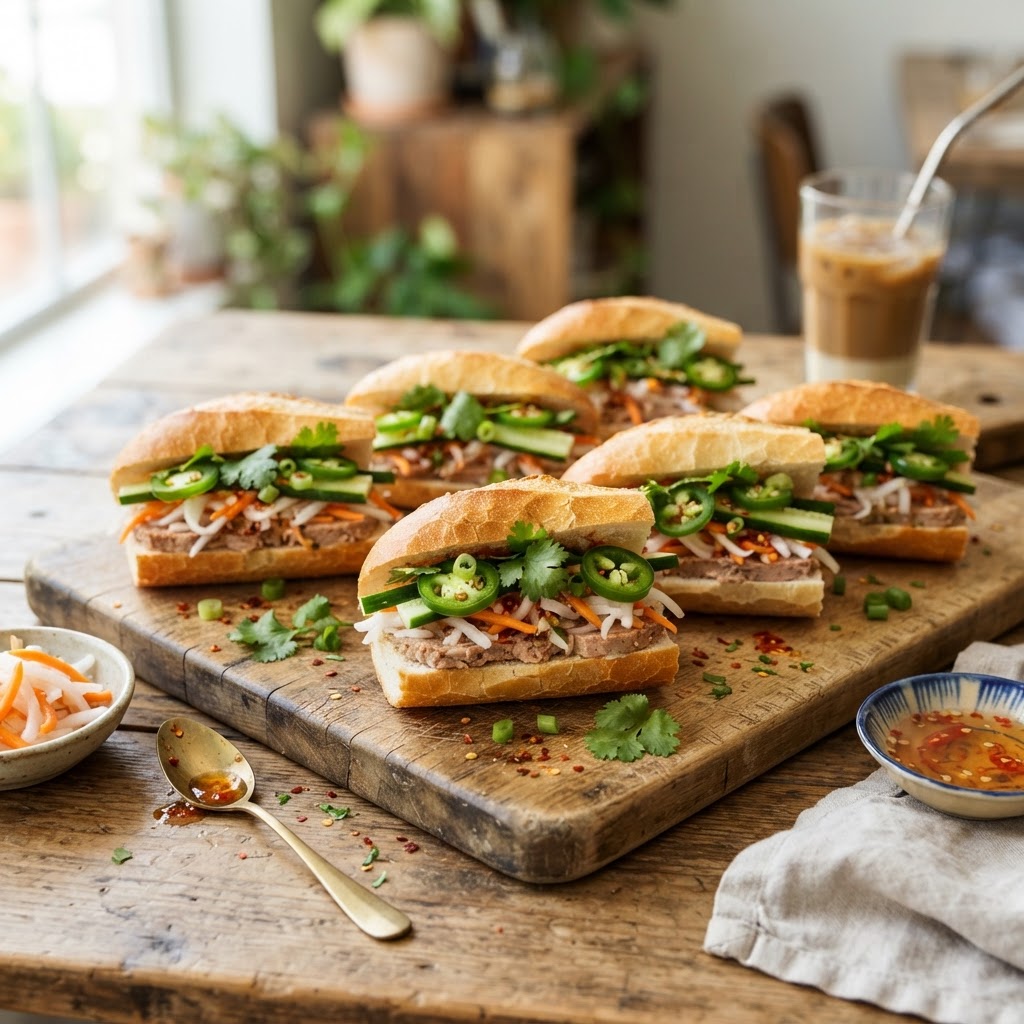
Vietnamese Bánh Mì Sliders with Pork Pâté and Pickled Daikon
July 23, 2026
A bánh mì is a sandwich that carries its whole history in the bite. The bread is a baguette, and the baguette is there because the French were there, colonizing Vietnam from the 1860s until 1954. What Vietnamese bakers did with that borrowed loaf is the real story: they worked rice flour into the dough until the crust turned paper-thin and shattering, the inside cottony and almost weightless, a bread so light it seems to dissolve on the tongue. On top of that base the fillings were layered one by one, pâté and cold cuts, pickled daikon and carrot, cool cucumber, cilantro, jalapeño, a slick of mayonnaise, until what had begun as a French idea became something the French would not have recognised and could not have made.
The sandwich that is eaten everywhere today came together in Saigon in the 1950s and sixties, sold from carts and small shopfronts, and it travelled out of Vietnam with the diaspora after the war until bánh mì shops opened in every major city in the world. Built small, on demi-baguettes, it becomes a party bite that holds an enormous amount of flavour in a few mouthfuls. The balance is the thing: the rich, savoury weight of the pâté, the sweet-tart snap of the pickles, the cool of the cucumber, the fragrant green of the cilantro, the slow burn of the chili, all of it pressing against the crisp of the bread. That push and pull is what makes a bánh mì one of the great sandwiches anywhere, and it is why it holds up so well at half size.
About the Ingredients
Baguette should be a light, airy Vietnamese baguette or a small French demi-baguettes. The bread must be fresh and crusty — it is the most important element. If you can find a Vietnamese bakery, make the trip. Lee's Sandwiches is a Vietnamese-American chain that ships baguettes. For sliders, use small demi-baguettes or cut a standard baguette into 2-inch pieces.
Pork pâté is the classic spread. In Vietnam, a smooth, liver-based pâté is used. Alexandre Farm and other brands make good-quality pork liver pâté. Alternatively, use a good chicken liver pâté or make your own from pork liver, shallots, garlic, and cognac.
Pickled daikon and carrot (đồ chua) are the essential acidic element. Daikon radish (củ cải trắng) and carrots are julienned and pickled in a simple solution of rice vinegar, sugar, and salt. This can be made days ahead and keeps for weeks in the refrigerator.
Cilantro, cucumber, and jalapeño are the fresh elements that make the bánh mì alive. The cilantro should include the stems, which have the most flavor. The cucumber should be thin-skinned and seedless. The jalapeño adds heat — adjust to taste.
Ingredients (makes 24 sliders):
Pickled vegetables (đồ chua): - 1 cup daikon radish, julienned into 2-inch matchsticks - 1 cup carrot, julienned into 2-inch matchsticks - ½ cup rice vinegar - ½ cup warm water - 3 tablespoons sugar - 1 teaspoon salt
Sandwiches: - 6 small demi-baguettes (or 2 standard baguettes, cut into 12 pieces each, split) - 8 oz pork liver pâté - ½ cup mayonnaise (preferably Kewpie or Kewpie) - 1 English cucumber, thinly sliced - 1 bunch fresh cilantro, stems and leaves - 2 jalapeños, thinly sliced - 1 tablespoon soy sauce - 1 tablespoon Sriracha (optional) - Flaky sea salt and black pepper
Instructions: For the pickled vegetables: combine the rice vinegar, warm water, sugar, and salt in a bowl, stirring until dissolved. Add the julienned daikon and carrot. Let sit at room temperature for at least 1 hour, or refrigerate for up to 2 weeks. The pickles improve with time.
To assemble: split the baguette pieces lengthwise, leaving a hinge on one side. Spread a layer of mayonnaise on the bottom half and a layer of pork pâté on the top half. Layer cucumber slices on the bottom half. Add a generous tangle of pickled daikon and carrot. Add a few sprigs of cilantro (stems included). Add 2–3 slices of jalapeño. Drizzle with soy sauce and Sriracha if using. Season with a pinch of salt and pepper.
Close the sandwich and serve immediately — the bread must be crusty and the vegetables crisp.
The Mimosa Pairing Logic: The bánh mì's complex interplay of rich pâté, sweet-tart pickles, fresh herbs, and spicy jalapeño calls for a mimosa that provides bright, refreshing contrast. A classic Champagne mimosa or a lychee rose mimosa is ideal — the citrus acidity cuts through the rich pâté and mayonnaise, while the lychee's floral sweetness echoes the Vietnamese flavor palette and complements the fresh cilantro. The wine's effervescence refreshes the palate between bites of this intensely flavored, multi-layered sandwich.
Reference Links: - Authentic Vietnamese bánh mì baguette: Full of Plants - Bánh mì sandwich recipe: Delish - Vietnamese cuisine guide: TasteAtlas
Make-Ahead: The pickled vegetables can be made up to 2 weeks ahead and refrigerated. The pâté can be made or purchased up to 1 week ahead. The baguettes should be purchased the day of serving. Assemble the sliders no more than 30 minutes before serving — the bread will soften from the wet toppings over time. Keep assembled sandwiches covered at room temperature.
Pro Tips: The bread is everything — a dense or stale baguette ruins the sandwich. The baguette should be fresh enough that the crust crackles audibly when squeezed. The pickled vegetables should be made at least 1 hour ahead — they need time for the flavors to develop. Do not skip the pâté — it is the element that distinguishes a bánh mì from an ordinary sandwich. The cilantro stems should be included — they have more flavor than the leaves and add a pleasant crunch. Layer the ingredients in order: wet ingredients (mayo, pâté) on the bread, then vegetables, then herbs, then chili — this prevents the bread from becoming soggy.
Rate this recipe
Be the first to rate this recipe
to submit your rating.
Perfect Mimosa Pairings
Mimosas that pair perfectly with this dish
Recent Posts
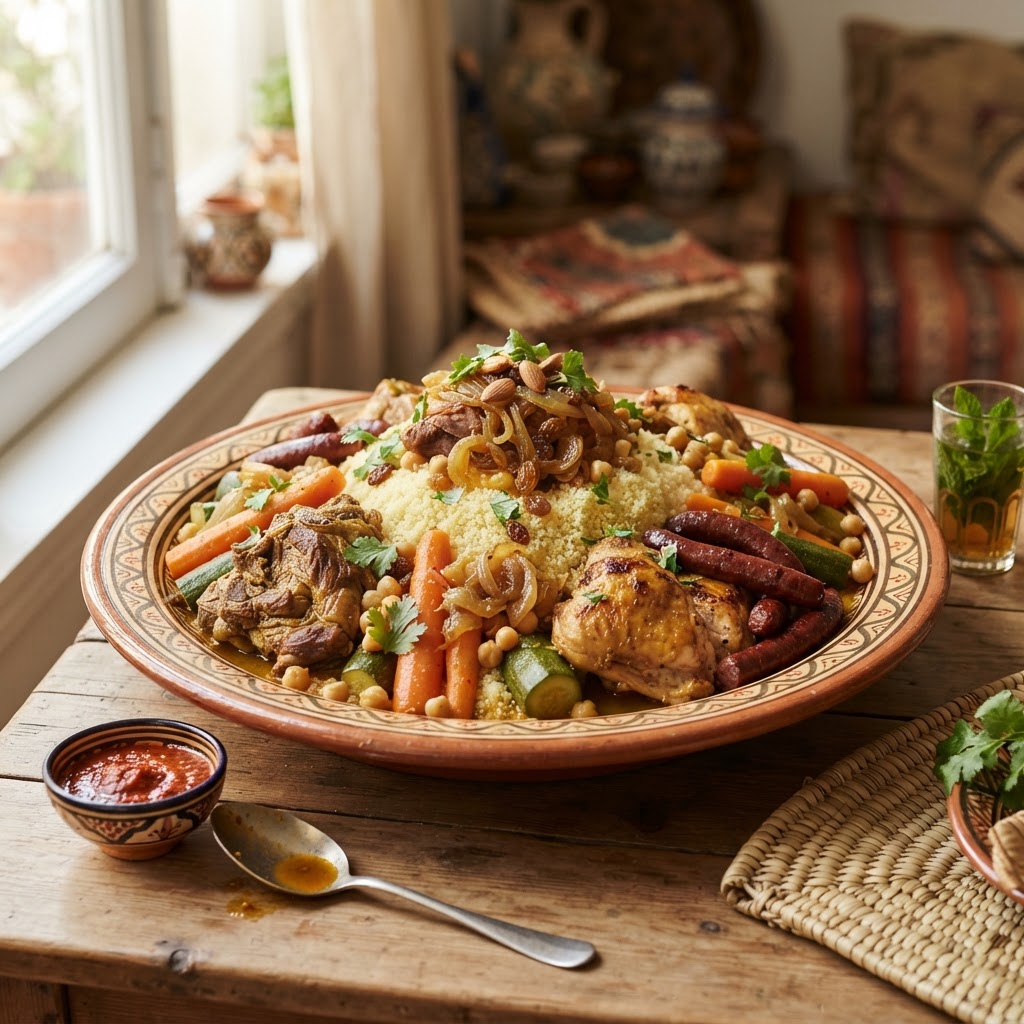
Couscous Royale: North Africa's Grand Platter of Lamb, Chicken, and Merguez
October 14, 2026
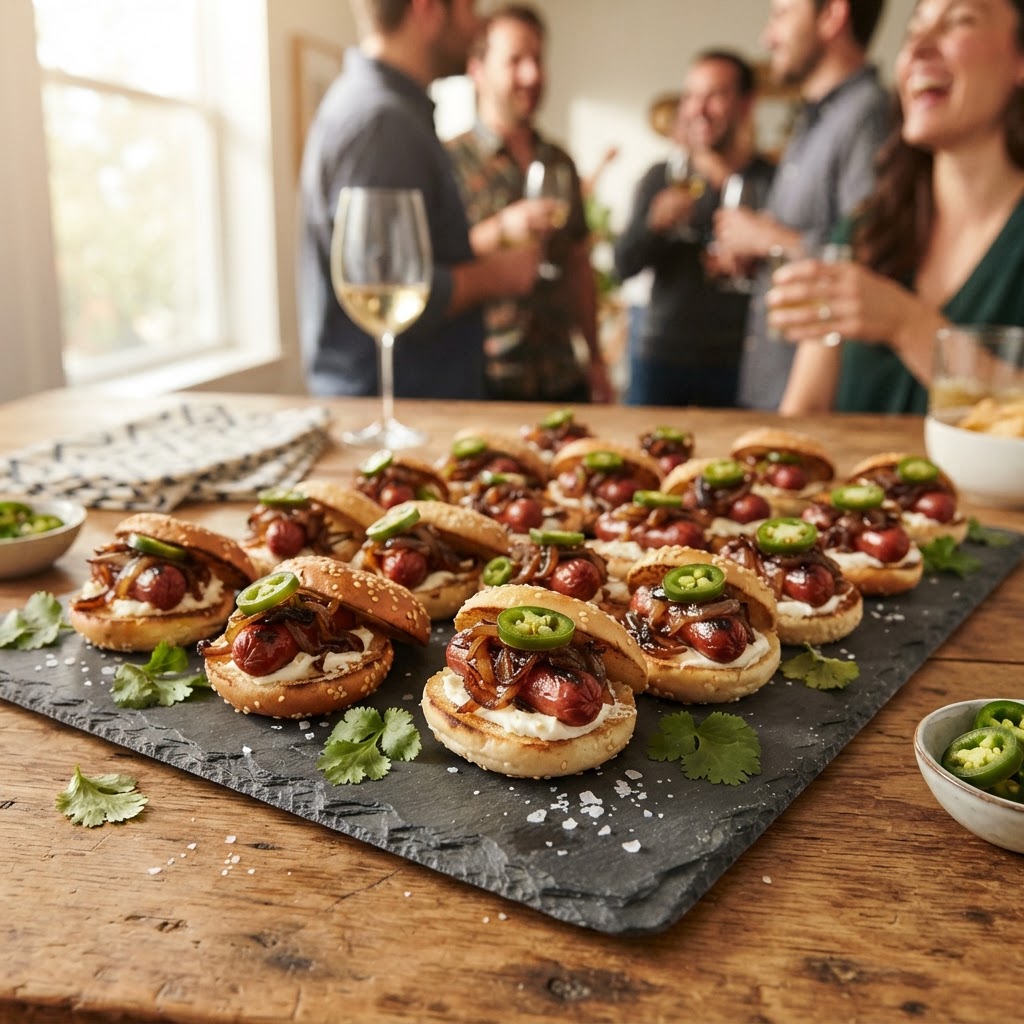
Seattle Cream Cheese Dog Bites: Hadley Long's 1989 Pioneer Square Invention
October 14, 2026
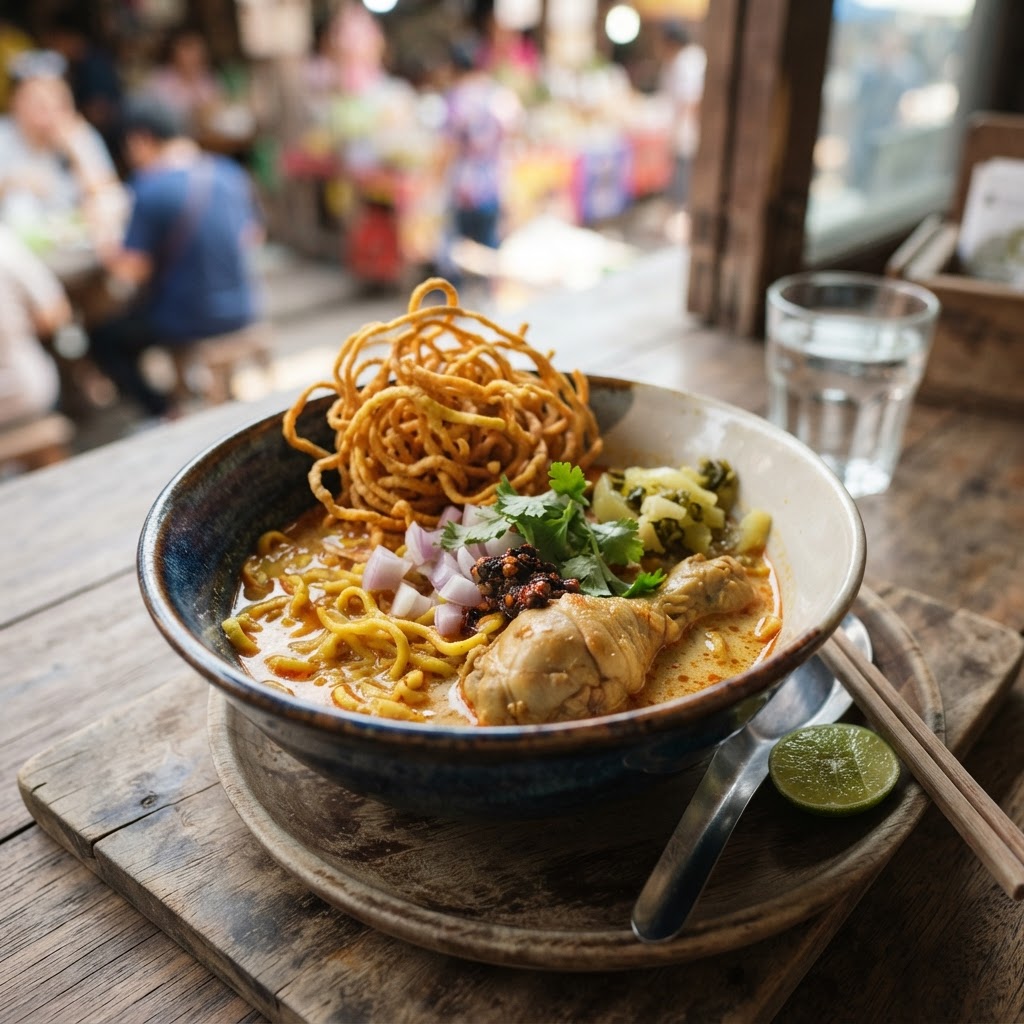
Khao Soi: Chiang Mai's Northern Thai Coconut Curry Noodles
October 13, 2026
Korean Bibimbap: Jeonju's Joseon Dynasty Mixed Rice
October 11, 2026
Spaghetti alla Carbonara: Rome's World War II Pasta of Eggs, Guanciale, and Pecorino
October 9, 2026