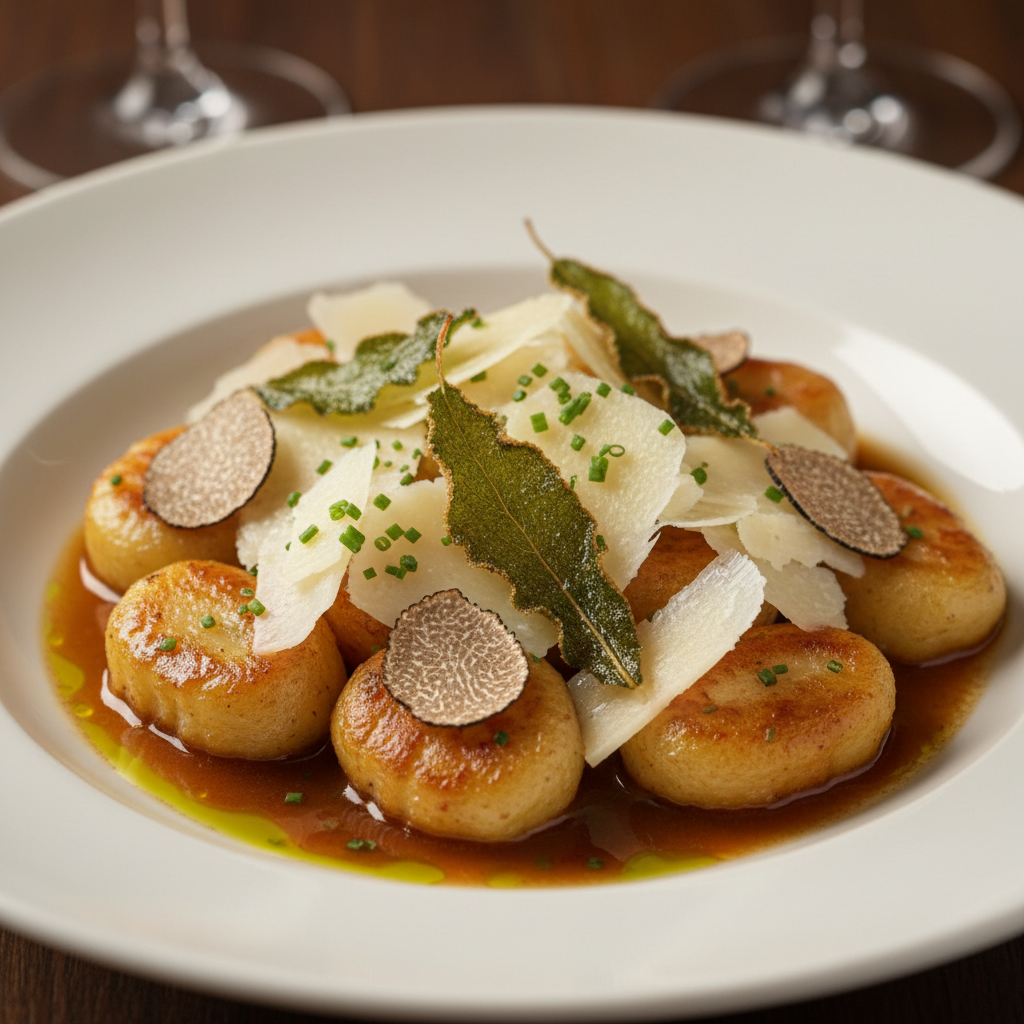
Truffled Potato Gnocchi with Brown Butter & Sage
February 8, 2026
Potato gnocchi has been made in northern Italy — particularly the Veneto, Friuli, and Lombardy — since at least the Renaissance, where it appeared in cookbooks as early as the 16th century as a simple mixture of cooked potato, flour, and egg. The refinement came gradually: lighter potato, less flour, a gentler touch. The finest gnocchi are nearly weightless, collapsing into the sauce rather than sitting heavily in it.
Brown butter and sage — beurre noisette with salvia in the Italian kitchen — is one of the defining preparations of Piemontese and Lombard cooking. The nutty, caramelized butter amplifies the earthiness of the potato, and the crispy fried sage leaves add a herbal bitterness and texture that cuts through the richness. Black truffle shaved over the top is the element that lifts this from a beautiful pasta course to the memory of the evening.
Ingredients (serves 12 as a plated first course or 8 as a main):
Potato Gnocchi: - 3¼ lbs Russet or Yukon Gold potatoes (Russet preferred — lower moisture content produces lighter gnocchi) - 1½ cups "00" flour, plus extra for dusting (approximately — use the minimum) - 2 large egg yolks - 1 teaspoon fine sea salt - ¼ teaspoon freshly grated nutmeg - White pepper to taste
Brown Butter & Sage Sauce: - 14 tablespoons unsalted butter (ideally European-style, 84% fat) - 24 large fresh sage leaves - Juice of ½ lemon - Flaky sea salt and cracked black pepper
To Finish: - 3 oz Parmigiano-Reggiano (minimum 24-month), finely grated - ⅔ oz-1 oz fresh black truffle (winter) OR 2 tablespoons high-quality black truffle paste + few drops truffle oil - Additional sage leaves, fried crisp, for garnish - Parmigiano shavings
Gnocchi Method: Bake potatoes whole at 400°F for 50–60 minutes until completely cooked through. Split immediately and scoop flesh into a ricer. Rice onto a clean, floured work surface while still hot — the steam escaping prevents the gnocchi from becoming dense. Spread riced potato thinly and allow to cool for 5 minutes until just handleable but still warm.
Make a well in the center. Add egg yolks, salt, nutmeg, and half the flour. Work gently with a bench scraper and your hands, adding just enough flour until the dough barely holds together — it should be soft, slightly tacky, and not cohesive in the way bread dough is. Overworking or over-flouring produces tough gnocchi.
Divide dough into portions. Roll each into a ¾-inch rope on a lightly floured surface. Cut into 1-inch pieces. Roll each piece down a gnocchi board or the back of a fork tines to create the characteristic ridges (these hold the sauce). Transfer to a floured tray. (Gnocchi can be refrigerated for 2 hours or frozen for 1 month at this point.)
Brown Butter: Melt butter in a wide, light-colored saucepan over medium heat. Cook, swirling frequently, until the foam subsides, the butter turns a deep golden-amber color, and the milk solids smell nutty and toasty — about 4–5 minutes. Add sage leaves (they will spit — step back) and fry 20 seconds until crisp. Remove the sage immediately to a paper towel. Add lemon juice to the butter to stop further cooking.
Service: Cook gnocchi in generously salted boiling water. They will sink initially then float to the surface — cook 30–45 seconds after they float. Remove with a slotted spoon directly into the brown butter pan. Toss gently over medium heat 1 minute to coat and slightly caramelize the exterior. Add grated Parmigiano, toss.
Plate in warm, shallow bowls. Arrange crispy sage leaves on top. Shave black truffle generously over each portion immediately before service — the heat of the gnocchi releases the aroma. Finish with Parmigiano shavings, flaky salt, and cracked pepper.
Reference Links: - Piemontese brown butter and truffle tradition: Academia Barilla
Make-Ahead: Formed gnocchi can be frozen in a single layer on a floured tray, then transferred to a freezer bag — cook directly from frozen (add 1–2 minutes). Brown butter can be made 2 hours ahead and held warm; add sage to order. Never refrigerate cooked gnocchi.
Pro Tips: The minimum-flour principle is everything in gnocchi. The correct amount is the least possible to form a cohesive dough — any excess produces dense, chewy results. Baking rather than boiling the potatoes removes maximum moisture. Hot ricing (while the potato steams) also drives off moisture. These two steps together produce the lightest possible gnocchi without industrial equipment.
Rate this recipe
Be the first to rate this recipe
to submit your rating.
Recent Posts

Couscous Royale: North Africa's Grand Platter of Lamb, Chicken, and Merguez
October 14, 2026

Seattle Cream Cheese Dog Bites: Hadley Long's 1989 Pioneer Square Invention
October 14, 2026

Khao Soi: Chiang Mai's Northern Thai Coconut Curry Noodles
October 13, 2026

Korean Bibimbap: Jeonju's Joseon Dynasty Mixed Rice
October 11, 2026

Spaghetti alla Carbonara: Rome's World War II Pasta of Eggs, Guanciale, and Pecorino
October 9, 2026