Tiramisu alla Prosecco
January 8, 2026
*Tiramisù* means "pick me up" in the dialect of the Veneto, and the dessert was codified in 1972 at Le Beccherie, a restaurant in the Piazza Ancillotto in Treviso. The restaurant had been founded in 1939, and in the early 1970s the owner's wife, Alba Campeol, working with the pastry chef Roberto Linguanotto, developed the dessert from the *sbatudin*, a mixture of egg yolks and sugar given to new mothers and invalids to restore their strength. They added mascarpone, coffee-soaked savoiardi, and cocoa, and *Tiramesù* appeared on the Le Beccherie menu in 1972. On 15 October 2010 the recipe was filed with a notarial deed with the Accademia Italiana della Cucina. Friuli disputes the origin, pointing to a handwritten recipe of 1959 by Norma Pielli of the Albergo Roma in Tolmezzo, and in 2017 the Italian government recognized tiramisu as a traditional specialty of Friuli, to the outrage of the Venetians.
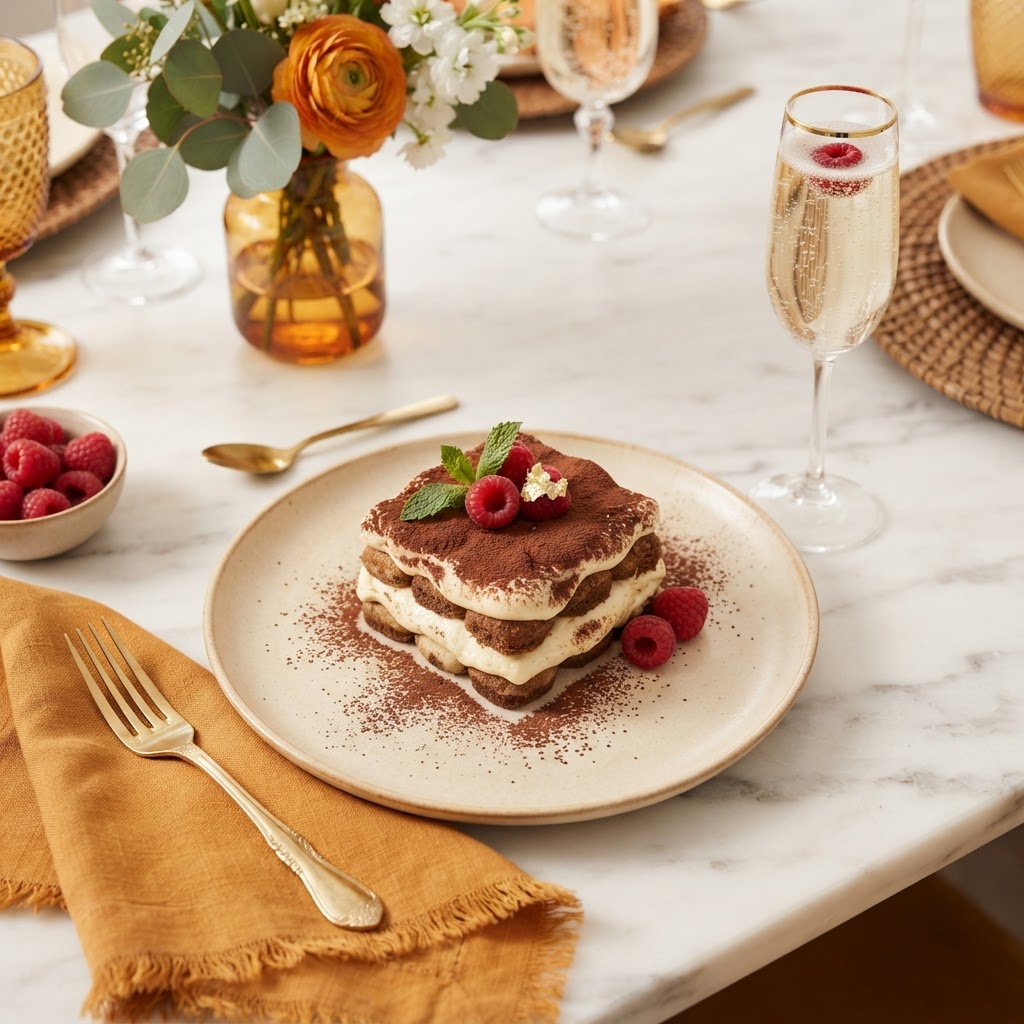
Our Mimosavated version takes the Treviso classic and adds a splash of Prosecco di Valdobbiadene to the coffee soaking liquid. The Prosecco does not make the dessert taste of sparkling wine; it makes it taste brighter and more alive, more like Treviso on a summer evening.
Ingredients (serves 8):
The Coffee-Prosecco Soak: - 1 ¼ cups strong espresso, cooled to room temperature - ½ cup Prosecco di Valdobbiadene (brut or extra dry) - 2 tablespoons sugar (to sweeten the soaking liquid)
The Mascarpone Cream: - 1 lb 2 oz mascarpone cheese, at room temperature - 6 large egg yolks - 5 ¼ oz granulated sugar - A pinch of salt - 3 ⅓ tbsp Prosecco di Valdobbiadene - 1 teaspoon vanilla extract - 1 ¼ cups heavy cream, cold
Assembly: - 10.6 oz savoiardi (Italian ladyfingers) — about 30-35 cookies - 1 ¾ oz unsweetened cocoa powder, for dusting - Dark chocolate shavings, for garnish - Fresh raspberries, for garnish
Making the Coffee-Prosecco Soak: Brew strong espresso and let it cool to room temperature. Combine the cooled espresso with the Prosecco and sugar in a wide, shallow dish. Stir until the sugar dissolves. The Prosecco adds a bright, floral lift that pure coffee alone doesn't have — it's subtle but transformative.
Making the Mascarpone Cream: Set up a double boiler: fill a saucepan with about 2 inches of water and bring to a gentle simmer. In a heatproof bowl, whisk together the egg yolks and sugar until thick and pale yellow, about 5 minutes. Place the bowl over the simmering water (don't let the bowl touch the water) and whisk constantly for about 8-10 minutes, until the mixture is thick, glossy, and holds a ribbon when you lift the whisk. Remove from heat and let cool to room temperature.
Once the yolk mixture has cooled, fold in the mascarpone, a pinch of salt, the Prosecco, and vanilla extract. In a separate bowl, whip the heavy cream to medium-stiff peaks. Gently fold the whipped cream into the mascarpone mixture in three additions — fold, don't stir, or you'll deflate the cream and lose the airy texture that makes tiramisu feel weightless.
Assembly: Choose a rectangular baking dish (approximately 23x13 in / 9x13 inches). Working quickly, dip each ladyfinger into the coffee-Prosecco soak for exactly 1-2 seconds per side — no longer. The ladyfingers should be moistened but not soggy. Arrange them in a single layer across the bottom of the dish, breaking them to fit if needed.
Spread half of the mascarpone cream evenly over the first layer of ladyfingers. Repeat with a second layer of dipped ladyfingers and the remaining mascarpone cream, smoothing the top with a spatula.
Cover with plastic wrap and refrigerate for at least 6 hours, ideally overnight. This is not optional — tiramisu needs time to set properly. The flavors need to meld, the ladyfingers need to soften into the cream, and the whole thing needs to become sliceable rather than pourable. Just before serving, dust generously with cocoa powder and garnish with chocolate shavings and fresh raspberries.
The Mimosa Pairing Logic: Since the tiramisu itself contains Prosecco, the natural pairing is a classic Prosecco-based mimosa, not a champagne one — the flavor profile stays consistent and complementary. A peach bellini mimosa is inspired here: the peach echoes the floral notes of the Prosecco in the tiramisu while adding a fruit dimension. For contrast, a strawberry mimosa provides a bright, acidic counterpoint to the rich mascarpone. Avoid heavy or bitter mimosas — the dessert is already rich, and you need something that refreshes the palate between bites.
Reference Links: - Tiramisu origin and Le Beccherie history: Le Beccherie - Tiramisu on Wikipedia: Wikipedia - Prosecco di Valdobbiadene: Wikipedia - Authentic mascarpone tiramisu technique: Serious Eats - Savoiardi ladyfingers: King Arthur Baking
Make-Ahead: Tiramisu must be made at least 6 hours ahead and can be refrigerated for up to 3 days. In fact, it's better on day two. The mascarpone cream can be made a day ahead and refrigerated separately. Do not freeze — the mascarpone separates and becomes grainy.
Pro Tips: The quality of your mascarpone determines the quality of your tiramisu. Use a genuine Italian mascarpone — the cheap substitutes are grainy and lack the silky, buttery texture. The dipping time for ladyfingers is critical: 1-2 seconds per side, no more. Over-dipped ladyfingers turn tiramisu into a soggy mess that won't hold its shape when cut. The egg yolks must be cooked over the double boiler to a safe temperature — use a thermometer if you're nervous; the mixture should reach 160°F (160°F). Finally, always use fresh, high-quality eggs since they're gently cooked. If you're serving pregnant guests or the immunocompromised, use pasteurized eggs.
Rate this recipe
Be the first to rate this recipe
to submit your rating.
Recent Posts

Couscous Royale: North Africa's Grand Platter of Lamb, Chicken, and Merguez
October 14, 2026

Seattle Cream Cheese Dog Bites: Hadley Long's 1989 Pioneer Square Invention
October 14, 2026

Khao Soi: Chiang Mai's Northern Thai Coconut Curry Noodles
October 13, 2026

Korean Bibimbap: Jeonju's Joseon Dynasty Mixed Rice
October 11, 2026

Spaghetti alla Carbonara: Rome's World War II Pasta of Eggs, Guanciale, and Pecorino
October 9, 2026