The Sazerac: New Orleans' Original Cocktail
September 23, 2026
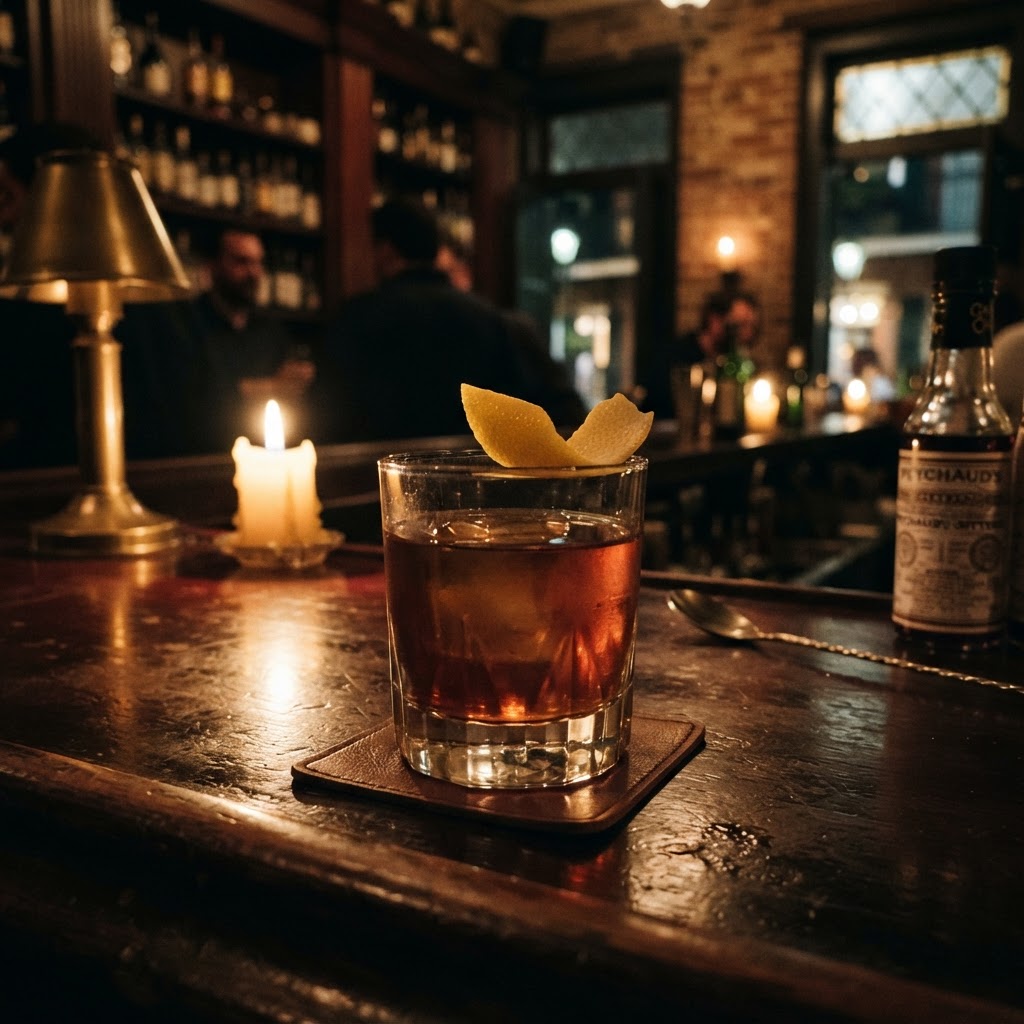
The Sazerac is widely regarded as the first true American cocktail — a bracing, aromatic pour of rye whiskey rinsed with absinthe, sweetened with sugar and sharpened with Peychaud's bitters, served neat in a chilled rocks glass with a twist of lemon peel. It is a drink that tastes unmistakably of New Orleans: strong, herbal, a little dangerous, and impossible to rush. According to New Orleans & Company, the story goes that in 1838 Creole apothecary Antoine Peychaud invented the Sazerac in his shop at 437 Royal Street in the French Quarter, serving it to fellow Masons in a small egg cup — a *coquetier* — a word some insist morphed into "cocktail." The drink took its name from Peychaud's favorite French brandy, Sazerac-de-Forge et fils; American rye whiskey later replaced the cognac, and in 1873 bartender Leon Lamothe added the defining dash of absinthe. Wikipedia's Sazerac entry notes the drink was designated the official cocktail of New Orleans by an act of the Louisiana legislature in 2008.
The genius of the Sazerac is the absinthe rinse: the glass is rinsed with absinthe (or its local anise-liqueur cousin, Herbsaint) and the excess poured out, so only a ghost of anise remains — enough to perfume the rye without overpowering it. Peychaud's Bitters, Antoine Peychaud's own creation, is brighter and more cherry-forward than Angostura, and it is the only correct bitter for a Sazerac.
About the Ingredients
Rye whiskey — the backbone; a high-rye bottled-in-bond rye (Rittenhouse, Sazerac 6-Year, or Bulleit Rye) gives the spice and structure the drink needs. Cognac was the original base, but rye has been standard since the late 19th century.
Absinthe or Herbsaint — used only as a rinse; genuine absinthe (or the New Orleans anise liqueur Herbsaint, created as an absinthe substitute after the 1912 ban) coats the glass with its licorice-fennel perfume. A few drops, no more.
Peychaud's Bitters — Antoine Peychaud's recipe, brighter, more floral, and more cherry-like than Angostura; the defining aromatic of the Sazerac and non-substitutable.
Sugar — a sugar cube muddled with the bitters and a splash of water, or a bar-spoon of simple syrup; just enough to round the rye's edge.
Lemon peel — expressed over the drink so the citrus oils mist the surface, then draped on the rim; the oil is the drink's top note.
Ingredients (makes 1): - 1 sugar cube (or 1 bar spoon simple syrup) - 3 dashes Peychaud's Bitters - 2 oz rye whiskey - ¼ oz absinthe or Herbsaint (for rinsing) - A wide strip of lemon peel
Instructions: Chill a rocks glass in the freezer. In a second rocks glass, soak the sugar cube with the Peychaud's Bitters and a splash of water; muddle until the sugar dissolves. Add the rye whiskey and a large ice cube; stir until well-chilled.
Take the chilled glass from the freezer and pour in the absinthe; tilt and roll the glass to coat the interior, then pour out the excess. Strain the rye mixture into the rinsed glass. Express the lemon peel oils over the surface by bending it skin-side-down over the drink, then drape it on the rim. Serve neat — no ice.
The Mimosa Pairing Logic: The Sazerac's anise-and-rye intensity calls for a bright, floral counterpart that lifts the herbs rather than fighting them. A lavender elderflower mimosa is the inspired match — the elderflower echoes Peychaud's floral notes and the lavender nods to the absinthe. For a classic New Orleans brunch, a classic Champagne mimosa is the traditional foil, its clean citrus cutting the rye's warmth the way a café au lait does. This is the brunch equivalent of a Sazerac at the Sazerac Bar and a glass of Champagne at the table — a toast to Royal Street and America's first cocktail.
Reference Links: - Sazerac Recipe and History (Antoine Peychaud, 1838, Royal Street, coquetier, Leon Lamothe, absinthe): New Orleans & Company - Sazerac (official cocktail of New Orleans, 2008): Wikipedia
Make-Ahead: The Sazerac is built to order and should not be batched — the absinthe rinse and lemon-oil expression lose their magic within a minute of preparation. You can pre-chill the glasses and pre-portion the rye. For a large brunch, rinse and chill a tray of rocks glasses ahead and build the drinks to order. Simple syrup can substitute for the sugar cube to speed service. The drink is meant to be sipped slowly, neat, at full strength.
Pro Tips: Use Peychaud's, not Angostura — the two bitters are categorically different, and Angostura makes a darker, heavier drink that is not a Sazerac. Rinse, don't pour — the absinthe is a coating for the glass, not an ingredient; more than a few drops makes the drink medicinal. Express the lemon peel properly — the oil mist is a real flavor layer, and a peel that is merely dropped in contributes nothing. Chill the serving glass thoroughly; a warm Sazerac is harsh and unbalanced. Serve neat with no ice — the dilution of a single stirred ice cube in the mixing glass is all it gets, and that precision is the point.
Rate this recipe
Be the first to rate this recipe
to submit your rating.
Recent Posts

Couscous Royale: North Africa's Grand Platter of Lamb, Chicken, and Merguez
October 14, 2026

Seattle Cream Cheese Dog Bites: Hadley Long's 1989 Pioneer Square Invention
October 14, 2026

Khao Soi: Chiang Mai's Northern Thai Coconut Curry Noodles
October 13, 2026

Korean Bibimbap: Jeonju's Joseon Dynasty Mixed Rice
October 11, 2026

Spaghetti alla Carbonara: Rome's World War II Pasta of Eggs, Guanciale, and Pecorino
October 9, 2026