Thai Pad Thai
June 3, 2026
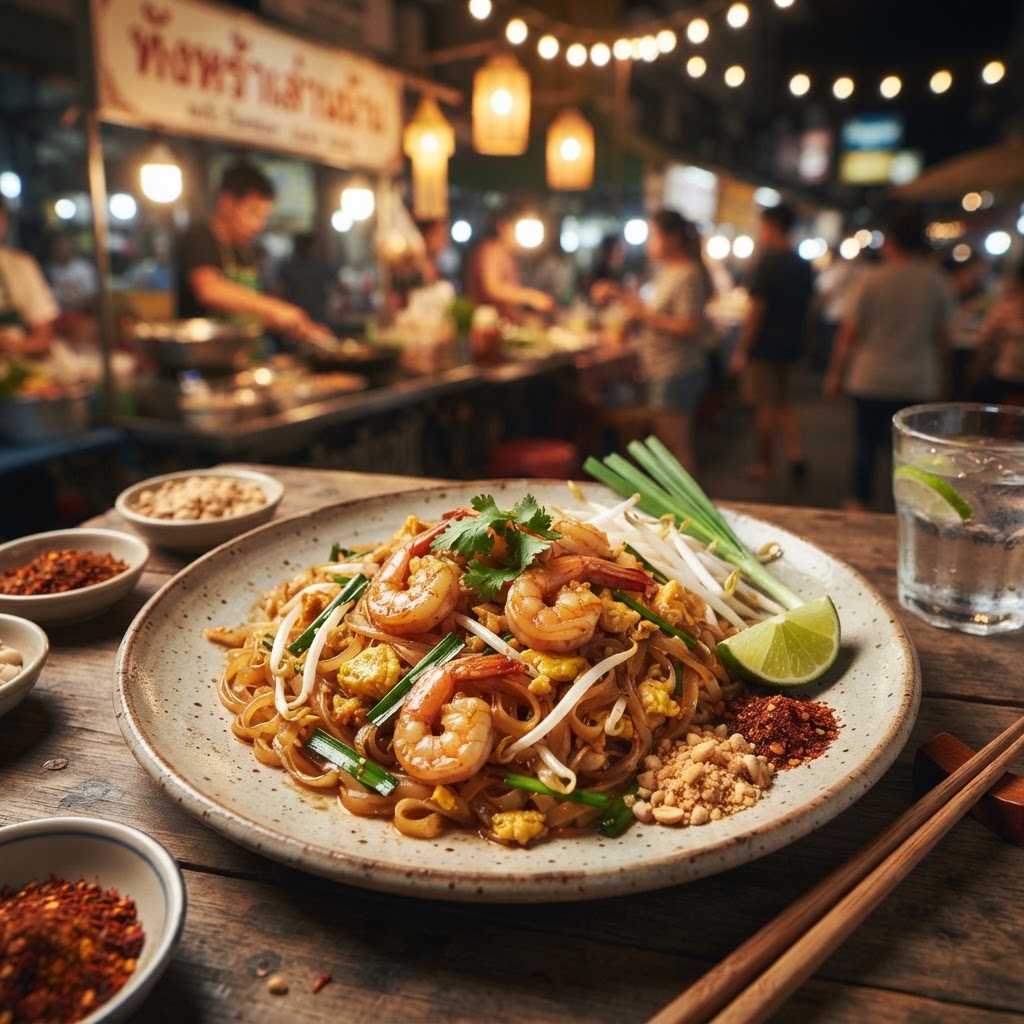
Pad thai — the stir-fried rice noodle dish with shrimp, egg, bean sprouts, and crushed peanuts, glistening with a sweet-sour-savory tamarind sauce — is Thailand's national dish, and one of the most famous street foods in the world. According to Wikipedia, although stir-fried rice noodles were introduced to Thailand from China centuries ago, the dish pad thai was invented in the mid-20th century; the commonly held explanation is that during World War II, Thailand suffered a rice shortage due to the war and floods, and to reduce domestic rice consumption, the Thai government under Prime Minister Plaek Phibunsongkhram promoted the consumption of noodles instead, helping to establish the modern identity of Thailand. As the Smithsonian Magazine recounts, the dish was created as part of a nation-building campaign — a way to galvanize nationalism through a unified cuisine — and pad thai has since become one of Thailand's national dishes, listed among the world's most delicious foods. The dish's signature is its balance of flavors — sour tamarind, salty fish sauce, sweet palm sugar, and the savor of shrimp and egg — all married in a hot wok in seconds.
For a party, pad thai is a vibrant, fragrant brunch or buffet dish — sweet, sour, savory, and bright, in a bowl that captures the balance at the heart of Thai cooking.
About the Ingredients
Noodles — flat dried rice noodles (sen lek), soaked until pliable; they finish cooking in the sauce in the wok, absorbing the tamarind's tang.
The sauce — tamarind paste (the sour), fish sauce (the salty), palm sugar (the sweet), and a little paprika for the dish's characteristic reddish tint; the sauce is the soul of pad thai, and the balance of these three is everything.
Protein — shrimp is classic, with scrambled egg folded through; tofu is a common addition for substance.
Aromatics and crunch — garlic, shallot, dried shrimp (optional), bean sprouts, garlic chives, and crushed roasted peanuts; the peanuts and sprouts are added at the end so they stay crunchy.
Ingredients (serves 8–12 as a party dish): - 1 lb flat dried rice noodles - 3 tablespoons tamarind paste - 3 tablespoons fish sauce - 3 tablespoons palm sugar (or brown sugar) - 1 tablespoon paprika (for color) - ¼ cup vegetable oil - 4 cloves garlic, minced - 2 shallots, finely sliced - 12 large shrimp, peeled and deveined - 4 eggs, lightly beaten - 1 cup bean sprouts - ½ cup garlic chives (or scallion greens), cut in 2-inch pieces - ½ cup roasted peanuts, roughly crushed - Lime wedges and chili flakes, for serving
Instructions: Soak the noodles in warm water 20–30 minutes until pliable but still firm; drain. In a bowl, whisk the tamarind paste, fish sauce, palm sugar, and paprika until the sugar dissolves; set the sauce aside.
Heat a large wok over high heat until smoking. Add 2 tablespoons oil, the garlic, and shallots; stir-fry 30 seconds until fragrant. Add the shrimp and cook 1 minute per side until pink; push to the side. Add the beaten egg to the cleared side and scramble until just set. Add the drained noodles and the sauce; toss vigorously, lifting and folding, 2–3 minutes, until the noodles absorb the sauce and turn glossy and reddish. If the noodles are still firm, add a splash of water and keep tossing. Off the heat, fold in the bean sprouts and chives. Turn out onto a platter and scatter with crushed peanuts. Serve with lime wedges and chili flakes.
The Mimosa Pairing Logic: The sweet-sour-savory, tamarind-bright character of pad thai wants a refreshing, fruit-driven drink that complements the balance without competing. A passionfruit mimosa is a beautiful choice — the tropical passionfruit echoes the tamarind's tang and the dish's Southeast Asian character. A mango coconut water mimosa is equally lovely, the mango a bright tropical mirror for the shrimp and the peanuts. This pairing is, in its way, the brunch equivalent of pad thai and an iced Thai tea at a Bangkok street stall — a sparkling toast to Thailand.
Reference Links: - Pad thai (WWII origin, Plaek Phibunsongkhram, national dish): Wikipedia - The Surprising History of Pad Thai: Smithsonian Magazine
Make-Ahead: The sauce can be mixed up to a week ahead, refrigerated. The noodles can be soaked and drained 2 hours ahead, kept at room temperature with a little oil to prevent sticking. The vegetables can be prepped a day ahead. The dish itself must be stir-fried to order — pad thai does not hold, and the noodles turn soft and the sprouts wilt if it sits. For a party, prep everything ahead and stir-fry in two large batches, serving immediately.
Pro Tips: Soak the noodles, do not boil them — they should be pliable but still firm when they hit the wok, where they finish cooking in the sauce; boiled noodles turn mushy. The wok must be smoking hot before the oil goes in; pad thai is a fast, searing stir-fry, and a cool wok makes the noodles steam and stick. Mix the sauce to a true balance of sour, salty, and sweet before cooking — taste it, and adjust; this is the soul of the dish, and an unbalanced sauce cannot be fixed in the wok. Add the sprouts and chives off the heat so they stay crisp and bright. And serve at once; pad thai waits for no one, and the dish's magic is the contrast of the glossy, sauce-coated noodles and the fresh, crunchy sprouts and peanuts.
Rate this recipe
Be the first to rate this recipe
to submit your rating.
Recent Posts

Couscous Royale: North Africa's Grand Platter of Lamb, Chicken, and Merguez
October 14, 2026

Seattle Cream Cheese Dog Bites: Hadley Long's 1989 Pioneer Square Invention
October 14, 2026

Khao Soi: Chiang Mai's Northern Thai Coconut Curry Noodles
October 13, 2026

Korean Bibimbap: Jeonju's Joseon Dynasty Mixed Rice
October 11, 2026

Spaghetti alla Carbonara: Rome's World War II Pasta of Eggs, Guanciale, and Pecorino
October 9, 2026