Thai Pad See Ew: Chinese Immigrant Origins and Bangkok Street Food
September 12, 2026
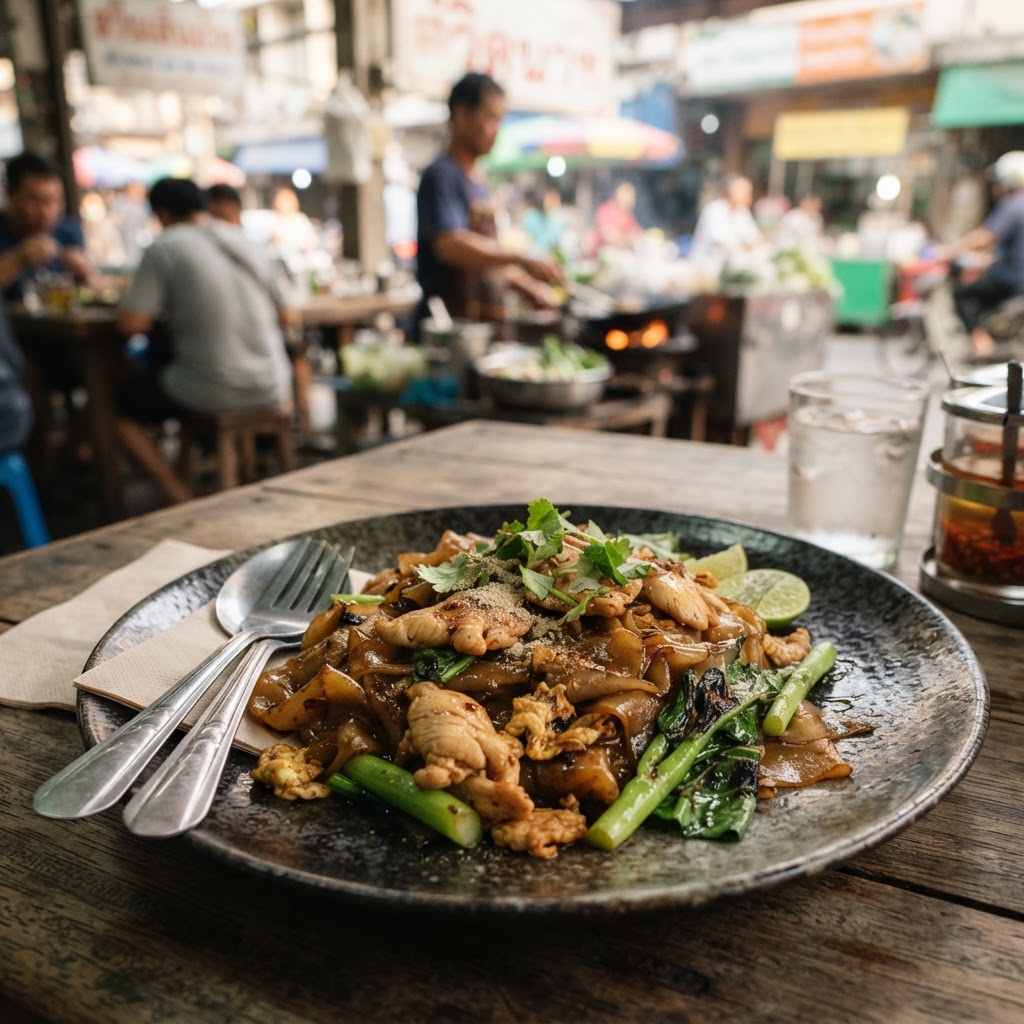
Pad see ew, which translates to "stir-fried soy sauce noodles," is one of the most popular street food dishes in Thailand, and its origins trace to Chinese immigrants who arrived in Bangkok from Guangdong province in southern China during the early 20th century. These immigrants brought with them the technique of stir-frying noodles in a wok over fierce heat, a method rooted in Chinese cuisine. The Thai adaptation of this technique used local ingredients, replacing Chinese wheat noodles with wide, flat rice noodles known as sen yai, and incorporating Chinese broccoli, or gai lan, and Thai dark soy sauce.
The result is a dish defined by its simplicity. Unlike pad thai, which balances sweet, sour, and nutty flavors, pad see ew is about the deep, smoky char that comes from the wok. The Thai call this char "wok hei," the "breath of the wok," and it is the defining quality of a great pad see ew. Achieving wok hei requires a powerful burner and a screaming hot wok, which is why the best versions are found at street stalls rather than home kitchens. The dish is salty, slightly sweet, and deeply savory, with the charred edges of the noodles providing a smoky bitterness that balances the dark soy sauce.
About the Ingredients: The noodles should be fresh, wide rice noodles, available at Asian markets. Dried wide rice noodles can be substituted but require soaking before use, and the texture will not be quite the same. Chinese broccoli, or gai lan, is the traditional vegetable. It has thick stems and dark green leaves with a slightly bitter, earthy flavor. If unavailable, regular broccoli can be substituted, though the flavor will be different. The sauce is a simple mixture of dark soy sauce, light soy sauce, oyster sauce, and a pinch of sugar. Thai dark soy sauce, called see ew dam, is thicker and sweeter than regular soy sauce and gives the dish its characteristic dark color. The protein is typically chicken, pork, or beef, sliced thin.
Ingredients (serves 6):
The Sauce: - 3 tablespoons Thai dark soy sauce (see ew dam) - 2 tablespoons light soy sauce - 2 tablespoons oyster sauce - 1 tablespoon sugar - 1 tablespoon water
The Stir-Fry: - 1 lb fresh wide rice noodles (sen yai) - 2 tablespoons vegetable oil - 3 garlic cloves, minced - 1 lb boneless, skinless chicken thighs, sliced thin - 1 bunch Chinese broccoli (gai lan), stems and leaves separated, cut into 2-inch pieces - 3 large eggs, beaten
To Serve: - White ground pepper - Thai chili flakes (optional) - Lime wedges - Fish sauce with sliced chili (prik nam pla)
Instructions: In a small bowl, whisk together the dark soy sauce, light soy sauce, oyster sauce, sugar, and water. Set aside.
If the fresh rice noodles are stuck together, microwave them for 30 seconds to soften, then gently separate them with your hands. Cut them into 1-inch wide strips if they are in a large sheet.
Heat a large wok or cast-iron skillet over the highest heat possible until it is smoking. Add 1 tablespoon of oil. Add the garlic and stir-fry for 10 seconds until fragrant. Add the sliced chicken and stir-fry for 2–3 minutes until browned and just cooked through. Push the chicken to one side of the wok.
Add the remaining tablespoon of oil to the empty side. Pour in the beaten eggs and let them set for 5 seconds, then scramble them briefly with a spatula. Once set, combine with the chicken.
Add the Chinese broccoli stems first (they take longer to cook) and stir-fry for 30 seconds. Add the leaves and stir-fry for 15 seconds more until wilted.
Add the rice noodles and pour the sauce over them. Using two spatulas, toss the noodles gently but rapidly to coat them with the sauce. Stir-fry for 2–3 minutes, spreading the noodles across the hot surface of the wok and letting them sit for a few seconds between tosses. This allows the noodles to char slightly, developing the smoky wok hei flavor.
Serve immediately, garnished with white pepper and chili flakes if desired.
The Mimosa Pairing Logic: The smoky, salty, savory character of pad see ew calls for a mimosa with bright fruit and a refreshing quality to balance the richness of the soy sauce. The Lemongrass Ginger Mimosa would be a natural match, its citrus and herbal notes echoing the Thai flavor profile. The Classic Champagne Mimosa provides a clean, simple contrast that refreshes the palate between bites of the smoky noodles.
Reference Links: - Pad see ew – Wikipedia - Pad See Ew (Thai Stir Fried Noodles) – RecipeTin Eats
Make-Ahead: The sauce can be made up to 5 days ahead and refrigerated. The chicken can be sliced and the broccoli prepped up to 1 day ahead. The dish itself should be cooked and served immediately. Pad see ew does not hold well, as the noodles become soft and lose their char when reheated. If you must prep ahead, have all the ingredients prepped and arranged near the stove so the cooking takes no more than 5 minutes once you start.
Pro Tips: The heat is everything. The wok must be smoking hot before any ingredient goes in. Home stoves rarely match the power of street-stall burners, so use the largest burner on its highest setting and work in batches if necessary. Do not crowd the wok, as this drops the temperature and causes the noodles to steam rather than char. Let the noodles sit undisturbed for a few seconds between tosses, so they develop those dark, smoky spots. The Chinese broccoli stems should go in before the leaves, as they need more time to cook. Be gentle with the rice noodles, as they tear easily when cold. If they are stiff, microwave them briefly to soften before stir-frying.
Rate this recipe
Be the first to rate this recipe
to submit your rating.
Recent Posts

Couscous Royale: North Africa's Grand Platter of Lamb, Chicken, and Merguez
October 14, 2026

Seattle Cream Cheese Dog Bites: Hadley Long's 1989 Pioneer Square Invention
October 14, 2026

Khao Soi: Chiang Mai's Northern Thai Coconut Curry Noodles
October 13, 2026

Korean Bibimbap: Jeonju's Joseon Dynasty Mixed Rice
October 11, 2026

Spaghetti alla Carbonara: Rome's World War II Pasta of Eggs, Guanciale, and Pecorino
October 9, 2026