Tamagoyaki — Japanese Sweet Rolled Omelette
May 31, 2026
Tamagoyaki skill is considered a mark of a good cook in Japan, which is worth knowing before you attempt it. The technique — building up thin layers of dashi-seasoned egg, rolling each into the previous — requires a few practice runs to get right. But it comes quickly, and once you have it, it's one of the most quietly impressive things you can put on a brunch table.
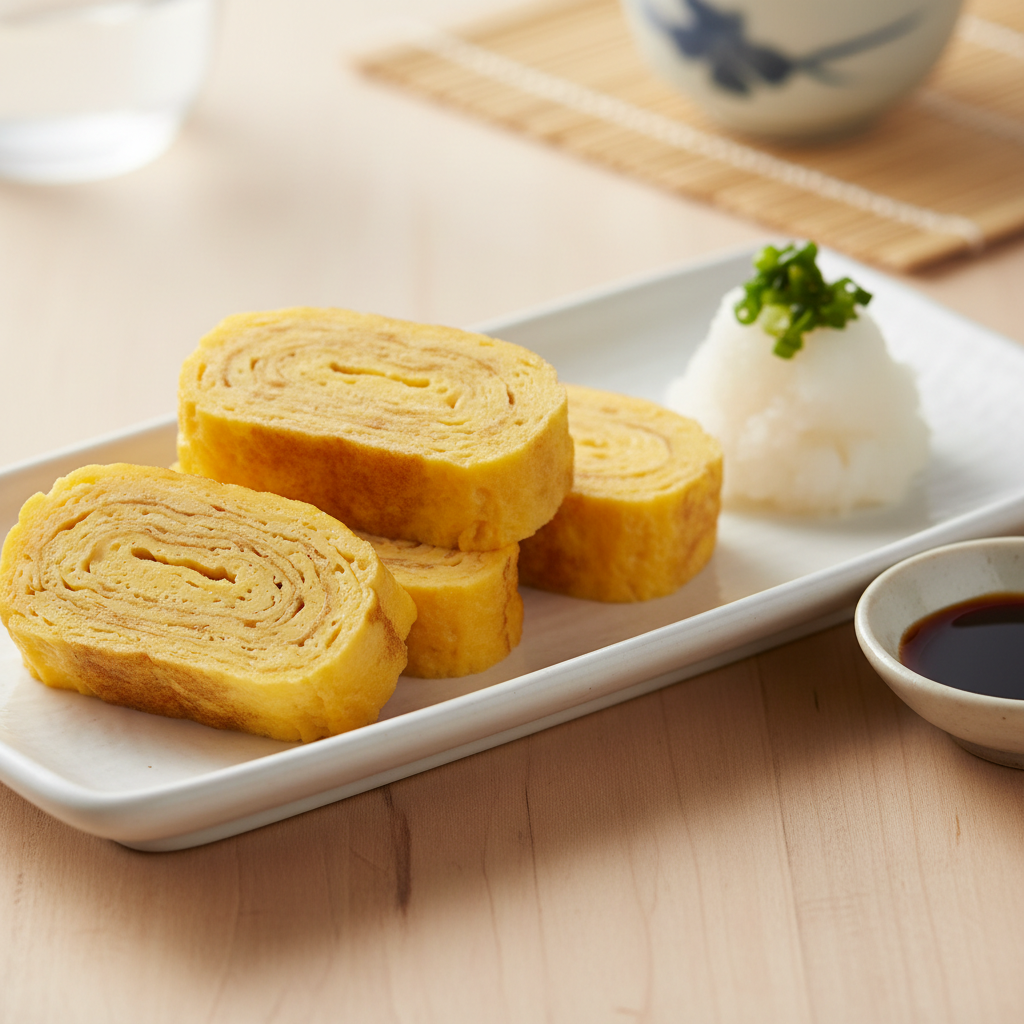
The dashi is what makes it taste unlike any Western omelette: a depth and umami from the stock that plain seasoning can't replicate. The mirin adds a delicate sweetness. Serve with grated daikon and soy sauce — the classic accompaniment — and the cross-section reveal when you slice it will justify every practice run.
Ingredients (serves 4, makes 2 tamagoyaki rolls): - 8 large eggs
Seasoning per roll (×2): - 2 tablespoons dashi stock (instant dashi powder dissolved in water is acceptable) - 1½ teaspoons mirin - 1 teaspoon soy sauce - 1 teaspoon sugar - Pinch of fine salt
For Cooking: - Neutral oil (vegetable or sunflower) for brushing - Specialized tamagoyaki pan (rectangular, 6×4 inches) — or use a small round non-stick pan
To Serve: - 3 ½ oz daikon radish, finely grated, excess liquid squeezed - Soy sauce for dipping - Pickled ginger - Microgreens or shiso leaves
Instructions: Beat 4 eggs lightly — do not over-whisk; you want to combine the white and yolk without incorporating too much air. Strain through a fine sieve (this removes any stringy chalazae and produces a silkier final texture). Stir in dashi, mirin, soy sauce, sugar, and salt. Taste — it should be subtly sweet and savory.
Heat the tamagoyaki pan over medium heat. Brush with a very thin layer of neutral oil using a folded piece of kitchen paper — too much oil produces an oily result.
Pour in a thin layer of egg mixture — enough to thinly coat the pan. Tilt to spread evenly. When the surface is just barely set (still slightly shiny and wet on top), use chopsticks or a spatula to roll the egg from the far edge toward you, making a thin first roll. Push the roll to the far end of the pan.
Re-oil the empty pan. Pour in another thin layer of egg mixture, tilting to coat the pan and running some egg under the existing roll. When just set, roll again — incorporating the first roll inside the new one. Continue this process 4–5 more times, building up layers, until all the egg mixture is used.
Transfer the finished roll to a bamboo sushi mat or a piece of parchment. Roll tightly to shape and compress. Hold in shape for 3–5 minutes. Unwrap and slice into ¾-inch rounds.
Serving: Arrange slices on a plate, cut-side up to reveal the layers. Accompany with a small mound of squeezed grated daikon and a small dish of soy sauce.
The Cultural Context: Tamagoyaki skill is considered a mark of a good cook in Japan — the ability to create thin, even layers with a clean roll requires practice. The sweetness level varies by region: Kansai-style (Osaka) is sweeter; Kanto-style (Tokyo) is more savory.
Pro Tips: The pan temperature must be consistent throughout — too hot and the egg browns and loses the characteristic pale gold color. Practice with the first roll; the technique comes quickly. Fresh, room-temperature eggs produce a more cohesive, silkier result.
Rate this recipe
Be the first to rate this recipe
to submit your rating.
Recent Posts

Couscous Royale: North Africa's Grand Platter of Lamb, Chicken, and Merguez
October 14, 2026

Seattle Cream Cheese Dog Bites: Hadley Long's 1989 Pioneer Square Invention
October 14, 2026

Khao Soi: Chiang Mai's Northern Thai Coconut Curry Noodles
October 13, 2026

Korean Bibimbap: Jeonju's Joseon Dynasty Mixed Rice
October 11, 2026

Spaghetti alla Carbonara: Rome's World War II Pasta of Eggs, Guanciale, and Pecorino
October 9, 2026