Syrniki: Russia's Beloved Cottage Cheese Pancakes from the Eastern European Table
February 9, 2026
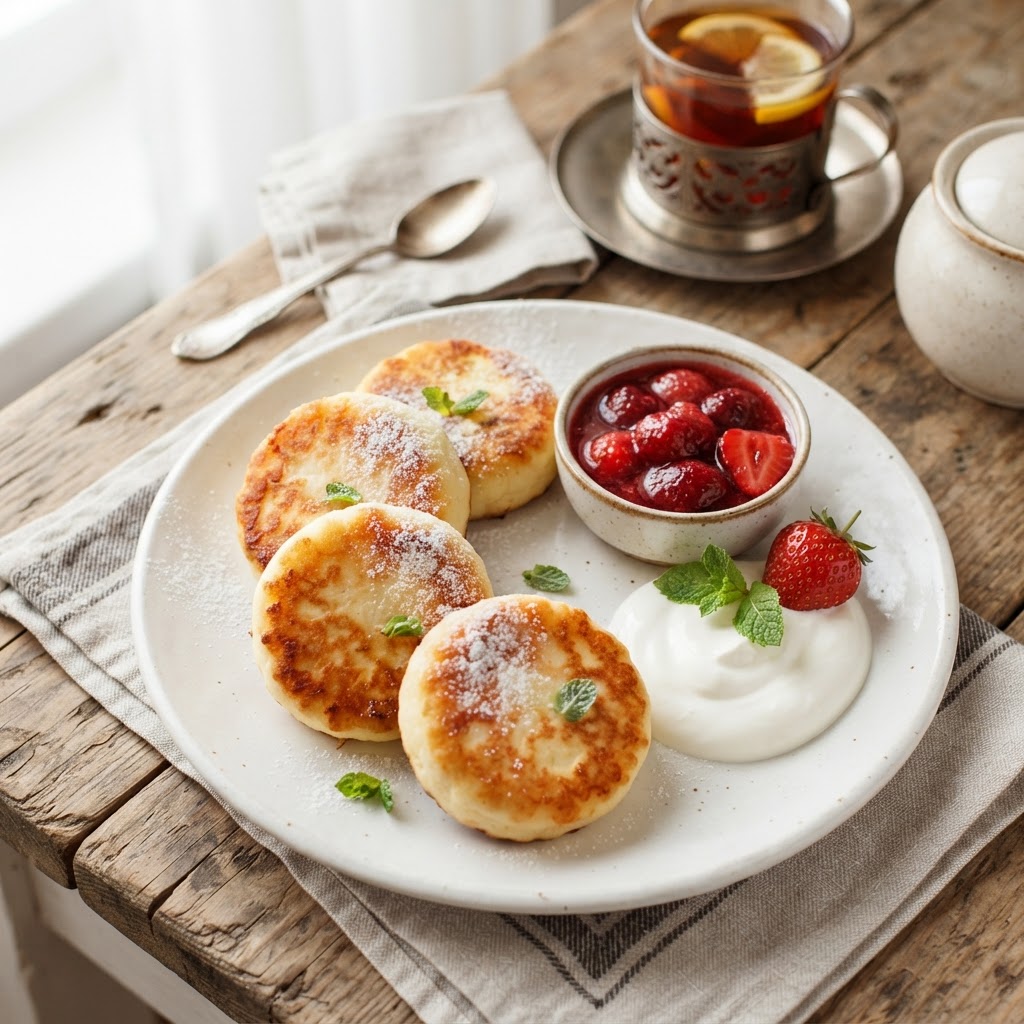
Syrniki — golden, pan-fried cottage cheese pancakes — are one of the most popular breakfast dishes in Eastern Europe. Thick, fluffy, and slightly sweet, with a creamy interior and a golden, crisp exterior, syrniki are traditionally served with sour cream, jam, varenye (fruit preserves), or honey. They're the breakfast that Russian, Ukrainian, Belarusian, and Lithuanian families have been making for centuries, and they remain a fixture of the Eastern European breakfast table to this day.
The name "syrniki" comes from the Slavic word "syr," meaning a soft curd cheese. In Ukrainian, the word "syr" retains this original meaning of soft curd cheese, while in Russian, the word "tvorog" is used for the same cheese — hence the alternative Russian name "tvorozhniki." The key ingredient in syrniki is tvorog (also known as quark, farmer's cheese, or pot cheese) — a fresh, soft curd cheese that is the cornerstone of Eastern European dairy cooking. Tvorog is denser and drier than ricotta but creamier than feta, and it gives syrniki their characteristic texture: creamy and slightly tangy on the inside, with a structure that holds together when fried.
Syrniki are part of a broader family of Eastern European cheese pancakes that includes the German Quarkkäulchen, the Lithuanian varškėčiai, the Latvian biezpiena plācenīši, and the Jewish cheese latke. All of these dishes share the same basic concept: fresh curd cheese mixed with egg, flour, and sugar, shaped into patties, and pan-fried until golden. The dish has been a staple of the Eastern European breakfast and tea table for generations, particularly in Russia, Ukraine, and Belarus, where dairy farming and cheese-making have deep historical roots.
The key to great syrniki is the quality and texture of the tvorog. The cheese should be dry enough to hold its shape when mixed — if it's too wet, the syrniki will be soggy and fall apart. If you can only find wet cottage cheese, you should drain it in a cheesecloth for a few hours, or add a little extra flour to compensate. The mixture should be thick enough to shape into patties that hold their shape when placed in the hot oil. The flour should be minimal — just enough to bind the cheese — so that the syrniki remain light and creamy rather than dense and bready.
Syrniki are traditionally served for breakfast or as a sweet snack with afternoon tea. They are typically served with smetana (sour cream), which provides a cool, tangy counterpoint to the sweet, warm pancakes. Jam, varenye, honey, or fresh berries are also common accompaniments. Some versions include raisins or chopped dried fruit in the batter, and savory versions with herbs are also made in some regions.
Our Mimosavated version makes classic sweet syrniki with tvorog (using farmer's cheese or cottage cheese as substitutes), served with sour cream and strawberry sauce.
Ingredients (makes about 12 syrniki):
The Syrniki: - 1 lb 2 oz tvorog (farmer's cheese, pot cheese, or dry cottage cheese — see note) - 2 large eggs - 2 ⅛ oz granulated sugar (adjust to taste) - 1 teaspoon vanilla extract - A pinch of salt - 2 ⅞ oz all-purpose flour (plus extra for coating) - 1 oz raisins (optional, plumped in warm water and drained) - 2 tablespoons vegetable oil (for frying) - 1 tablespoon unsalted butter (for frying)
For Serving: - 7 oz sour cream (full-fat) - Strawberry sauce or fruit jam (see below) - Fresh berries (strawberries, raspberries, or blueberries) - Honey or powdered sugar (optional)
The Strawberry Sauce (optional but delicious): - 8 ⅞ oz fresh or frozen strawberries - 2 tablespoons granulated sugar - 1 teaspoon lemon juice
Preparing the Tvorog: If using farmer's cheese or pot cheese, crumble it well. If using wet cottage cheese, drain it in a cheesecloth-lined sieve for at least 2 hours, or press out excess moisture with paper towels. The cheese should be as dry as possible — wet cheese makes soggy syrniki. If the cheese is very crumbly and dry, you can press it through a sieve for a smoother texture, or leave it crumbly for a more rustic texture.
Making the Syrniki Batter: In a large bowl, combine the tvorog, eggs, sugar, vanilla, and salt. Mix well — you can use a fork or your hands. The mixture should be well combined but can still have some small curds. Add the flour and mix just until incorporated — don't overmix, or the syrniki will be dense. If using raisins, fold them in.
*(Note on texture: If the mixture is too wet and sticky, add a little more flour, one tablespoon at a time, until you can shape it into patties. The exact amount of flour depends on the moisture of your cheese. If the mixture is too dry and crumbly, add a teaspoon of milk or another egg.)*
Shaping the Syrniki: Place some flour on a plate. Take about 2 tablespoons of the mixture and shape it into a patty about ⅔ in (½ inch) thick and 6–2.5 inches in diameter. Lightly coat the patty in flour on all sides, shaking off the excess. Repeat with the remaining mixture — you should get about 12 syrniki.
Frying the Syrniki: Heat the oil and butter in a large non-stick skillet over medium heat. The butter adds flavor and the oil prevents the butter from burning. When the oil is hot but not smoking, carefully place the syrniki in the skillet — don't crowd the pan, fry in batches of 4–6 at a time. Cook for 3–4 minutes per side, until deep golden brown and crisp. The syrniki should be browned on the outside and cooked through but still creamy on the inside. Transfer to a plate lined with paper towels to drain briefly.
Making the Strawberry Sauce (if using): In a small saucepan, combine the strawberries, sugar, and lemon juice. Cook over medium heat for 8–10 minutes, stirring occasionally, until the strawberries break down and the sauce thickens slightly. For a smooth sauce, blend with an immersion blender; for a chunky sauce, leave as is. Let cool slightly.
Serving: Serve the syrniki warm, 3–4 per person, with a generous dollop of sour cream, a spoonful of strawberry sauce or jam, and fresh berries. Drizzle with honey or dust with powdered sugar if desired. The combination of the warm, creamy, slightly tangy pancakes with the cool sour cream and the sweet fruit is one of the great breakfast experiences.
The Mimosa Pairing Logic: Syrniki are sweet, creamy, and slightly tangy. The ideal mimosa pairing is a classic Prosecco mimosa — orange juice and Prosecco. The bright, acidic citrus provides a refreshing contrast to the rich, creamy cheese pancakes, while the Prosecco's effervescence cleanses the palate. A strawberry mimosa is also excellent — the strawberry echoes the traditional fruit accompaniment. Avoid heavy or bitter mimosas — syrniki are sweet and delicate, and you need something bright and fruity to balance them.
Reference Links: - Syrniki on Wikipedia (Eastern Slavic quark pancakes, tvorog): Wikipedia - Russian Syrniki (Cottage Cheese Pancakes) with Strawberry Sauce: Happy Kitchen - Syrniki (Ukrainian/Russian Cheese Pancakes): Caroline's Cooking - Syrniki Cottage Cheese Pancakes from Eastern Europe: Culturally Ours
Make-Ahead: The syrniki batter can be made up to 1 day ahead and refrigerated — shape and fry just before serving. The shaped, uncooked syrniki can be placed on a floured plate, covered, and refrigerated for up to 4 hours before frying. The strawberry sauce can be made up to 3 days ahead and refrigerated — serve warm or at room temperature. Fried syrniki are best served immediately, while warm and crisp. Leftover syrniki can be refrigerated for up to 2 days and reheated in a 347°F/350°F oven for 5 minutes — they will lose some of their crispness but will still be delicious. Fried syrniki can also be frozen for up to 1 month — reheat from frozen in a 347°F/350°F oven for 10 minutes. Do not microwave, as they will become soggy.
Pro Tips: Use the driest tvorog you can find — wet cottage cheese makes soggy syrniki that fall apart in the pan. If you can only find wet cottage cheese, drain it in cheesecloth for at least 2 hours, or press out the moisture with paper towels. Don't overmix the batter — overmixing makes the syrniki dense and heavy; mix just until the ingredients are combined. Use minimal flour — just enough to bind the cheese; too much flour makes the syrniki bready rather than creamy. The exact amount of flour depends on the moisture of your cheese, so adjust as needed. Coat the syrniki lightly in flour before frying — this helps them brown and prevents them from sticking to the pan. Fry over medium heat — too high and the outside burns before the inside is cooked; too low and they don't get crispy. Don't crowd the pan — fry in batches so the syrniki have room to brown evenly. Use a non-stick skillet — the cheese mixture is delicate and can stick to regular pans. Serve warm — syrniki are at their best freshly fried, when the outside is crisp and the inside is warm and creamy. The sour cream is essential — the cool, tangy sour cream is the traditional and perfect complement to the warm, sweet pancakes; don't skip it.
Rate this recipe
Be the first to rate this recipe
to submit your rating.
Recent Posts

Couscous Royale: North Africa's Grand Platter of Lamb, Chicken, and Merguez
October 14, 2026

Seattle Cream Cheese Dog Bites: Hadley Long's 1989 Pioneer Square Invention
October 14, 2026

Khao Soi: Chiang Mai's Northern Thai Coconut Curry Noodles
October 13, 2026

Korean Bibimbap: Jeonju's Joseon Dynasty Mixed Rice
October 11, 2026

Spaghetti alla Carbonara: Rome's World War II Pasta of Eggs, Guanciale, and Pecorino
October 9, 2026