Swedish Semlor: The Lenten Cardamom Bun That (Allegedly) Killed a King
September 5, 2026
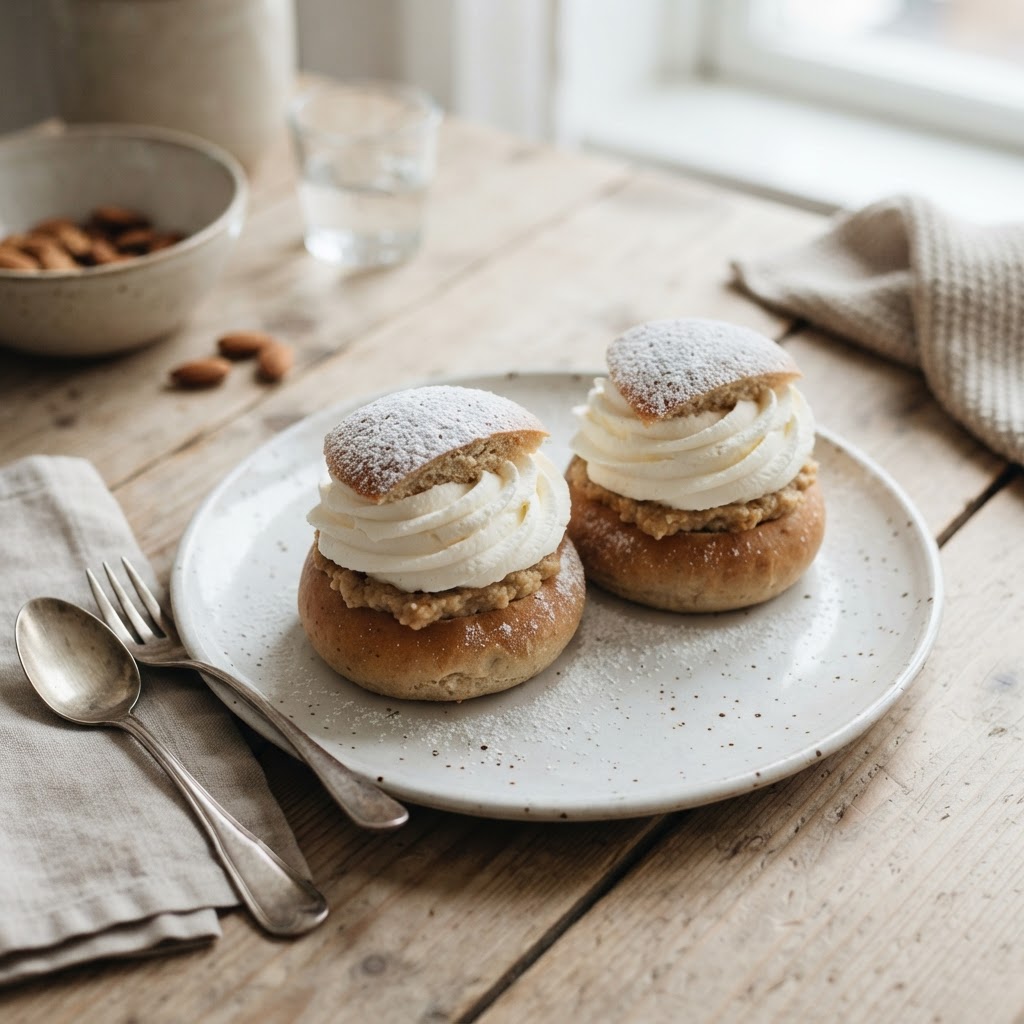
The semla is the most popular pastry of the Swedish winter — a cardamom-scented wheat bun, sliced open, hollowed, filled with almond paste and a towering cloud of whipped cream, capped with its own lid cut from the bun's crown, and dusted with powdered sugar, eaten by the millions in the weeks between Christmas and Easter and inseparable in the Swedish imagination from *fettisdag* — Fat Tuesday, Shrove Tuesday, the last feast before Lent. According to Wikipedia, the semla is a traditional sweet roll made in various forms in Sweden, Finland, Estonia, Denmark, and the Nordic countries, associated with Lent and especially Shrove Tuesday; the oldest version was a plain bread bun eaten in a bowl of warm milk, called in Swedish *hetvägg*, and it was only after the Protestant Reformation that Swedes abandoned the strict Lenten fast and began adding cream and almond paste, eating semlor every Tuesday from Shrove Tuesday to Easter. Sweden.se, the official Swedish cultural site, calls the semla "a small, wheat flour bun, flavoured with cardamom and filled with almond paste and whipped cream," rooted in *fettisdag* and "eaten at a last celebratory feast before the Christian fasting period of Lent" — and notes that each Swede consumes on average four to five bakery-produced semlor each year.
The semla also has the best death-by-pastry story in European culinary history. Wikipedia records the popular legend that King Adolf Frederick of Sweden died on February 12, 1771, after consuming a *hetvägg* (semla in warm milk) — the king's favorite dessert — following a meal of sauerkraut, turnips, caviar, smoked herring, and champagne. In recent versions of the legend, the number of semlor has grown to fourteen, though the truth is likely indigestion rather than gluttony. Either way, it is the only pastry in the world with a monarch on its conscience.
About the Ingredients
Cardamom bun — an enriched wheat dough of milk, butter, sugar, egg, and yeast, flavored generously with ground green cardamom; the cardamom is the defining flavor of Scandinavian baking.
Almond paste — a paste of ground almonds and sugar, loosened with a little milk and sometimes a spoonful of the crumb scooped from inside the bun, forming a thick, sweet filling.
Whipped cream — heavily whipped, unsweetened or barely sweetened, piled high; the ratio of cream to bun is essential and should be generous.
Powdered sugar — a thick dusting over the lid and the cream.
Ingredients (makes 12 semlor): - For the dough: 1 cup warm milk, 2 1/4 tsp active dry yeast, 1/2 cup sugar, 1 tsp salt, 1 tsp ground cardamom, 1 large egg, 1/2 cup (1 stick) melted unsalted butter, 3 1/2 to 4 cups all-purpose flour - 1 egg, beaten with 1 tbsp water (egg wash) - For the filling: 1 cup almond paste, 1/4 cup milk, 1 cup heavy cream, whipped to soft peaks, powdered sugar for dusting
Instructions: In a large bowl, dissolve the yeast in the warm milk with a pinch of the sugar; let stand 5 minutes until foamy. Add the remaining sugar, salt, cardamom, egg, and melted butter. Gradually stir in enough flour to form a soft, slightly sticky dough. Knead 5–7 minutes until smooth and elastic. Place in an oiled bowl, cover, and let rise in a warm place about 1 hour, until doubled.
Divide the dough into 12 equal pieces. Shape each into a smooth round bun and place on parchment-lined baking sheets, spacing well. Cover and let rise 30–45 minutes, until puffed and nearly doubled.
Brush with egg wash. Bake at 425°F for 10–12 minutes until deep golden. Cool completely on a rack.
To fill: slice a thin lid from the top of each bun. Scoop out a little of the soft crumb from inside and set aside. Crumble the almond paste and mix it with the milk and the reserved crumb to make a thick paste. Spoon the almond filling into each hollow. Pipe or spoon a generous mound of whipped cream over the filling. Replace the lid and dust generously with powdered sugar. Serve at once, or eat in a bowl of warm milk in the traditional *hetvägg* style.
The Mimosa Pairing Logic: The cardamom bun and the almond-and-cream filling want a bright, aromatic drink that echoes the cardamom and cuts the richness. A lavender elderflower mimosa is a beautiful choice — the elderflower nods to the almond and the lavender mirrors the cardamom. A classic Champagne mimosa is equally lovely, the citrus cutting the cream and the bubbles lifting the enriched dough. This pairing is, in its way, the brunch equivalent of a semla and a cup of strong Swedish coffee — a sparkling toast to *fettisdag* and the bun that (allegedly) killed a king.
Reference Links: - Semla (Swedish Lenten sweet roll, cardamom, almond paste, King Adolf Frederick): Wikipedia - The semla — a Swedish delicacy (official Swedish cultural site): Sweden.se
Make-Ahead: The dough can be made the night before and refrigerated after the first rise; bring to room temperature for 30 minutes before shaping. The buns can be baked a day ahead and held in an airtight container; fill them only just before serving, because the cream softens the bun overnight. The almond filling can be made ahead. Assemble close to serving for the best texture.
Pro Tips: Use freshly ground green cardamom if you can; the pre-ground spice loses its aroma quickly and the cardamom is the soul of the bun. Do not underbake; a pale semla is doughy and collapses under the filling. Cool the buns fully before filling; warm buns melt the cream. Be generous with the whipped cream — a semla with a stingy layer of cream is a diminished thing, and the proper ratio is nearly equal volumes of bun and cream. Dust the sugar over the cream and the lid; the first bite should leave a powdered-sugar mark on the nose, which is part of the tradition.
Rate this recipe
Be the first to rate this recipe
to submit your rating.
Recent Posts

Couscous Royale: North Africa's Grand Platter of Lamb, Chicken, and Merguez
October 14, 2026

Seattle Cream Cheese Dog Bites: Hadley Long's 1989 Pioneer Square Invention
October 14, 2026

Khao Soi: Chiang Mai's Northern Thai Coconut Curry Noodles
October 13, 2026

Korean Bibimbap: Jeonju's Joseon Dynasty Mixed Rice
October 11, 2026

Spaghetti alla Carbonara: Rome's World War II Pasta of Eggs, Guanciale, and Pecorino
October 9, 2026