Sticky Buns (Schnecken): The Pennsylvania Dutch Pastry with German Roots
February 25, 2026
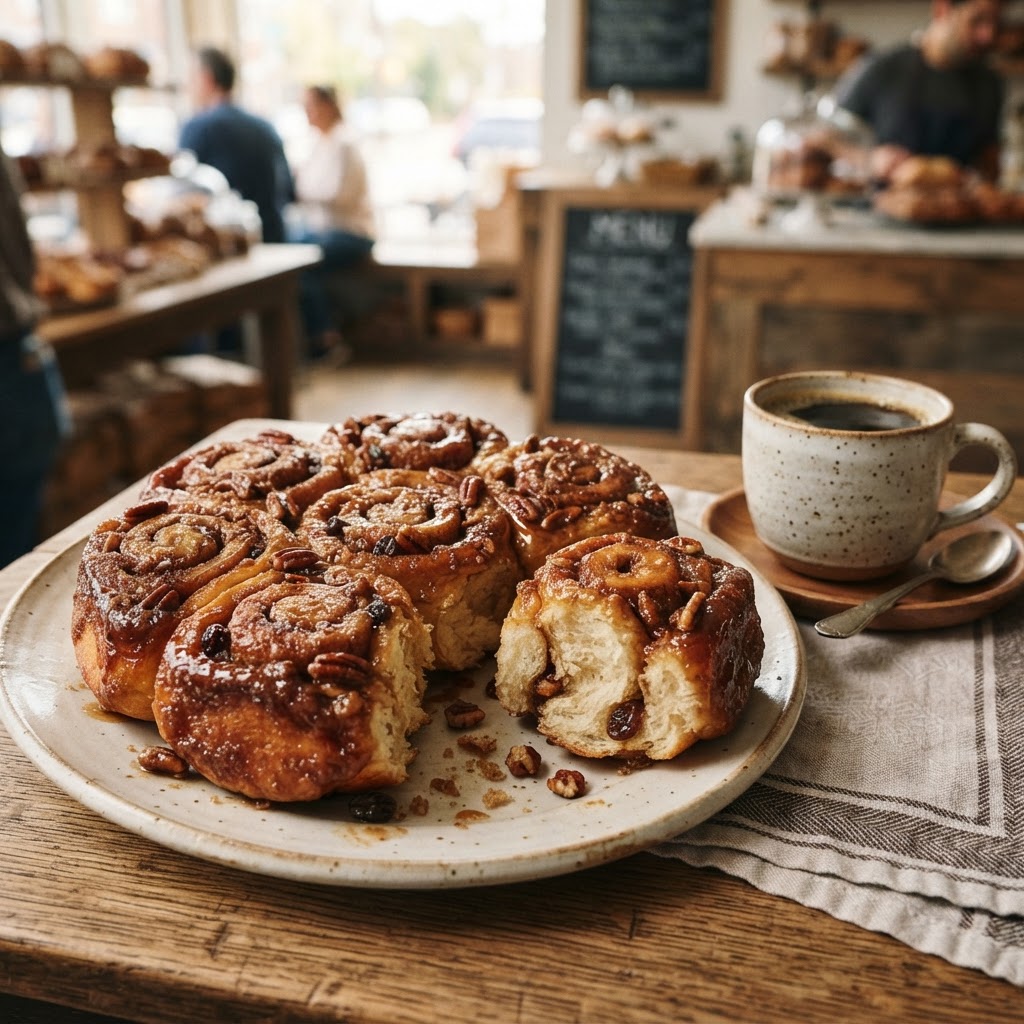
Sticky buns — those gooey, caramel-soaked, pecan-studded spiral buns that pull apart to reveal layers of cinnamon and sugar — are one of the most popular breakfast pastries in America. And while they may seem classically American, their roots lie in Germany, where they were known as Schnecken (meaning "snails," for their spiral shape). The story of how German settlers brought their Schnecken to Pennsylvania, where they evolved into the American sticky bun, is a tale of immigration, adaptation, and the enduring power of butter, sugar, and cinnamon.
Sticky buns have their origins in the German baking tradition of Schnecken — sweet, yeast-raised buns rolled into a spiral (resembling a snail's shell) and filled with cinnamon, sugar, raisins, and nuts. The Pennsylvania Dutch — a group of German-speaking immigrants (including Germans, Swiss, and Alsatians) who settled in Pennsylvania in the 17th and 18th centuries — brought their Schnecken recipes with them to America. The name "Schnecken" eventually became "sticky buns" as the pastry was adapted to American ingredients and tastes. The Pennsylvania Dutch version typically features a sticky glaze of brown sugar, butter, and pecans (or walnuts) on the bottom of the pan, which becomes a caramel-like topping when the buns are inverted after baking.
The sticky bun as we know it today — with its signature sticky, caramelized pecan topping — became a staple of Pennsylvania Dutch baking in the 18th and 19th centuries. Over time, the recipe spread beyond Pennsylvania Dutch communities and became a fixture of American bakeries, diners, and home kitchens. National Sticky Bun Day is celebrated on February 21st in the United States, a testament to the pastry's enduring popularity.
The key difference between sticky buns and their close cousin, cinnamon rolls, is the topping. Cinnamon rolls are topped with icing or cream cheese frosting after baking, while sticky buns are baked upside-down in a pan of caramel and nuts, then inverted so the sticky, caramelized topping becomes the top. The result is a pastry that's simultaneously crispy and soft, gooey and chewy, with the nuts providing a contrasting crunch.
Our Mimosavated version stays true to the Pennsylvania Dutch tradition: a yeasted dough, a cinnamon-sugar-raisin filling, and a sticky brown sugar-pecan caramel topping, inverted after baking.
Ingredients (serves 12):
The Dough: - 1 lb 2 oz all-purpose flour - ¼ oz active dry yeast (1 packet) - 2 ⅞ oz granulated sugar - 1 teaspoon salt - 1 cup warm milk - 2 ⅛ oz unsalted butter, melted - 2 large eggs, room temperature
The Sticky Topping: - 5 ¼ oz brown sugar - 3 ½ oz unsalted butter - ¼ cup honey or corn syrup - 5 ¼ oz pecans, chopped - ½ teaspoon cinnamon - A pinch of salt
The Filling: - 3 ½ oz brown sugar - 1 ¾ oz granulated sugar - 2 teaspoons ground cinnamon - 2 ⅛ oz unsalted butter, softened - 2 ⅞ oz raisins (optional but traditional) - 1 ¾ oz pecans, chopped (optional)
Making the Dough: In a small bowl, combine the warm milk, yeast, and 1 teaspoon of the sugar. Let sit for 5 minutes, until foamy. In a large bowl, whisk together the flour, remaining sugar, and salt. Add the yeast mixture, melted butter, and eggs. Mix until a dough forms, then knead for 8–10 minutes until smooth and elastic.
Place the dough in a greased bowl, cover with a damp cloth, and let rise in a warm spot for 1–1.5 hours, until doubled in size.
Preparing the Sticky Topping: In a saucepan, combine the brown sugar, butter, honey, cinnamon, and salt. Bring to a simmer over medium heat, stirring until smooth. Pour into the bottom of a greased 23x13 in (9x13 inch) baking pan. Sprinkle the chopped pecans evenly over the caramel. Set aside.
Making the Filling: Punch down the dough and turn it out onto a lightly floured surface. Roll into a rectangle about 40x11 ¾ in (16x12 inches). Spread the softened butter evenly over the dough. Combine the brown sugar, granulated sugar, and cinnamon, and sprinkle evenly over the butter. Scatter the raisins and chopped pecans over the sugar mixture.
Starting from the long side, roll the dough into a tight log. Cut into 12 equal pieces (about 1.5 inches each). Place the pieces, cut-side down, on top of the caramel-pecan mixture in the prepared pan. Cover and let rise for 30–45 minutes, until puffed and the buns are touching.
Baking: Preheat the oven to 347°F (350°F). Bake for 25–30 minutes, until deep golden brown. Let cool in the pan for exactly 5 minutes — no longer, or the caramel will set and the buns will stick.
Serving: Place a large serving tray or baking sheet over the pan. Quickly and carefully invert the pan and tray together. Tap the bottom of the pan and lift it away — the sticky buns should release, with the caramel and pecans now on top. Pull apart and serve warm.
The Mimosa Pairing Logic: Sticky buns are sweet, gooey, and rich with caramel and pecans. The ideal mimosa pairing is a classic Prosecco mimosa — orange juice and Prosecco. The bright, acidic citrus cuts through the sweetness and the richness of the caramel, while the Prosecco's bubbles cleanse the palate. A peach mimosa is also excellent — the peach complements the caramel and the cinnamon. Avoid heavy or dry mimosas — the buns are sweet and rich, and you need something bright and fruity to balance them.
Reference Links: - Sticky bun on Wikipedia (German origins, Schnecken, Pennsylvania Dutch): Wikipedia - The history of Sticky Buns (Schnecken, German cuisine): La Patisserie du Monde - Bake Great Buns: National Sticky Bun Day (February 21): Iowa Food and Family - Sticky buns have long history (1700s, Pennsylvania Dutch): Times-Journal - Celebrate National Sticky Bun Day in South Philly (German origins): Passyunk Post
Make-Ahead: The dough can be made the night before and refrigerated after the first rise — let it come to room temperature before rolling. The assembled, unbaked sticky buns can be refrigerated overnight and baked fresh in the morning — add 5–10 minutes to the baking time if baking from cold. The caramel topping can be prepared in the pan a day ahead. Sticky buns are best served warm, the day they're made. Reheat leftovers in a 302°F/300°F oven for 5 minutes. Do not freeze — the caramel and the dough both suffer.
Pro Tips: Use real yeasted dough, not canned biscuits — the flavor and texture are far superior, and the effort is worth it. The caramel topping goes in the bottom of the pan, not the top — the buns are baked upside-down and inverted after baking, which is what creates the signature sticky, caramelized topping. Invert after exactly 5 minutes of cooling — if you wait too long, the caramel sets and the buns stick to the pan. If you invert too quickly, they'll fall apart. Use pecans, not walnuts — pecans are traditional in the Pennsylvania Dutch version and have a sweeter, more buttery flavor. Don't skip the raisins — they're traditional in Schnecken and add a lovely chewiness and sweetness. Roll the dough tightly — a loose roll will result in gaps between the layers and a less attractive spiral. Let the dough rise properly — under-rised dough will be dense and heavy. Serve warm — the caramel is at its best when warm and gooey, and the buns lose their magic when cold.
Rate this recipe
Be the first to rate this recipe
to submit your rating.
Recent Posts

Couscous Royale: North Africa's Grand Platter of Lamb, Chicken, and Merguez
October 14, 2026

Seattle Cream Cheese Dog Bites: Hadley Long's 1989 Pioneer Square Invention
October 14, 2026

Khao Soi: Chiang Mai's Northern Thai Coconut Curry Noodles
October 13, 2026

Korean Bibimbap: Jeonju's Joseon Dynasty Mixed Rice
October 11, 2026

Spaghetti alla Carbonara: Rome's World War II Pasta of Eggs, Guanciale, and Pecorino
October 9, 2026