Spanish Paella Valenciana: The 19th Century Rice Dish of the Albufera Lagoon
July 30, 2026
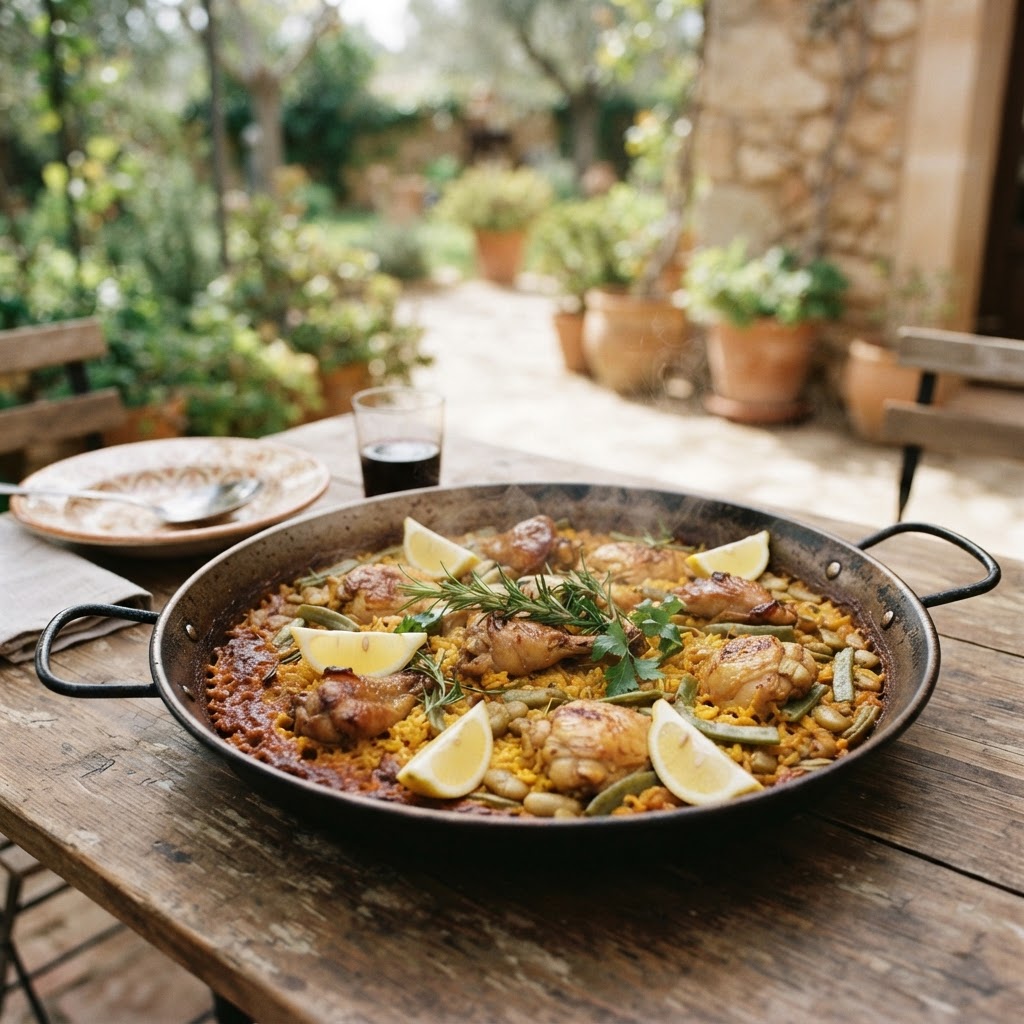
In the mid-nineteenth century, in the flat rice fields and marshlands around the Albufera de Valencia lagoon, south of the city of Valencia, farmers and laborers gathered at midday to cook a single pot of rice over an open fire. The pan they used was wide and shallow, called a _paella_ in the Valencian language, the same word for the pan and the dish. They filled it with whatever the land provided: rice, rabbit, chicken, snails, green beans, and sometimes water vole or eel from the lagoon. By 1840, a local Spanish newspaper first used the word _paella_ to refer to the recipe rather than the pan itself. The food historian Lourdes March wrote that the dish "symbolizes the union and heritage of two important cultures, the Roman, which gives us the utensil, and the Arab, which brought us the basic food of humanity for centuries: rice" (Wikipedia — Paella).
The true paella valenciana is a specific, unyielding recipe. Valencians insist on short-grain bomba or senia rice, saffron, olive oil, rabbit, chicken, flat green beans called _ferradura_, large white lima beans, snails, tomato, rosemary, and water. Nothing else. Fish and shellfish are, in the words of the most passionate Valencian cooks, "absolutely out of the question." The seafood paella that most of the world knows is a later invention, a restaurant adaptation from the coast. The original is a dish of the land, of the fields, and of the fire. The technique is everything: the rice is spread thin across the wide pan, the broth is absorbed rather than stirred, and the bottom layer, the _socarrat_, caramelizes into a crisp golden crust that is the prize of the dish. Paella is, above all, a communal meal, cooked in one pan for a table to share.
Ingredients (serves 6): - 2 cups bomba or short-grain Valencia rice - 1 whole rabbit, cut into pieces (or substitute chicken thighs) - 4 chicken thighs, bone-in - 2 cups flat green beans (ferradura), cut into 2-inch pieces - 1 cup large white lima beans, cooked - 1 large ripe tomato, grated - 1 teaspoon sweet paprika - A large pinch of saffron threads, steeped in ¼ cup warm water - 5 cups chicken stock, heated - 4 tablespoons olive oil - 1 sprig fresh rosemary - Salt, to taste - Lemon wedges, for serving
Instructions: Heat the olive oil in a wide paella pan or a large shallow skillet over medium-high heat. Season the rabbit and chicken pieces with salt and sear until deeply golden on all sides, about 10 minutes. Push the meat to the edges of the pan. Add the green beans and cook 3 minutes. Add the grated tomato and paprika and cook 2 minutes, stirring. Add the rice and stir to coat each grain in the oil, about 2 minutes. Pour in the saffron water and the hot stock. Stir once to distribute the rice evenly, then do not stir again. Add the cooked lima beans and the rosemary sprig. Simmer over medium heat for 10 minutes, then reduce to medium-low and cook another 8 to 10 minutes, until the rice has absorbed the liquid and the surface is studded with small holes. Listen for a crackling sound, which means the socarrat is forming on the bottom. Remove from the heat, cover with a clean towel, and rest 5 minutes. Serve directly from the pan with lemon wedges.
For a Crowd (serves 12): - Use a large paella pan (at least 18 inches) and double the recipe. Cook over a gas paella burner or an outdoor grill for even heat. The wider the pan, the better the socarrat.
Variations: - Paella de Marisco (Seafood Paella): Replace the meat with shrimp, mussels, clams, and calamari, and use fish stock instead of chicken stock. - Paella Mixta: Combine meat and seafood, the most popular restaurant version, though purists disapprove. - Arroz Negro: Add squid ink and cuttlefish for a dramatic black rice.
Pairing: Paella valenciana pairs with a Spanish red such as a Garnacha or a Rioja, or with a crisp Albariño white. For a brunch gathering, a sparkling mimosa or a glass of dry Cava echoes the Spanish table. Serve with a simple green salad and crusty bread. For another great rice dish, try our Hyderabadi dum biryani.
Reference Links: - Paella (Valencia, Albufera lagoon, 1840, bomba rice, socarrat, Lourdes March): Wikipedia
Pro Tips: The rice layer must be thin, no more than half an inch deep, so it cooks evenly and the socarrat can form. Once the stock goes in, do not stir the rice; stirring releases starch and turns paella into risotto, which it is not. The socarrat is the goal: listen for the crackle in the last few minutes and smell for toast, but pull the pan off the heat before the bottom burns. Use bomba rice if you can find it, because it absorbs three times its volume in liquid without turning mushy, unlike Arborio. Let the paella rest under a towel for 5 minutes after cooking so the rice finishes steaming and the flavors settle. Serve from the pan, eat the socarrat first, and do not be shy about scraping the bottom.
Rate this recipe
Be the first to rate this recipe
to submit your rating.
Perfect Mimosa Pairings
Mimosas that pair perfectly with this dish
Recent Posts

Couscous Royale: North Africa's Grand Platter of Lamb, Chicken, and Merguez
October 14, 2026

Seattle Cream Cheese Dog Bites: Hadley Long's 1989 Pioneer Square Invention
October 14, 2026

Khao Soi: Chiang Mai's Northern Thai Coconut Curry Noodles
October 13, 2026

Korean Bibimbap: Jeonju's Joseon Dynasty Mixed Rice
October 11, 2026

Spaghetti alla Carbonara: Rome's World War II Pasta of Eggs, Guanciale, and Pecorino
October 9, 2026