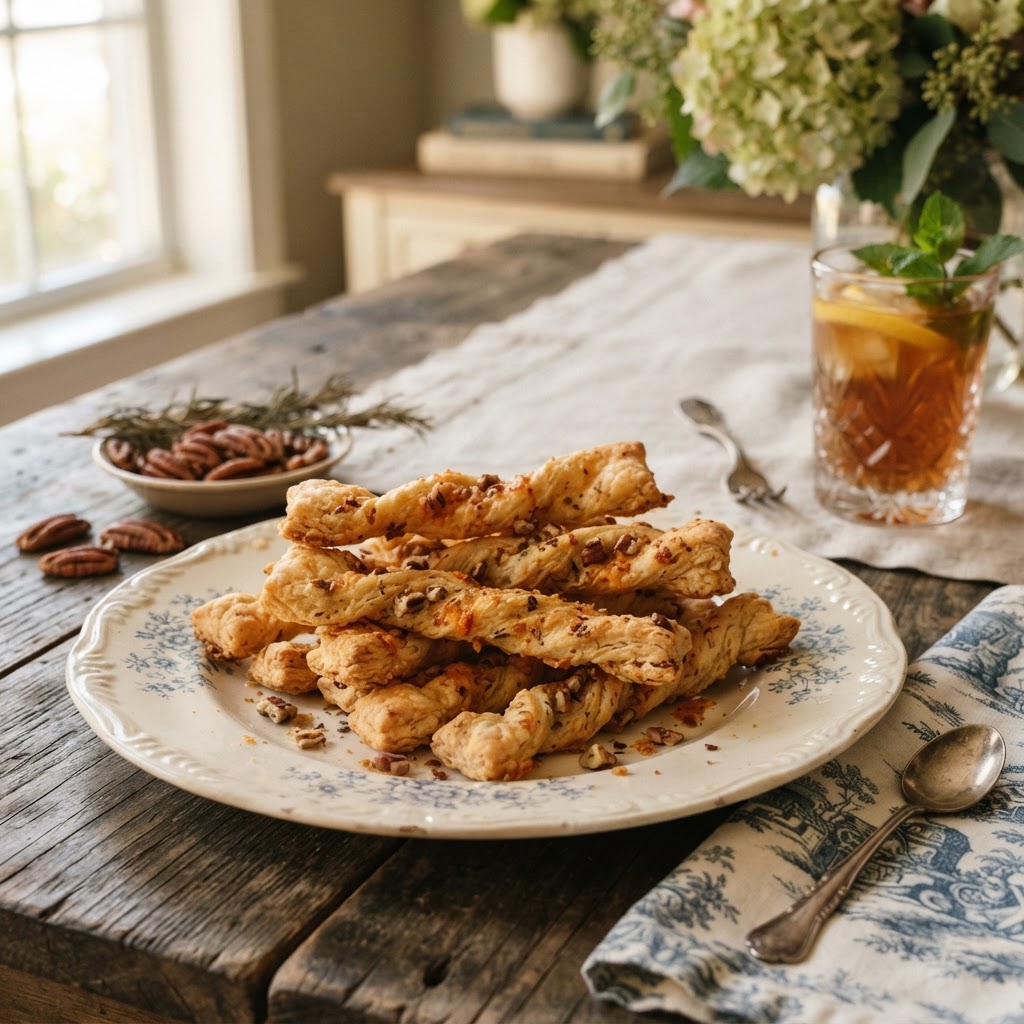
Southern Cheese Straws with Cayenne and Toasted Pecans
April 4, 2026
Cheese straws are one of the most enduring traditions of Southern entertaining — a crisp, savory, cheese-laden pastry straw flavored with cayenne pepper and baked until golden and shatteringly crisp. The recipe first entered American cooking through Louis Eustache Ude's "The French Cook," published in Philadelphia in 1828, where a similar cheese pastry appeared as a French technique. After the Civil War, Southern home cooks adopted and transformed the recipe, making it their own with the addition of cayenne pepper and locally grown pecans, and cheese straws became an indispensable element of Southern hospitality — served at bridal showers, cocktail parties, funeral receptions, and every gathering of consequence.
The undisputed authority on Southern cheese straws is Edna Lewis, the legendary chef and cookbook author often called "the South's Julia Child," whose recipe — refined with Scott Peacock in "The Gift of Southern Cooking" — set the standard for the perfect cheese straw: made with extra-sharp cheddar, a whisper of cayenne, butter, flour, and toasted pecans, piped through a cookie press or shaped by hand and baked until the edges are deeply golden and the centers are just set. The texture should be crisp and snap cleanly — a soft cheese straw is a failed cheese straw.
Ingredients (makes approximately 60 straws): - 8 ⅞ oz extra-sharp cheddar cheese, freshly grated (Cabot or Tillamook aged 12+ months) - 4 oz unsalted butter, softened to room temperature - 6 ⅓ oz all-purpose flour - ½ teaspoon cayenne pepper (adjust to taste — the heat should be a gentle warmth, not aggressive) - ½ teaspoon salt - ¼ teaspoon freshly ground black pepper - ¼ teaspoon garlic powder (optional) - 1 ¾ oz pecans, toasted and finely chopped - 1 tablespoon heavy cream or milk (only if needed to bring the dough together)
Toasting the Pecans: Preheat oven to 350°F. Spread pecans on a baking sheet and toast 8–10 minutes until fragrant and slightly darker. Cool completely, then chop very finely. (Toasting is essential — raw pecans taste flat and waxy. Toasted pecans are nutty, sweet, and aromatic.)
Making the Dough: In a food processor, combine grated cheddar, softened butter, flour, cayenne, salt, black pepper, and garlic powder. Pulse until the mixture forms a cohesive dough that holds together when pinched. If the dough is too dry and crumbly, add cream 1 teaspoon at a time. Pulse in the toasted chopped pecans — do not over-process or they become paste. (Alternatively, grate the cheese finely by hand and mix everything by hand or with a stand mixer fitted with the paddle attachment.)
Shaping: The traditional method is a cookie press (press fitted with a star disk): fill the press and pipe long strips onto an ungreased or parchment-lined baking sheet, then cut into 3-inch lengths after baking. If you do not have a cookie press, roll the dough into a log 1 inch in diameter, wrap in plastic, and chill 30 minutes, then slice into ¼-inch rounds. Or roll the dough out to ¼-inch thickness and cut into strips with a knife or fluted pastry wheel.
Baking: Preheat oven to 375°F. Arrange straws or rounds on parchment-lined baking sheets, leaving 1 inch between each. Bake 12–15 minutes until the edges are deeply golden and the centers are just set — the straws should be golden, not pale. Cool on the baking sheet 5 minutes, then transfer to a wire rack to cool completely. The straws will crisp as they cool.
The Mimosa Pairing Logic: The sharp, savory, slightly spicy character of cheese straws calls for a mimosa with bright acidity that cuts through the cheese's richness while complementing the cayenne's warmth. A classic orange mimosa is the most natural pairing — the citrus refreshes the palate and the champagne's toasty depth mirrors the baked cheddar. A grapefruit rosemary mimosa is exceptional — the grapefruit's gentle bitterness balances the richness, while the rosemary adds an aromatic dimension that echoes the Southern herb garden. For a more adventurous pairing, a spicy jalapeño mimosa creates a beautiful heat-on-heat resonance with the cayenne. Avoid very sweet mimosas — they make the cheese taste flat and the cayenne taste harsh.
Reference Links: - Southern cheese straws recipe: Food & Wine - Cheese straws Southern tradition: Southern Discourse - Edna Lewis and Southern cooking: Southern Foodways Alliance - History of cheese straws in America: Serious Eats
Make-Ahead: The dough can be refrigerated for up to 1 week or frozen for up to 2 months. Baked cheese straws keep for 2 weeks in an airtight container at room temperature (they actually improve in flavor after a day). Do not refrigerate baked straws — the moisture softens them.
Pro Tips: Freshly grated cheese is non-negotiable — pre-shredded cheese is coated with anti-caking agents (cellulose) that prevent it from melting smoothly and produce a grainy, oily dough. The cayenne should provide a gentle warmth on the finish, not an aggressive burn — start with ½ teaspoon and adjust. The dough should be just moist enough to hold together when pinched — too wet and the straws spread and become flat; too dry and they crumble. Deeply golden edges are the sign of a properly baked cheese straw — pale straws are soft and doughy. The straws will seem slightly soft when they come out of the oven but crisp completely as they cool — do not overbake trying to achieve crispness in the oven.
Rate this recipe
Be the first to rate this recipe
to submit your rating.
Recent Posts

Couscous Royale: North Africa's Grand Platter of Lamb, Chicken, and Merguez
October 14, 2026

Seattle Cream Cheese Dog Bites: Hadley Long's 1989 Pioneer Square Invention
October 14, 2026

Khao Soi: Chiang Mai's Northern Thai Coconut Curry Noodles
October 13, 2026

Korean Bibimbap: Jeonju's Joseon Dynasty Mixed Rice
October 11, 2026

Spaghetti alla Carbonara: Rome's World War II Pasta of Eggs, Guanciale, and Pecorino
October 9, 2026