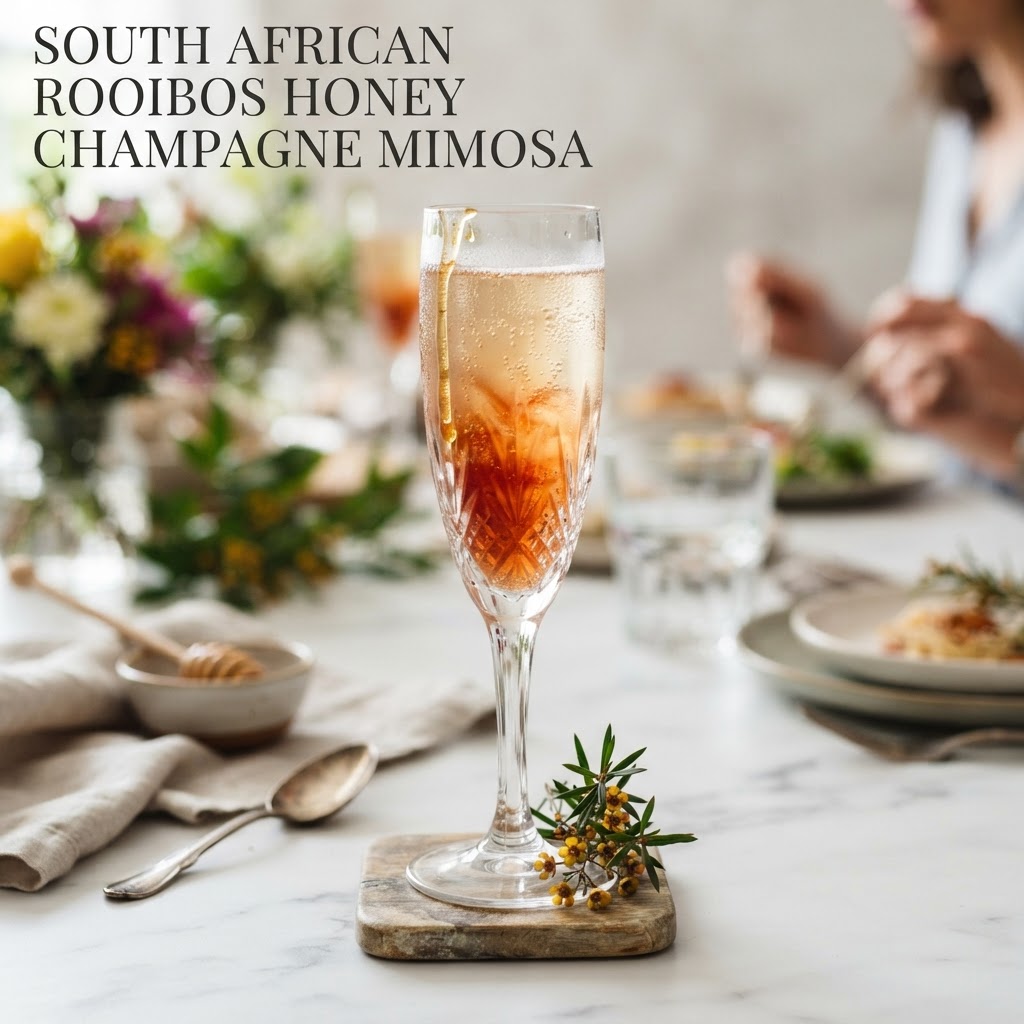
The South African Rooibos Honey Champagne Mimosa
September 24, 2026
The rooibos plant (Aspalathus linearis) grows wild only in the Cederberg mountains of South Africa's Western Cape, where the indigenous Khoisan people were the first to harvest its needle-like leaves and brew them into a caffeine-free, reddish infusion more than three hundred years ago. The name is Afrikaans for "red bush," and the tea's distinctive amber color and warm, earthy, slightly sweet, vanilla-tinged flavor come from the oxidation the leaves undergo after harvest. Rooibos remained a local, Khoisan and settter tradition for centuries until the early twentieth century, when a Russian immigrant named Benjamin Ginsberg recognized its commercial potential and began to market it; today rooibos holds protected designation of origin status, and the Cederberg remains the only place on earth where it is grown.
Rooibos makes a remarkable brunch cocktail base because its warm, earthy, honeyed character pairs naturally with both honey and Champagne in a way no true tea can match: it is caffeine-free, so it carries none of black tea's astringency or stimulation, and its natural vanilla-honey notes amplify the drink's sweetness without added sugar. Over Champagne, a rooibos-honey syrup produces a mimosa of warm, amber-gold color and gentle, aromatic depth, a drink for cool mornings and golden light.
About Rooibos
Rooibos (Aspalathus linearis) is a broom-like member of the Fabaceae (legume) family, endemic to the Cederberg region of the Western Cape. The leaves are harvested, bruised, and oxidized in the sun, which turns them a deep red-brown and develops the characteristic sweet, earthy, vanilla-like flavor. Unlike true tea (Camellia sinensis), rooibos contains no caffeine and very little tannin, so it is naturally sweet and never bitter. Reference: Rooibos — Wikipedia
Rooibos-Honey Syrup: - 1 cup water - ½ cup honey - 4 rooibos tea bags (or 2 tablespoons loose-leaf rooibos) - 1 strip fresh orange zest - 1 cinnamon stick (optional, for warmth)
Bring the water to a boil, then remove from heat and add the rooibos tea bags, orange zest, and cinnamon stick if using. Steep 8 minutes — no longer, as over-steeping makes rooibos flat rather than richer. Remove the bags and aromatics and whisk in the honey until fully dissolved. Cool completely. The syrup will be a warm, translucent amber-red with a pronounced honeyed, vanilla-tinged aroma. Refrigerate for up to 2 weeks.
Ingredients (serves 6): - 3 oz rooibos-honey syrup (above — ½ oz per serving) - 3 oz fresh lemon juice (½ oz per serving — the bright acid bridges the rooibos's warm, earthy depth) - 1 bottle (25 oz chilled Champagne Brut NV or Crémant de Bourgogne (Crémant de Bourgogne — such as Louis Bouillot — provides a warmer, more honeyed expression that resonates with the rooibos; Champagne Brut provides more structure) - A thin orange twist and a sprig of fresh thyme for garnish - Optional: ½ oz of bourbon (Woodford Reserve) per serving for a Rooibos Honey Bourbon Mimosa with autumnal warmth
Instructions: Combine the rooibos-honey syrup and lemon juice. Chill thoroughly. Chill Champagne flutes for 5 minutes. Pour 1 oz of the rooibos-lemon blend into each flute. Add bourbon if using. Top slowly with chilled Champagne or Crémant, pouring down the side. The warm amber syrup will bloom through the pale wine in luminous, golden-amber gradients. Garnish with a thin orange twist expressed over the glass and a sprig of fresh thyme.
For a Mimosa Bar (serves 12): - 6 oz rooibos-honey syrup - 6 oz fresh lemon juice - 3 oz bourbon (optional) - 2 bottles Champagne Brut or Crémant de Bourgogne, chilled - Orange twists and thyme sprigs for garnish
Variations: - Replace Champagne with sparkling rosé for a deeper salmon-amber hue. - Add a slice of fresh ginger to the steeping syrup for a Rooibos Honey Ginger Mimosa with warming spice. - Use honeybush (a related South African caffeine-free infusion) instead of rooibos for a sweeter, rounder expression.
Mimosa Pairing Logic: The rooibos's warm, honeyed, vanilla-tinged depth and the honey's floral sweetness call for a Champagne or Crémant whose own warmth and toasty notes resonate with the tea. The lemon's bright acidity keeps the drink from cloying. For a related pour, the Earl Grey Bergamot Champagne Mimosa is the true-tea cousin, and the Honeyed Chamomile Lemon Prosecco Mimosa shares the herbal-infusion-over-bubbles logic.
Reference Links: - Rooibos (Aspalathus linearis, Cederberg, Khoisan, protected designation of origin): Wikipedia - The History of Rooibos Tea (Khoisan, 300+ years): Klipopmekaar
Make-Ahead: Rooibos-honey syrup (2 weeks, refrigerated). The rooibos-lemon blend (3 days, refrigerated). Assemble per glass just before serving.
Pro Tips: Steep the rooibos for exactly 8 minutes: shorter and the flavor is thin; longer and the tea flattens rather than deepens. Use a good-quality, long-cut rooibos; the dusty "tea bag" grades produce a duller, earthier syrup than long-leaf rooibos. The honey should be a mild variety (orange blossom or clover); strong buckwheat honey overwhelms the rooibos's delicate vanilla notes. The lemon juice is essential, as without it the warm, honeyed syrup reads as flat and cloying. Crémant de Bourgogne is an excellent, affordable Champagne alternative here; its warmer, more honeyed character resonates with the rooibos where a leaner Blanc de Blancs would read as stark.
Rate this recipe
Be the first to rate this recipe
to submit your rating.
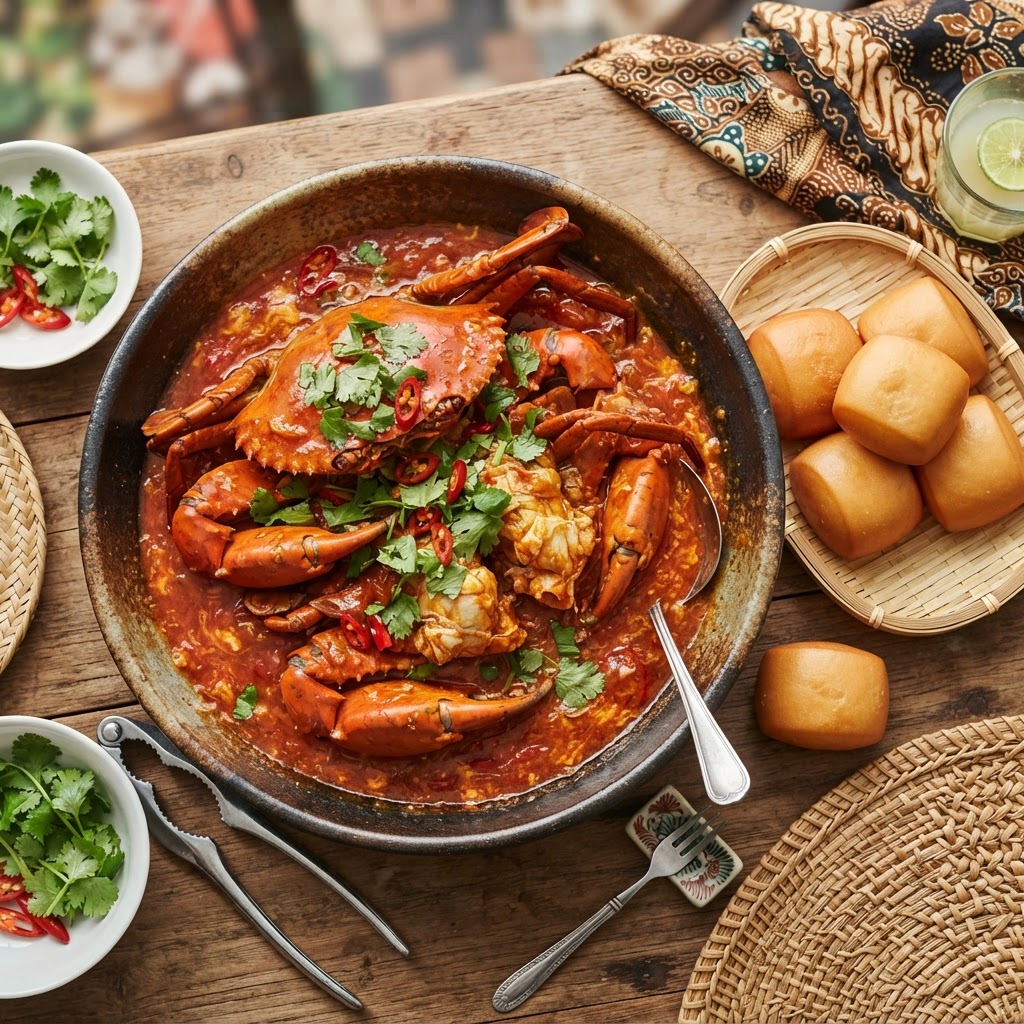
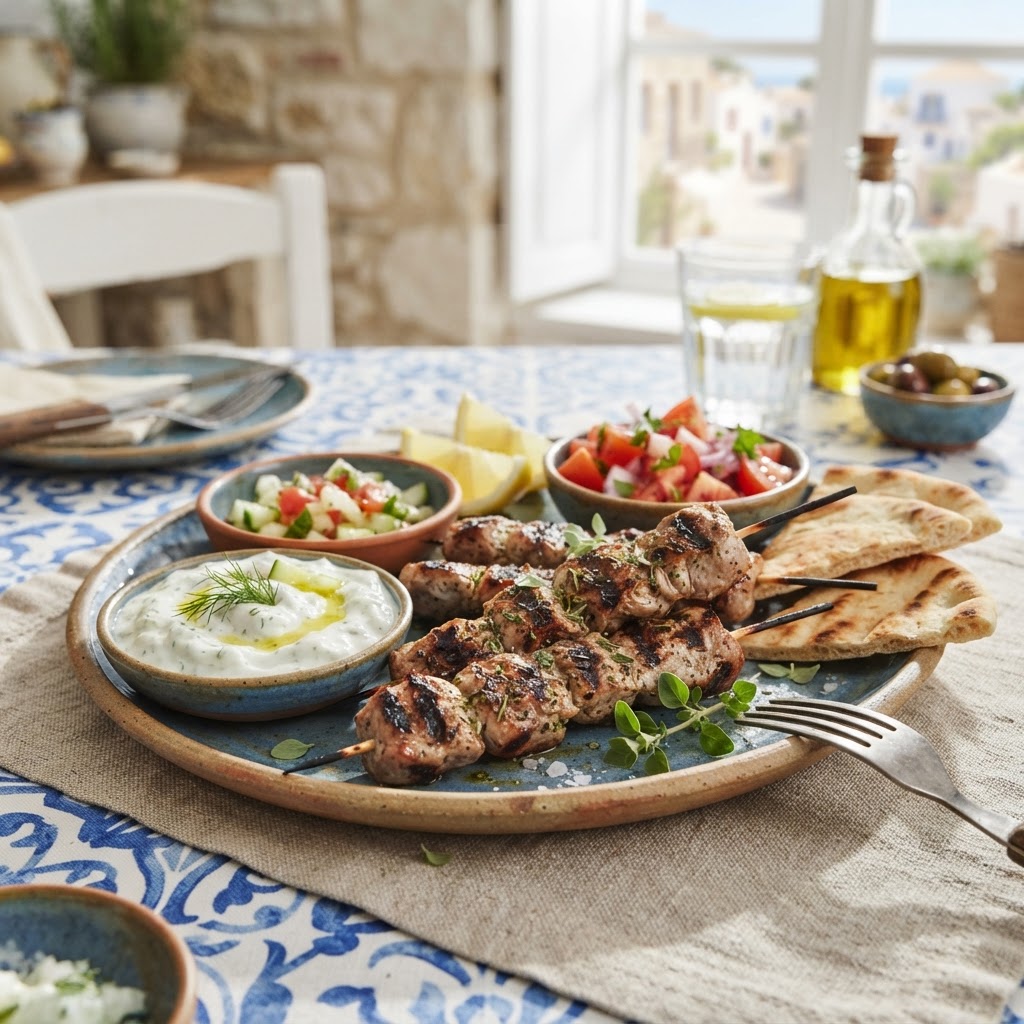
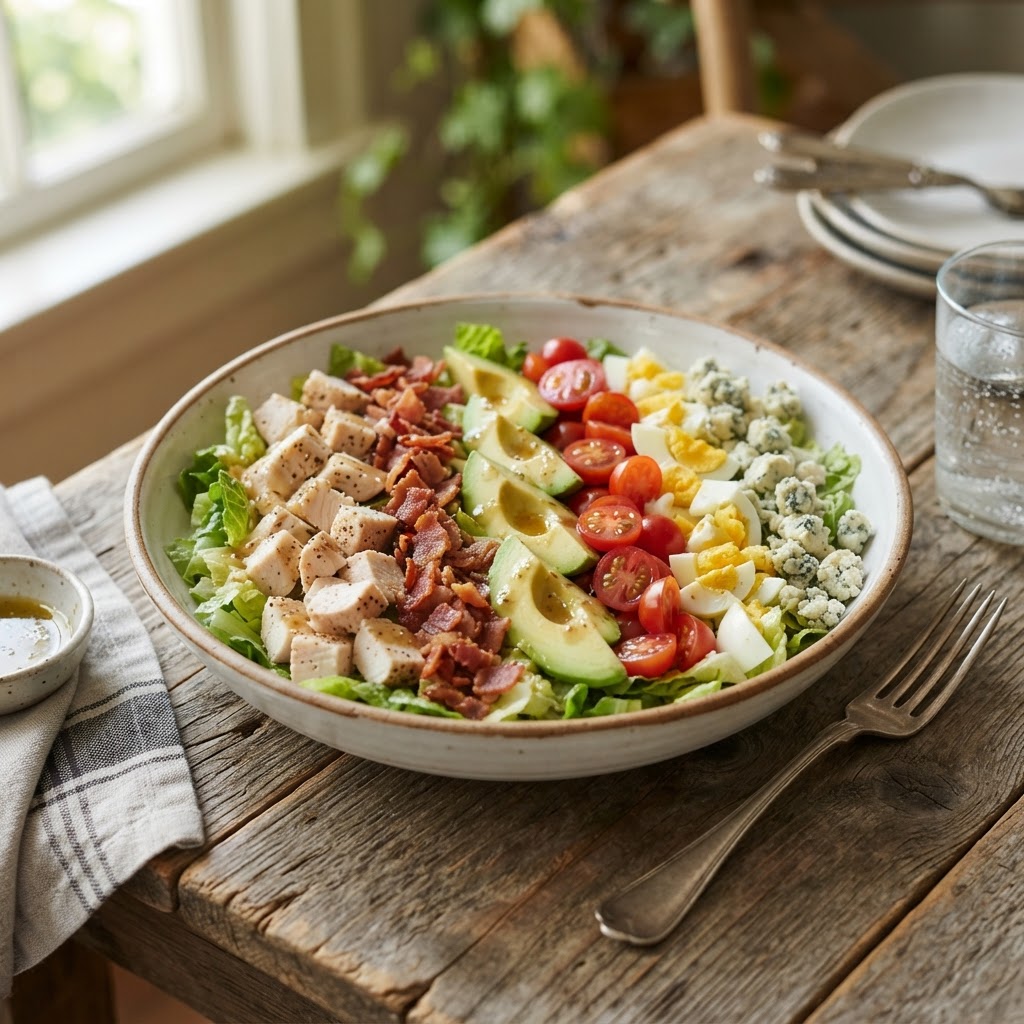
Perfect Mimosa Pairings
Mimosas that pair perfectly with this dish
Recent Posts

Couscous Royale: North Africa's Grand Platter of Lamb, Chicken, and Merguez
October 14, 2026

Seattle Cream Cheese Dog Bites: Hadley Long's 1989 Pioneer Square Invention
October 14, 2026

Khao Soi: Chiang Mai's Northern Thai Coconut Curry Noodles
October 13, 2026

Korean Bibimbap: Jeonju's Joseon Dynasty Mixed Rice
October 11, 2026

Spaghetti alla Carbonara: Rome's World War II Pasta of Eggs, Guanciale, and Pecorino
October 9, 2026