Smithfield Ham: Virginia's Legendary Cured Country Ham
March 18, 2026
Smithfield ham is the great cured ham of Virginia — a country ham finish-cured in the town of Smithfield, on the Isle of Wight in the Hampton Roads region, dry-cured, smoked over hickory and oak, and aged for months until the meat is deep red, firm, and intensely savory. According to Wikipedia, Smithfield ham is a specific form of country ham finish-cured in the town of Smithfield in Isle of Wight County in the Hampton Roads region of Virginia. The Virginia General Assembly passed a statute defining "Smithfield ham" by law, and the curing tradition reaches back to the colonial era. Virginia Tourism records that Indigenous peoples first taught the settlers at Jamestown how to preserve meat by using salt, smoke, and aging, and that the special combination of ingredients and curing makes Virginia ham unlike any other.
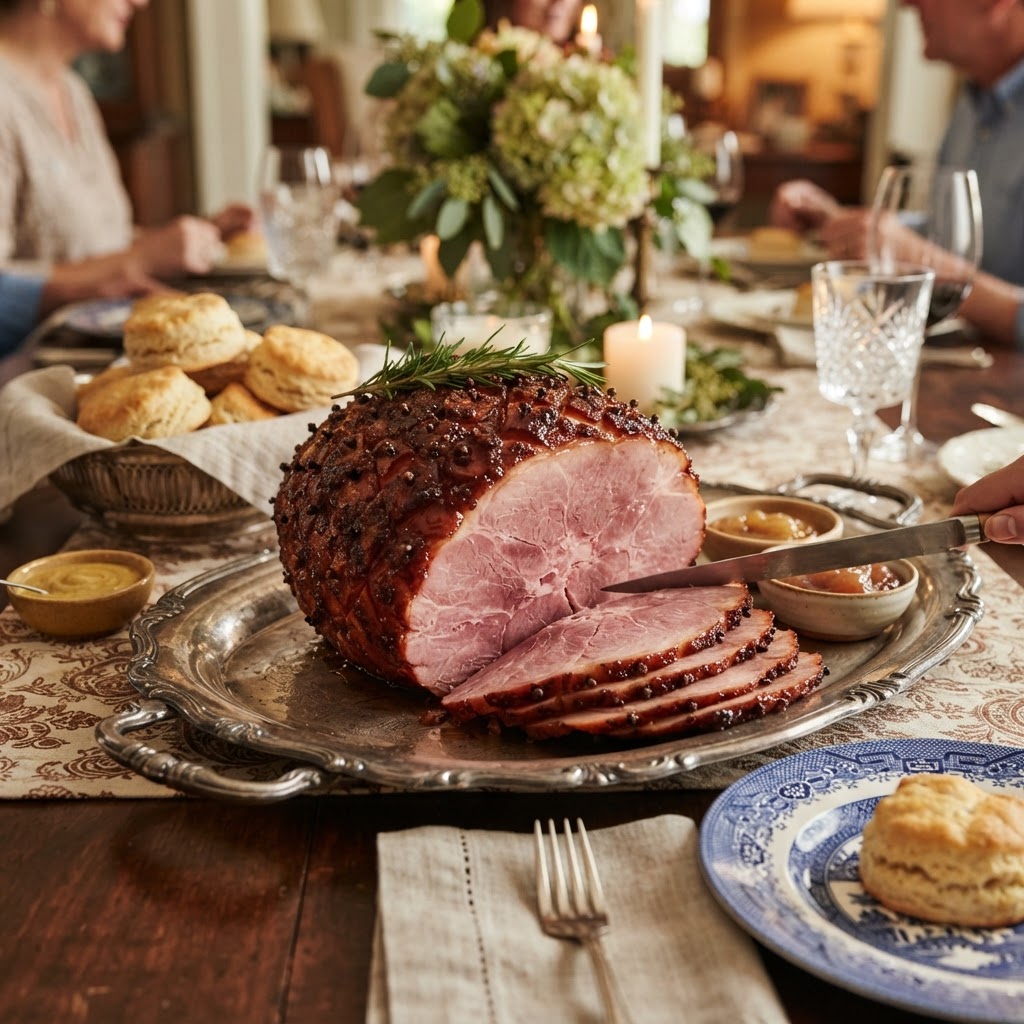
A true Smithfield ham is cured, smoked, and aged at least 180 days (some go a year or more), then soaked, simmered, and baked with a clove-and-brown-sugar glaze, sliced paper-thin, and served with biscuits and red-eye gravy or with beaten biscuits at a Southern celebration. It is the centerpiece of the Virginia holiday table.
About the Ingredients
The ham — a whole Smithfield country ham, fully cured and aged; available from Virginia ham producers. It is very salty and must be soaked before cooking.
Soaking — the cured ham is soaked 12–24 hours in cold water, changing the water, to draw out excess salt before cooking.
Glaze — brown sugar, mustard, and whole cloves, baked into a crackling, caramelized crust; a little bourbon or cola is a Virginia touch.
Ingredients (serves 12–16): - 1 whole Smithfield (or Virginia) country ham, 12–15 lb - Whole cloves - 1 cup brown sugar, packed - 1/4 cup Dijon or whole-grain mustard - 1/2 cup bourbon (or apple cider) - 2 tbsp cider vinegar
Instructions: Soak the ham: scrub the ham, place in a large container, cover with cold water, and soak 12–24 hours in the refrigerator, changing the water 2–3 times. (This is essential — an unsoaked Smithfield ham is too salty to eat.)
Simmer the ham: place the ham in a large pot, cover with fresh water, bring to a simmer, and cook 20 minutes per pound, skimming, until a thermometer reads 145°F (145°F). Remove, let cool, and trim the skin and excess fat, leaving a thin fat layer. Score the fat in a diamond pattern and stud each diamond with a clove.
Bake the ham: preheat the oven to 325°F (329°F). Mix the brown sugar, mustard, bourbon, and vinegar into a paste; spread over the ham. Bake 30–45 minutes until the glaze is caramelized and bubbling. Rest 20 minutes. Slice paper-thin across the grain and serve with biscuits, or with red-eye gravy made from the pan drippings.
The Mimosa Pairing Logic: The deeply savory, slightly salty Smithfield ham and the sweet glaze want a bright, fruit-driven drink that can cut the salt and echo the sweet crust. A classic Champagne mimosa is the safe and perfect choice — the citrus cuts the rich cured ham, and the wine's effervescence refreshes the palate of the salt. A peach bellini mimosa is equally lovely, the stone fruit a beautiful Southern orchard partner for the ham. This pairing is, in its way, the brunch equivalent of Smithfield ham and beaten biscuits and a glass of bourbon — a sparkling toast to Virginia.
Reference Links: - Smithfield Ham (Virginia, Isle of Wight, Hampton Roads): Wikipedia - The History Behind Virginia Ham — An Iconic Culinary Tradition: Virginia Tourism
Make-Ahead: The soaked, simmered ham can be held a day ahead, refrigerated, then glazed and baked the next day. The baked ham keeps, sliced and wrapped, up to a week, and the slices are delicious cold with biscuits. The glaze can be made ahead and reheated. Serve the sliced ham warm or at room temperature; the thin slices are the point.
Pro Tips: Soak the ham a full 12–24 hours, changing the water — a Smithfield ham is heavily salted and unsoaked is inedible. Simmer, don't boil; a boil toughens the lean meat. Score the fat in diamonds and stud with cloves so the glaze seeps into the seams. Slice paper-thin across the grain; country ham is eaten in thin, almost translucent slices, not thick slabs. Save the bone for soup and red-eye gravy; the bone is the cook's reward.
Rate this recipe
Be the first to rate this recipe
to submit your rating.
Recent Posts

Couscous Royale: North Africa's Grand Platter of Lamb, Chicken, and Merguez
October 14, 2026

Seattle Cream Cheese Dog Bites: Hadley Long's 1989 Pioneer Square Invention
October 14, 2026

Khao Soi: Chiang Mai's Northern Thai Coconut Curry Noodles
October 13, 2026

Korean Bibimbap: Jeonju's Joseon Dynasty Mixed Rice
October 11, 2026

Spaghetti alla Carbonara: Rome's World War II Pasta of Eggs, Guanciale, and Pecorino
October 9, 2026