Silog: The Filipino Garlic Fried Rice Breakfast That Defined a Nation
July 29, 2026
Silog is the Philippines' most famous breakfast — a plate of garlic fried rice (sinangag), a fried sunny-side-up egg (itlog), and a savory meat or fish dish (ulam), served together in a combination that's so widespread it has become a way of life. The name "silog" is a portmanteau of "sinangag" (garlic fried rice) and "itlog" (egg), and the specific type of meat determines the full name — tapsilog (tapa + sinangag + itlog), longsilog (longganisa + sinangag + itlog), hamsilog (ham + sinangag + itlog), and so on. There are dozens of variations, but they all share the same foundation: garlic fried rice, a fried egg, and a savory protein.
The story of silog begins with tapsilog — the first type of silog to be named as such. Tapsilog was originally intended to be quick breakfast or late-night hangover fare. It developed from "tapsi," which referred to meals of beef tapa and sinangag (garlic fried rice) with no fried egg explicitly mentioned. Diners that mainly or exclusively served such meals were called "tapahan" or "tapsihan" in Filipino. The term "tapsilog" was originally established in the 1980s and came from the Tapsi ni Vivian restaurant in Marikina, a city in Metro Manila. According to Vivian del Rosario, the owner of Tapsi ni Vivian, she was the first to use the term "tapsilog."
Vivian del Rosario opened a simple canteen in 1986 that catered to the masses, and she popularized the tapsilog — including its name. Her restaurant became so popular that it spawned a whole genre of Filipino dining. Due to the popularity of this type of cuisine in the Philippines, restaurants, fast food chains such as Jollibee and McDonald's Philippines, and even hotels have included silogs on their breakfast menus. Some restaurants and fast food chains, like Tapa King and Rufo's Famous Tapa, exclusively or mainly serve this type of dish. Some diners, like the first Tapsi ni Vivian in Marikina and Rodic's Diner in the University of the Philippines Diliman campus in Quezon City, have become recognized for their silog dishes and have opened multiple branches.
The key to a great silog is the sinangag — the garlic fried rice. True garlic rice is rice stir-fried with garlic, not rice topped with fried garlic flakes. The rice should be day-old, cold cooked white rice — fresh rice is too moist and will become gummy when fried. The garlic should be generous — lots of fresh garlic, finely chopped and fried golden in oil, then the rice is added and stir-fried until every grain is coated with the garlic and the oil. The rice should be fragrant with garlic, with a slightly toasted flavor and individual, separate grains. The egg should be fried sunny-side up with a runny yolk — when you break the yolk, it runs into the rice and the meat, creating a rich sauce that ties everything together.
The most popular silog is tapsilog — beef tapa (cured, marinated beef that's pan-fried or grilled), sinangag, and itlog. The tapa is traditionally marinated in a mixture of soy sauce, calamansi (Philippine lime), garlic, sugar, and black pepper, then pan-fried until slightly caramelized and tender. Other popular silogs include longsilog (Filipino sausage called longganisa), hamsilog (ham), tocilog (sweet cured pork called tocino), bangsilog (fried milkfish called bangus), and cornsilog (corned beef). The variety is endless, and every Filipino has their favorite.
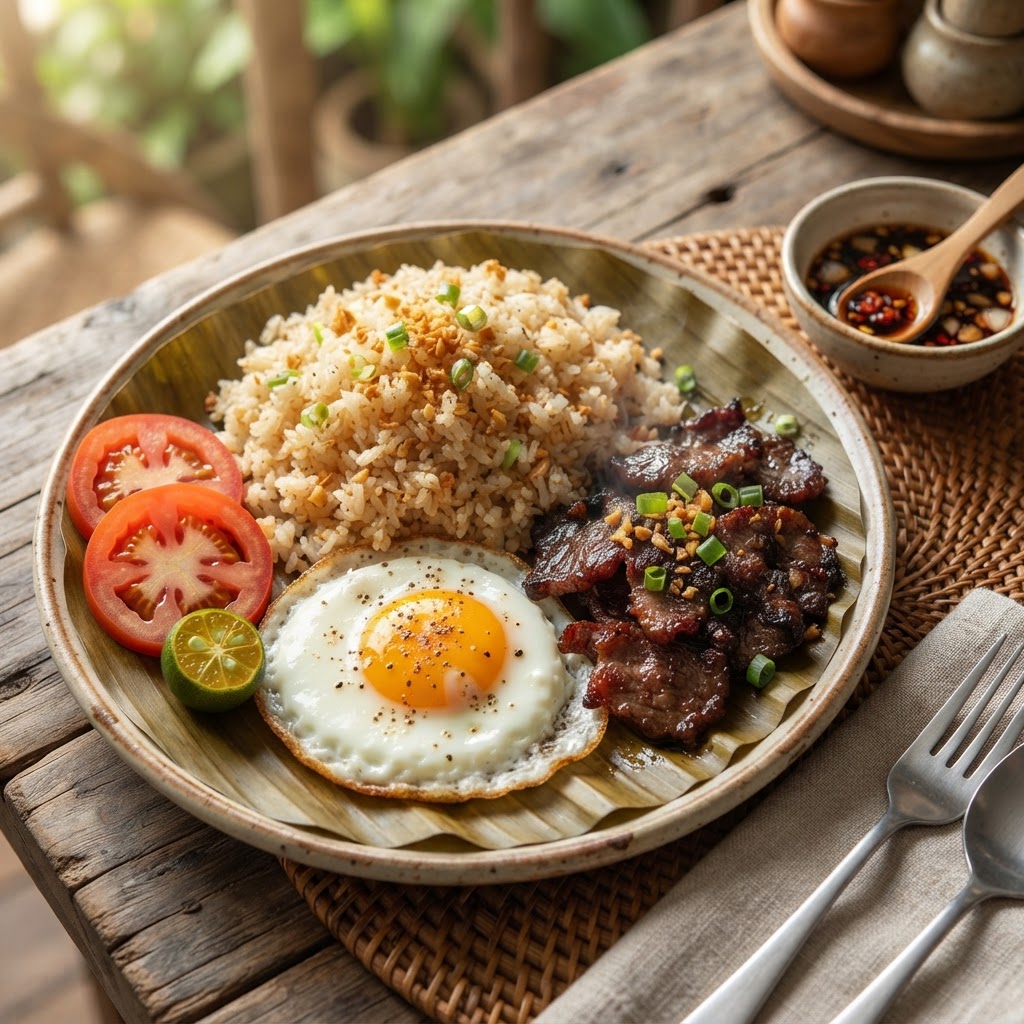
Our Mimosavated version makes the classic tapsilog — beef tapa, garlic fried rice, and a sunny-side-up egg, with sliced tomatoes and a calamansi or lemon wedge.
Ingredients (serves 4):
The Beef Tapa: - 1 lb 2 oz beef sirloin or flank steak, sliced thinly against the grain - ¼ cup soy sauce - 2 tbsp calamansi juice (or lemon juice) - 1 tablespoon granulated sugar (or brown sugar) - 4 cloves garlic, minced - ½ teaspoon black pepper - 2 tablespoons vegetable oil (for frying)
The Sinangag (Garlic Fried Rice): - 1 lb 5 oz day-old cooked white rice (cold — ideally jasmine or long-grain) - 6 cloves garlic, finely chopped - 3 tablespoons vegetable oil - 1 teaspoon salt (or to taste)
The Eggs: - 4 large eggs - 1 tablespoon vegetable oil (for frying) - Salt and pepper to taste
Garnishes: - 2 tomatoes, sliced - 1 small red onion, thinly sliced (soaked in water for 10 minutes to mellow) - Calamansi or lemon wedges - Hot sauce or vinegar with garlic (spicy vinegar dipping sauce)
Marinating the Beef Tapa: In a bowl, combine the soy sauce, calamansi (or lemon) juice, sugar, minced garlic, and black pepper. Add the sliced beef and toss to coat. Marinate for at least 2 hours, or preferably overnight in the refrigerator. The longer the marination, the more flavorful and tender the tapa will be.
Making the Sinangag (Garlic Fried Rice): Break up the cold rice with your hands or a fork — the grains should be separated, not clumped. In a large wok or skillet, heat the oil over medium heat. Add the chopped garlic and fry until golden brown and fragrant — about 2–3 minutes. Don't burn the garlic or it will be bitter. Add the rice and stir-fry for 5–7 minutes, breaking up any clumps and tossing constantly so every grain is coated with the garlic and the oil. Season with salt. The rice should be fragrant with garlic, with individual, separate grains and a slightly toasted flavor. Keep warm.
Cooking the Beef Tapa: In a large skillet, heat the oil over medium-high heat. Remove the beef from the marinade (reserve the marinade) and add to the skillet in a single layer. Cook for 2–3 minutes per side, until browned and slightly caramelized. Pour the reserved marinade into the skillet and cook for 1–2 minutes more, until the sauce reduces and coats the beef. The tapa should be tender, savory, and slightly sweet from the marinade. Remove from heat.
Frying the Eggs: In a separate skillet, heat the oil over medium heat. Crack the eggs into the skillet and fry sunny-side up — the whites should be set and the yolks should be runny. Cook for about 3 minutes, or until the whites are completely set. Season with salt and pepper.
Assembling: Divide the garlic fried rice among 4 plates. Add a portion of beef tapa alongside the rice. Top each plate with a sunny-side-up egg. Add sliced tomatoes and red onion on the side. Serve with calamansi or lemon wedges and hot sauce or spicy vinegar.
Serving: Serve immediately. The traditional way to eat tapsilog is to break the egg yolk so it runs into the rice and the beef, then mix everything together. The combination of the savory, slightly sweet beef tapa, the fragrant garlic rice, the rich egg yolk, and the bright calamansi is one of the most satisfying breakfast experiences in the world. A splash of spicy vinegar or hot sauce adds an extra kick.
The Mimosa Pairing Logic: Tapsilog is savory, garlicky, and rich with beef and egg. The ideal mimosa pairing is a classic Prosecco mimosa — orange juice and Prosecco. The bright, acidic citrus echoes the calamansi in the dish and provides a refreshing contrast to the savory, garlicky rice and the rich beef, while the Prosecco's effervescence cleanses the palate between bites. A tropical mango mimosa is also excellent — the tropical fruit complements the Filipino flavors of the dish. Avoid heavy or sweet mimosas — the dish is savory and garlicky, and you need something bright and acidic to balance it.
Reference Links: - Silog on Wikipedia (tapsilog, Tapsi ni Vivian, 1980s, Marikina): Wikipedia - Meet the Pinay who started the 'tapsilog' craze (Vivian del Rosario, 1986): ABS-CBN News - A Brief History of the Tapsilog and Its Many Variations: Pepper.ph - The History of Tapsilog and Where It All Began (Vivian del Rosario, Marikina): Esquire Philippines - The History of Tapsilog: A Filipino Breakfast Staple: Adobo Throwdown
Make-Ahead: The beef tapa can be marinated up to 2 days ahead and refrigerated — cook just before serving. The cooked tapa can be refrigerated for up to 3 days and reheated in a skillet with a splash of water. The rice should be made with day-old cooked rice — you can cook the rice a day ahead and refrigerate it. The garlic fried rice is best made just before serving, but can be kept warm for up to 30 minutes. The eggs should be fried just before serving. Assemble at the last minute — the dish is at its best when the tapa is hot, the rice is freshly fried and fragrant with garlic, and the egg yolk is runny. Leftover tapsilog (mixed, without egg) can be refrigerated for up to 2 days and reheated in a skillet or microwave. Do not freeze.
Pro Tips: Slice the beef thin and against the grain — this ensures the tapa is tender, not chewy; partially freeze the beef for 30 minutes before slicing for easier, thinner cuts. Marinate overnight — the longer the beef marinates in the soy, calamansi, sugar, and garlic, the more flavorful and tender it becomes; overnight is ideal. Use day-old, cold rice — fresh rice is too moist and will become gummy when fried; cold, day-old rice is dry enough to fry properly and the grains separate easily. Break up the rice before frying — separate the clumps with your hands or a fork before adding to the wok; this ensures even frying and individual grains. Use plenty of garlic — the garlic is the defining flavor of sinangag, and you should use at least 6 cloves for 4 servings; don't be shy. Fry the garlic golden before adding the rice — golden garlic is fragrant and nutty; burned garlic is bitter and will ruin the dish. Toss constantly — the rice should be tossed continuously while frying so every grain is coated with the garlic and the oil and heated evenly. The egg must be sunny-side up with a runny yolk — the runny yolk mixing with the rice and the beef is the defining moment of the dish; if you don't like runny yolks, cook the egg over-easy, but the classic version is sunny-side up. Serve with calamansi if you can find it — calamansi is a small, round Philippine citrus that's more aromatic and floral than regular lime; it's the traditional acid for tapsilog. If you can't find it, lemon is a reasonable substitute. Add spicy vinegar — a splash of spiced vinegar (vinegar with garlic, chili, and onions) is the traditional Filipino condiment for tapsilog and adds a bright, acidic kick that complements the savory, rich dish.
Rate this recipe
Be the first to rate this recipe
to submit your rating.
Recent Posts

Couscous Royale: North Africa's Grand Platter of Lamb, Chicken, and Merguez
October 14, 2026

Seattle Cream Cheese Dog Bites: Hadley Long's 1989 Pioneer Square Invention
October 14, 2026

Khao Soi: Chiang Mai's Northern Thai Coconut Curry Noodles
October 13, 2026

Korean Bibimbap: Jeonju's Joseon Dynasty Mixed Rice
October 11, 2026

Spaghetti alla Carbonara: Rome's World War II Pasta of Eggs, Guanciale, and Pecorino
October 9, 2026