Sfogliatella alla Mimosa
March 28, 2026
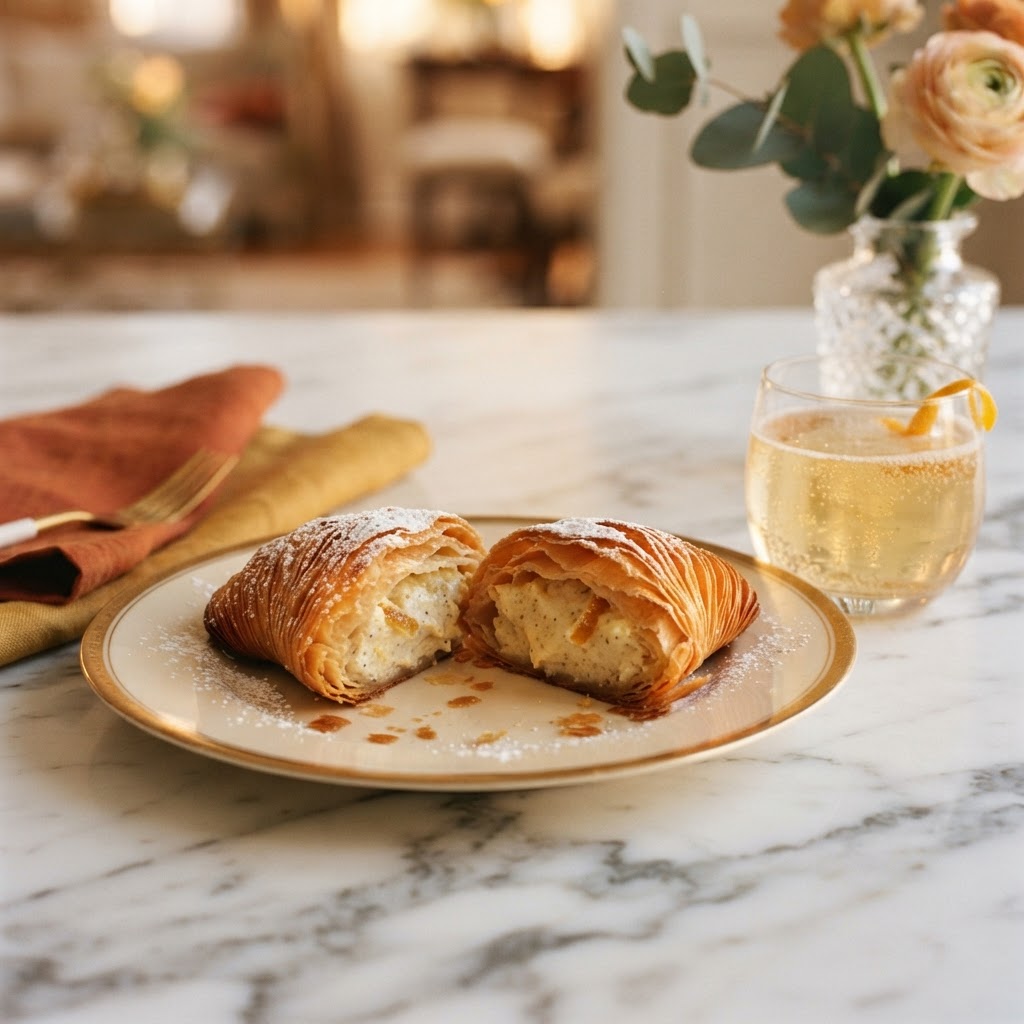
Sfogliatella is the pastry that makes Neapolitans get up early. It's a clam-shaped shell of hundreds of paper-thin layers of crisp pastry, filled with a warm, fragrant semolina-ricotta cream scented with cinnamon, candied orange, and lemon zest. When you bite into it, the shell shatters — audibly — and the filling oozes out. It's one of the most technically demanding pastries in the Italian repertoire, and also one of the most rewarding.
The story goes that sfogliatella was invented in the 17th century at the Monastery of Santa Rosa in Conca dei Marini, a village on the Amalfi Coast. A nun, experimenting with leftover semolina, created a filling wrapped in a layered pastry and baked it. The result was so good that the monastery began producing it for feast days. The pastry was called "Santa Rosa" in honor of the monastery's namesake. In the 19th century, a Neapolitan pastry chef named Pasquale Pintauro acquired the recipe and adapted it into the version we know today — smaller, with the characteristic "lobster tail" shape — and renamed it sfogliatella, from the Italian "sfoglia," meaning "leaf" or "layer." It became a Naples icon.
This is a "practice pastry." The lamination — folding fat into dough to create hundreds of layers — takes time and patience. Our Mimosavated version adds a splash of Prosecco to the semolina-ricotta filling, which brightens the flavors without fundamentally changing the character of the dessert. If you're attempting sfogliatella for the first time, consider buying the shells and making the filling yourself — the filling is the soul of the dessert, and it's where the flavor lives.
Ingredients (makes 12 sfogliatelle):
The Dough (for the shells): - 1 lb 2 oz all-purpose flour (or Tipo 00 flour) - ⅞ cup water, at room temperature - 1 teaspoon salt - 8 ⅞ oz rendered pork lard (or clarified butter, if you prefer), at room temperature — for the lamination
The Prosecco-Semolina-Ricotta Filling: - 5 ¼ oz semolina flour - 2 ⅛ cups whole milk - 14 ⅛ oz whole-milk ricotta, drained - 5 ¼ oz granulated sugar - 3 ⅓ tbsp Prosecco - 1 large egg, plus 1 egg yolk - 1 teaspoon ground cinnamon - 1 ¾ oz candied orange peel, finely chopped - Zest of 1 lemon - 1 teaspoon vanilla extract - A pinch of salt
To Finish: - Powdered sugar, for dusting - Honey, warmed (optional, for glazing)
Making the Dough: In a stand mixer or by hand, combine the flour, water, and salt. Knead for 10-15 minutes until you have a smooth, elastic dough. Divide into 4 pieces, shape into balls, cover with plastic wrap, and let rest for 30 minutes.
Roll each piece of dough out as thin as possible — paper-thin, where you can almost see through it. A pasta machine is ideal. Brush the surface with a thin layer of softened lard. Roll the dough up tightly into a log, like a Swiss roll. Repeat with all 4 pieces. Wrap the logs in plastic and refrigerate for at least 2 hours, ideally overnight.
Making the Filling: In a saucepan, bring the milk to a gentle boil. Gradually whisk in the semolina flour, stirring constantly to prevent lumps. Cook over low heat for about 5 minutes, until thick and pulling away from the sides of the pan. Remove from heat and let cool completely.
In a bowl, combine the drained ricotta and sugar. Beat until smooth. Add the cooled semolina, Prosecco, egg, egg yolk, cinnamon, candied orange peel, lemon zest, vanilla, and salt. Mix until well combined. The filling should be thick and hold its shape.
Shaping the Sfogliatelle: Cut each dough log into ⅓ in-thick slices. Take a slice, cut side facing up, and press it out with your thumbs, shaping it into a cone or clam shell shape. The layers should fan out. Spoon a generous tablespoon of filling into the center. Fold the dough over the filling, pressing the edges to seal, and shape into the characteristic clam shape. Place on a baking sheet lined with parchment paper.
Baking: Preheat the oven to 392°F (400°F). Brush the sfogliatelle with melted lard or butter. Bake for 15 minutes, then reduce the heat to 356°F (350°F) and bake for another 10-15 minutes, until the shells are deep golden and the layers have separated and crisped. If desired, warm a little honey and brush the sfogliatelle with it while they're still hot — this gives them a beautiful sheen. Let cool for 5 minutes, then dust generously with powdered sugar.
The Mimosa Pairing Logic: The Prosecco in the filling makes a classic Prosecco mimosa the natural pairing — the flavors match perfectly. A lemon mimosa (sparkling wine with a splash of fresh lemon juice) is inspired: the lemon echoes the citrus zest in the filling while the bubbles cut through the richness of the ricotta. An orange mimosa also works, as the orange complements the candied orange peel. Avoid heavy or very sweet mimosas — the sfogliatella is rich enough on its own.
Reference Links: - Sfogliatella history and Santa Rosa monastery: Web Food Culture - Sfogliatella on Wikipedia: Wikipedia - Lamination technique for layered pastry: Serious Eats - Semolina flour guide: King Arthur Baking - Conca dei Marini and the Amalfi Coast: Italy Magazine
Make-Ahead: The dough logs can be refrigerated for up to 2 days before shaping. The filling can be made a day ahead and refrigerated. The shaped, unbaked sfogliatelle can be frozen on the baking sheet, then transferred to a bag and frozen for up to a month — bake from frozen, adding 5 extra minutes. Once baked, they're best eaten the same day — the shells lose their crunch overnight.
Pro Tips: The dough must be rolled as thin as possible — if it's too thick, you won't get the characteristic hundreds of layers. A pasta machine makes this much easier. The lard is traditional and produces the crispiest, most authentic result; butter works but the texture is slightly less shatteringly crisp. The filling must be completely cool before you add the egg — if it's warm, you'll cook the egg and get a scrambled texture. When shaping, don't overfill — the filling expands during baking and will burst out if there's too much. The sfogliatelle should be eaten warm — the contrast of the crisp shell and the warm, fragrant filling is the whole point.
Rate this recipe
Be the first to rate this recipe
to submit your rating.
Recent Posts

Couscous Royale: North Africa's Grand Platter of Lamb, Chicken, and Merguez
October 14, 2026

Seattle Cream Cheese Dog Bites: Hadley Long's 1989 Pioneer Square Invention
October 14, 2026

Khao Soi: Chiang Mai's Northern Thai Coconut Curry Noodles
October 13, 2026

Korean Bibimbap: Jeonju's Joseon Dynasty Mixed Rice
October 11, 2026

Spaghetti alla Carbonara: Rome's World War II Pasta of Eggs, Guanciale, and Pecorino
October 9, 2026