Santa Maria-Style Tri-Tip Barbecue
September 7, 2026
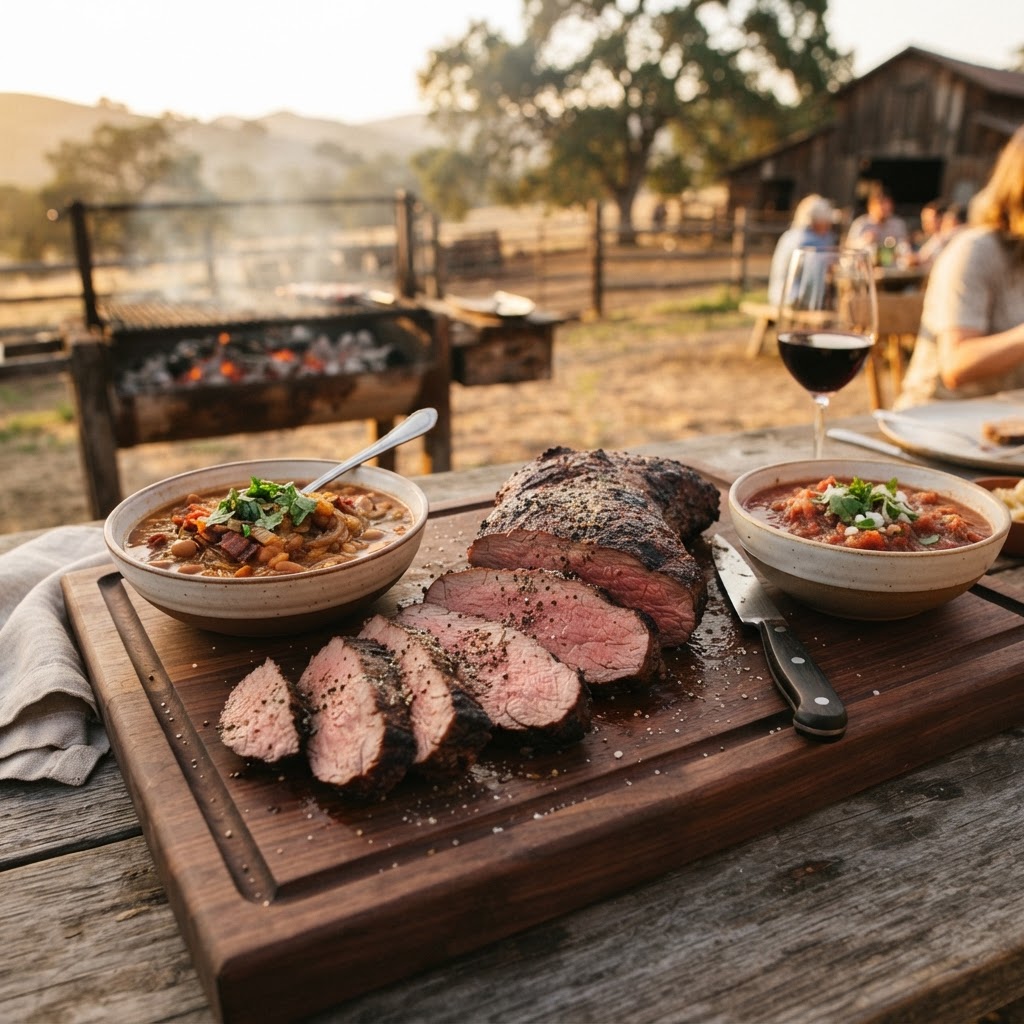
Santa Maria-style barbecue was born in the late nineteenth century in the Santa Maria Valley of California's Central Coast, where rancheros cooked beef over open fires of native red oak for their roundup crews. The style crystallized in the 1950s, when the tri-tip cut, the triangular muscle at the bottom of the sirloin, became the meat of choice. The Santa Maria Elks Lodge began cooking tri-tip for its weekend fundraisers during the Santa Maria Rodeo, and the tradition spread through the valley until it became the regional barbecue standard. The method is defined by three things: the red oak wood, a dry rub of salt, pepper, and garlic, and cooking the meat over direct heat on a grill that can be raised and lowered to control the temperature. In 2004, the tri-tip was named the official cut of Santa Maria barbecue by the Santa Maria Valley Chamber of Commerce (Wikipedia — Santa Maria-style barbecue; Susie Q Brand — Tri-Tip History).
Tri-tip is a cut that was nearly unknown outside the Central Coast until the late twentieth century. It is a small roast, usually two to three pounds, with a robust beefy flavor and a loose grain that takes smoke and char beautifully, and it is cooked whole and sliced thin across the grain after a brief rest.
Ingredients (serves 6): - 1 whole beef tri-tip (about 2½–3 lb), untrimmed - 2 tablespoons coarse kosher salt - 1 tablespoon freshly ground black pepper - 1 tablespoon garlic powder - 1 teaspoon paprika - Red oak wood or hardwood charcoal for the grill - Santa Maria-style salsa (fresh tomato, onion, cilantro) for serving - Pinquito beans and garlic bread, for serving
Instructions: Combine the salt, pepper, garlic powder, and paprika. Coat the tri-tip evenly on all sides and let it sit at room temperature for 30 minutes. Build a fire with red oak or hardwood charcoal for direct grilling; the coals should be hot but not flaming. Place the tri-tip over the direct heat and sear for 5 to 7 minutes per side, until a dark crust forms. Raise the grill (or move the meat to a cooler part of the grill) and continue cooking over indirect heat for another 15 to 20 minutes, turning occasionally, until the internal temperature reaches 130°F for medium-rare. Remove from the grill and rest for 10 minutes. Slice thinly against the grain and serve with salsa, pinquito beans, and garlic bread.
For a Crowd (serves 12): - 2 whole tri-tips (5–6 lb total), double the rub; grill in two zones for even cooking. - Rest for 10 minutes before slicing; a whole tri-tip feeds roughly 5 to 6 people.
Variations: - Santa Maria Traditional: Serve with pinquito beans, macaroni and cheese, garlic bread, and a fresh tomato salsa. - Smoked Tri-Tip: Smoke the tri-tip at 225°F for about an hour, then sear over high heat to finish, for a hybrid smoke-and-grill version. - Tri-Tip Tacos: Slice the grilled tri-tip thinly and serve in warm corn tortillas with salsa and cilantro.
Pairing: Santa Maria tri-tip pairs with a bold red wine such as a California Cabernet Sauvignon or a Zinfandel, or with a cold American lager. For a brunch gathering, a sparkling wine or a light sangria also works. The traditional sides are pinquito beans, garlic bread, and a simple green salad.
Reference Links: - Santa Maria-style barbecue (red oak, tri-tip, 1950s, Elks Lodge): Wikipedia - Tri-Tip history, preparation & seasoning: Susie Q Brand
Pro Tips: The rub is simple for a reason: salt, pepper, and garlic, and nothing else, because the red oak smoke is the seasoning that matters. Do not trim the fat cap; it renders during cooking and bastes the meat. Cook the tri-tip hot and fast, not low and slow like a brisket; it is a tender cut that needs only a hard sear and a brief finish. Use a grill you can raise and lower if you have one, because the ability to control the distance from the coals is the heart of the Santa Maria method. Rest the meat before slicing and always slice against the grain; tri-tip has a long, loose grain, and slicing with it produces tough, stringy bites.
Rate this recipe
Be the first to rate this recipe
to submit your rating.
Recent Posts

Couscous Royale: North Africa's Grand Platter of Lamb, Chicken, and Merguez
October 14, 2026

Seattle Cream Cheese Dog Bites: Hadley Long's 1989 Pioneer Square Invention
October 14, 2026

Khao Soi: Chiang Mai's Northern Thai Coconut Curry Noodles
October 13, 2026

Korean Bibimbap: Jeonju's Joseon Dynasty Mixed Rice
October 11, 2026

Spaghetti alla Carbonara: Rome's World War II Pasta of Eggs, Guanciale, and Pecorino
October 9, 2026