Red Velvet Cake al Brachetto
January 28, 2026
Red velvet cake became vividly, unmistakably red in the 1940s, when John A. Adams and his wife Betty, of the Adams Extract company in Texas, tasted a red velvet cake at the Waldorf-Astoria in New York and went home to print a recipe on their food-coloring packaging that called for a full bottle of red dye. The Waldorf-Astoria had been serving a reddish cocoa-buttermilk cake since the 1920s, and the Eaton's department store in Toronto was serving one by the 1940s, credited to Flora Eaton, but it was the Adams Extract recipe card that carried the vivid version into American kitchens across the country. Before the dye, the red was natural: raw cocoa powder contains anthocyanins, the same reddish pigments as red cabbage, and an acid, buttermilk or vinegar, reacted with baking soda to turn the cocoa a reddish-brown. During the Second World War, with ingredients scarce, some bakers used boiled beet juice to deepen the color. The cake receded after Red Dye No. 2 was linked to cancer in the 1970s, then returned in 1989 with the armadillo-shaped groom's cake in *Steel Magnolias*.
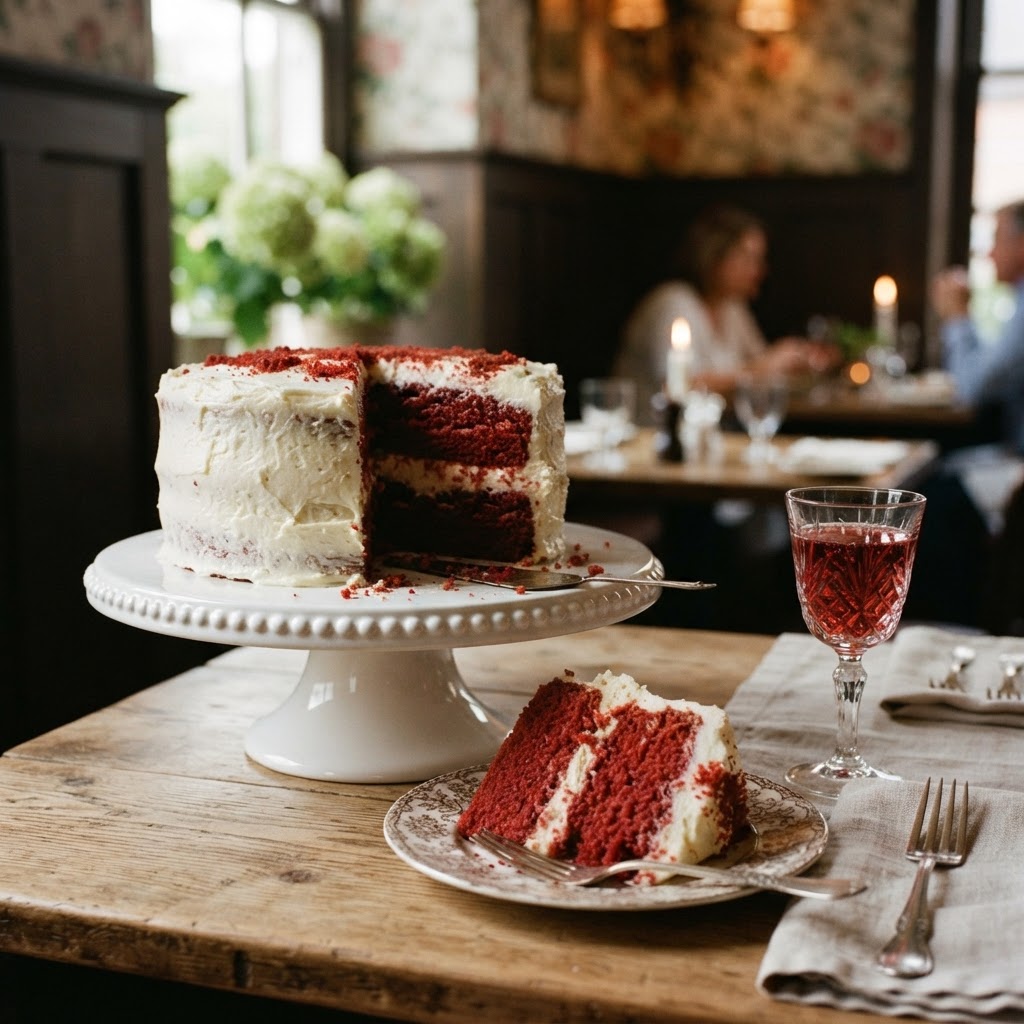
Our Mimosavated version pairs the cake with a Brachetto d'Acqui cream cheese frosting, the sweet, lightly sparkling red wine of Piedmont, whose strawberry and rose aromas add a berry note to the frosting that complements the cocoa in the cake.
Ingredients (serves 12):
The Red Velvet Cake: - 12 ⅓ oz all-purpose flour - ½ oz unsweetened cocoa powder (natural, not Dutch-processed) - 1 teaspoon baking soda - 1 teaspoon baking powder - 1 teaspoon salt - 8 ⅞ oz granulated sugar - 7 oz vegetable oil (or melted butter) - 2 large eggs, room temperature - 1 teaspoon white vinegar - 1 cup buttermilk, room temperature - 1 tablespoon red food coloring (or 2 tablespoons beet powder for a natural version) - 1 teaspoon vanilla extract
The Brachetto Cream Cheese Frosting: - 15 ⅞ oz full-fat cream cheese, room temperature - 3 ½ oz unsalted butter, room temperature - 14 ⅛ oz powdered sugar, sifted - ¼ cup Brachetto d'Acqui - 1 teaspoon vanilla extract - A pinch of salt
Making the Cake: Preheat the oven to 347°F (350°F). Butter and flour three 7 ⅞ in (8-inch) round cake pans, and line the bottoms with parchment paper.
In a medium bowl, sift together the flour, cocoa powder, baking soda, baking powder, and salt. In a large bowl, whisk together the sugar, oil, eggs, vinegar, buttermilk, red food coloring, and vanilla until smooth. Gradually add the dry ingredients to the wet, mixing just until combined — don't overmix.
Divide the batter evenly among the three prepared pans. Bake for 25–30 minutes, until a skewer inserted into the center comes out clean. Let cool in the pans for 10 minutes, then turn out onto wire racks to cool completely. The cakes must be completely cool before frosting.
Making the Brachetto Cream Cheese Frosting: In a stand mixer, beat the cream cheese and butter together until smooth and creamy. Gradually add the powdered sugar, beating on low speed until combined, then increase speed and beat until light and fluffy. Add the Brachetto, vanilla, and salt, and beat until just combined. Don't overbeat or the frosting will become too soft.
Assembling: If the cake layers have domed, use a serrated knife to level them. Place the first layer on a cake stand and spread with about a third of the frosting. Repeat with the second and third layers. Frost the top and sides of the cake. For a rustic look, leave the sides with a thin "crumb coat" and focus the frosting on the layers. For a smooth finish, apply a thin crumb coat first, refrigerate for 30 minutes, then apply the final coat.
Serving: Slice with a hot, clean knife — dip in hot water and wipe between cuts for pristine slices. Serve at room temperature.
The Mimosa Pairing Logic: Since the frosting contains Brachetto, pair with a raspberry rose champagne mimosa — the raspberry and rose notes echo the Brachetto and complement the cocoa in the cake. A strawberry mimosa is also excellent — strawberry and red velvet are a natural pairing. Avoid dry or bitter mimosas — red velvet is sweet and rich, and you need a mimosa with a touch of fruit and sweetness.
Reference Links: - Red velvet cake on Wikipedia (Waldorf-Astoria, Adams Extract): Wikipedia - History of Red Velvet Cake (Waldorf-Astoria, Adams Extract): Sunflour Baking Company - The Complex History of Red Velvet Cake (Adams Extract, WWII): Harry & David - The History of Southern Red Velvet Cake: Southern Living - Brachetto d'Acqui wine guide: Wine Folly
Make-Ahead: The cake layers can be baked up to 2 days ahead and stored, well-wrapped, at room temperature or frozen for up to 1 month. The frosting can be made a day ahead and refrigerated — bring to room temperature and re-whip before using. The assembled cake can be refrigerated for up to 3 days; bring to room temperature before serving for the best texture.
Pro Tips: Use natural cocoa powder (not Dutch-processed) — the acid in natural cocoa is what reacts with the buttermilk and baking soda to give the cake its traditional reddish hue. If you use Dutch-processed cocoa, the cake will be brown, not red. The buttermilk and vinegar are essential — they provide the acid that reacts with the cocoa and baking soda, giving the cake its tender, velvety texture. Don't overmix the batter — overmixing develops gluten and makes the cake tough. Make sure all ingredients are at room temperature — this ensures even mixing and proper texture. The cream cheese and butter for the frosting must be at room temperature — cold ingredients will create lumps that you can never beat out. Don't overbeat the frosting once the sugar is added — overbeating can make it too soft or grainy. Level the cake layers before frosting — domed layers will make the cake tilt and slide.
Rate this recipe
Be the first to rate this recipe
to submit your rating.
Recent Posts

Couscous Royale: North Africa's Grand Platter of Lamb, Chicken, and Merguez
October 14, 2026

Seattle Cream Cheese Dog Bites: Hadley Long's 1989 Pioneer Square Invention
October 14, 2026

Khao Soi: Chiang Mai's Northern Thai Coconut Curry Noodles
October 13, 2026

Korean Bibimbap: Jeonju's Joseon Dynasty Mixed Rice
October 11, 2026

Spaghetti alla Carbonara: Rome's World War II Pasta of Eggs, Guanciale, and Pecorino
October 9, 2026