The Raspberry Lychee Rose Champagne Mimosa
March 6, 2026
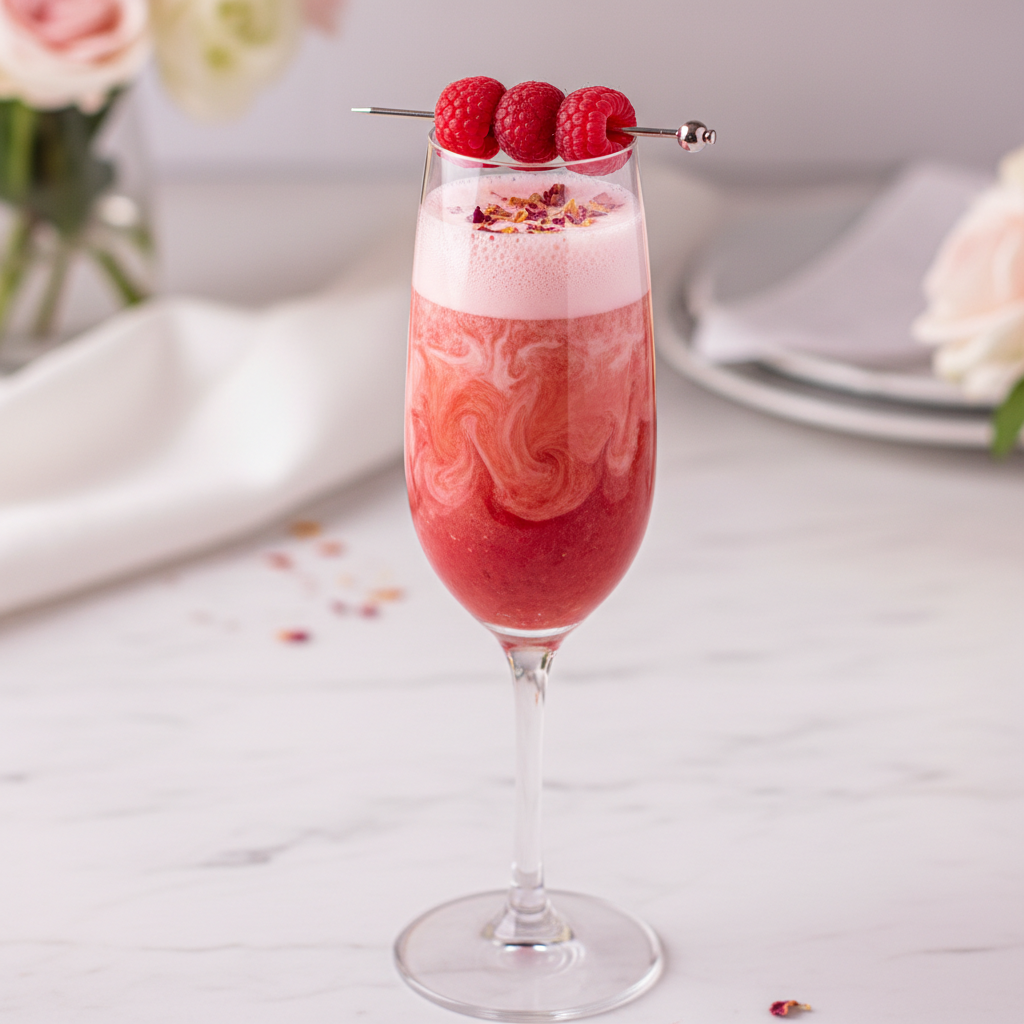
The Raspberry Lychee Rose Champagne Mimosa is the most romantic and feminine drink in the entire collection — a deeply pink, floral, ethereal cocktail built from the unlikely harmony of three ingredients that share more than meets the eye. Raspberry, lychee, and rose all contain geraniol and citronellol, fragrant terpene alcohols that create a common aromatic thread binding the three together into a drink of layered, complex floral-fruit character. It is the Valentine's Day brunch cocktail par excellence — and beautiful enough to serve any time of year.
The Flavor Science
The unexpected compatibility of raspberry, lychee, and rose is not coincidental: all three contain significant quantities of geraniol (a fragrant compound also found in geranium and rose essential oils) which creates a perceptible aromatic connection — a quality of shared floral-fruitiness that makes them taste as if they were designed to go together. This is the science behind classic flavor pairings: shared aromatic compounds, whether perceived consciously or not, create a sense of harmony and coherence in the glass.
Fresh raspberries, ripe enough to be soft, produce a juice of extraordinary vivid color and balanced sweet-tart flavor. Canned lychee in light syrup provides the most reliable year-round result. Nielsen-Massey Rose Water is the recommended product for its relatively mild concentration and clean rose character.
Raspberry Lychee Purée: - 2 cups fresh raspberries (or 12 oz frozen, thawed) - 1 can (20 oz) lychees in light syrup, drained (reserve 4 tablespoons of syrup) - 1 tablespoon fresh lemon juice - 2 tablespoons reserved lychee syrup - 4–6 drops food-grade rose water (Nielsen-Massey)
Blend raspberries, drained lychees, lemon juice, and lychee syrup until smooth. Pass through a fine-mesh sieve — press firmly to extract maximum liquid. Stir in rose water, adding drops gradually and tasting after each addition. The purée should be a deep pink-coral with a background floral note. Cool completely. Refrigerate up to 2 days.
Ingredients (serves 6): - 1¼ cups raspberry lychee purée (above) - 1 bottle (25 oz chilled Champagne Rosé Brut NV (Billecart-Salmon Brut Rosé, or Laurent-Perrier Cuvée Rosé — both benchmark examples) - Fresh raspberries and dried rose petals for garnish - Optional: ½ oz Chambord Black Raspberry Liqueur per serving for deeper raspberry intensity
Instructions: Chill Champagne flutes for 5 minutes. Pour 1¾ oz of the raspberry lychee purée into each flute. Add Chambord if using. Top slowly with chilled Rosé Champagne, pouring down the side. The deep coral-pink purée will bloom through the salmon-pink Champagne in extraordinary waves of color. Garnish with 3 fresh raspberries on a cocktail pick and a scatter of dried rose petals on the foam surface.
For a Mimosa Bar (serves 12): - 2½ cups raspberry lychee purée - 3 oz Chambord (optional) - 2 bottles Champagne Rosé Brut, chilled
Variations: - Add ½ oz of Hendrick's Gin per serving for a Raspberry Lychee Rose Gin Fizz Mimosa that bridges cocktail and mimosa categories. - Replace rosé Champagne with a sparkling Lambrusco Rosato for a deeper, more berry-forward Italian-style version. - Add 1 teaspoon of culinary-grade dried rose petals steeped for 10 minutes in the purée for a more pronounced rose note.
Pairing: This is the mimosa for dessert-adjacent brunch preparations — macarons, financiers, rose-flavored pastries, and any fruit tart. Its deep fruit sweetness also pairs with aged cheese boards and honey-based preparations.
Reference Links: - Geraniol flavor compound (raspberry-lychee-rose connection): FlavorDB — Flavor Compounds - Chambord Black Raspberry Liqueur: Chambord Official - Laurent-Perrier Cuvée Rosé: Laurent-Perrier
Pro Tips: Rosé Champagne deepens the existing pink of the purée into a richer, more complex color than Blanc de Blancs would. The color combination — deep pink purée blooming into pale salmon Champagne — is one of the most visually beautiful effects in this entire collection. The rose water must be used with extreme restraint; the single most common failure with this ingredient is overuse, which produces a perfume-like, soapy character.
Rate this recipe
Be the first to rate this recipe
to submit your rating.
Recent Posts

Couscous Royale: North Africa's Grand Platter of Lamb, Chicken, and Merguez
October 14, 2026

Seattle Cream Cheese Dog Bites: Hadley Long's 1989 Pioneer Square Invention
October 14, 2026

Khao Soi: Chiang Mai's Northern Thai Coconut Curry Noodles
October 13, 2026

Korean Bibimbap: Jeonju's Joseon Dynasty Mixed Rice
October 11, 2026

Spaghetti alla Carbonara: Rome's World War II Pasta of Eggs, Guanciale, and Pecorino
October 9, 2026