Pennsylvania Dutch Scrapple: The Thrifty Pork Loaf Brought from the German Palatinate in the 1700s
September 27, 2026
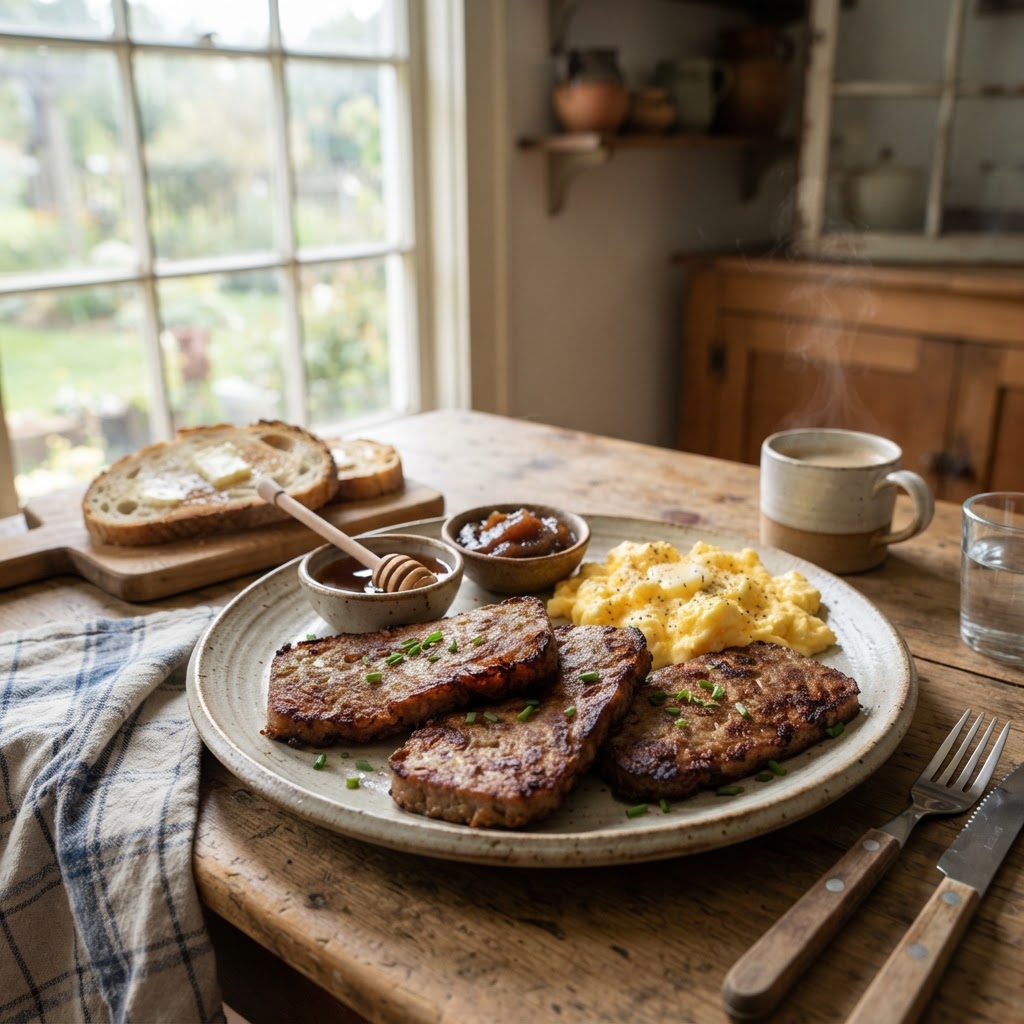
Scrapple is the most thrifty and most misunderstood breakfast of the Pennsylvania Dutch, a loaf of pork scraps, cornmeal, and buckwheat flour, seasoned with sage and spices, set in a pan to firm, then sliced and fried until the outside is crisp and the inside is soft and creamy. According to Taste Cooking, scrapple finds its ancestry in *panhaas*, a German meat pudding consisting of pork odds and ends mixed with buckwheat and spices like sage, brought to southeastern Pennsylvania by German settlers from the Palatinate in the late 1600s and early 1700s. These settlers, who became known as the Pennsylvania Dutch, used every part of the pig after butchering, simmering the bones and scraps to extract the broth and meat, then stirring in cornmeal and buckwheat to create a loaf that could feed a family for a week. Wikipedia confirms that scrapple, also known by the Pennsylvania Dutch name *panhaas*, is a savory mush made from pork scraps and trimmings combined with cornmeal and wheat flour, often buckwheat flour, and spices, typically formed into a loaf and pan-fried before serving, with the recipe brought to the United States by German settlers in the 17th and 18th centuries.
The genius of scrapple is the crust. Fried in a hot skillet with a little oil or butter, the slices develop a deep mahogany crust that crackles under the teeth, giving way to a soft, almost porridge-like interior that tastes of pork, sage, and corn. Eaten with maple syrup or apple butter, scrambled eggs, and toast, it is the most honest and most sustaining farm breakfast in the Pennsylvania Dutch country, a dish born of the principle that nothing from a slaughtered pig should be wasted.
About the Ingredients
Pork — pork shoulder or pork butt, cubed, plus a pork bone or trotters if available for extra body and gelatin in the broth. Some traditional recipes use the head and organ meats, but shoulder produces a milder, more accessible scrapple.
Cornmeal — yellow or white stone-ground cornmeal, which gives the scrapple its body and creamy texture.
Buckwheat flour — buckwheat flour, which gives scrapple its characteristic dark color and earthy, nutty flavor. All-purpose flour alone works but produces a lighter, less authentic result.
Broth — the pork cooking liquid, rich with gelatin from the bones, which sets the scrapple firm when chilled.
Seasonings — sage, thyme, black pepper, and salt, the classic Pennsylvania Dutch spice blend. Some recipes add nutmeg, marjoram, or savory.
Fat — butter or bacon grease for frying the slices.
Ingredients (serves 8, makes one 9x5-inch loaf): - 2 lbs pork shoulder, cubed - 1 pork bone or 2 pork trotters (optional, for gelatin) - 1 large onion, quartered - 2 cloves garlic, smashed - 2 bay leaves - 1 tsp whole black peppercorns - Water to cover - 1 1/2 cups yellow cornmeal - 1/2 cup buckwheat flour - 1 tsp dried sage - 1/2 tsp dried thyme - 1 tsp salt (or to taste, depending on broth saltiness) - 1 tsp freshly ground black pepper - Butter or bacon grease, for frying - Maple syrup or apple butter, for serving
Instructions: In a large pot, combine the pork, bone if using, onion, garlic, bay leaves, and peppercorns. Add water to cover by 2 inches. Bring to a boil, then reduce to a simmer and cook, covered, until the pork is very tender and falling off the bone, about 2 hours.
Remove the meat and bones from the broth and set aside to cool. Strain the broth and measure out 6 cups. If you have less, add water; if more, reduce by boiling.
When the pork is cool enough to handle, shred the meat finely, discarding bones, gristle, and excess fat. You should have about 4 cups of shredded meat.
Return the 6 cups of broth to the pot and bring to a simmer. In a bowl, whisk together the cornmeal, buckwheat flour, sage, thyme, salt, and pepper. Gradually whisk this into the simmering broth in a steady stream, whisking constantly to prevent lumps.
Cook over low heat, stirring constantly with a wooden spoon, until the mixture thickens to a stiff, porridge-like consistency that pulls away from the sides of the pot, about 15 to 20 minutes. Stir in the shredded pork until evenly distributed.
Pour the mixture into a greased 9x5-inch loaf pan, smoothing the top. Let cool to room temperature, then refrigerate at least 8 hours or overnight until completely firm.
To serve, turn the loaf out of the pan and cut into 1/2-inch slices. Heat butter or bacon grease in a skillet over medium heat. Fry the slices until deeply browned and crisp on both sides, about 4 minutes per side. Serve hot with maple syrup or apple butter, alongside scrambled eggs and toast.
The Mimosa Pairing Logic: The savory, porky, sage-scented scrapple wants a bright, dry sparkling wine that can cut the richness and echo the farm table. A classic Champagne mimosa is the natural match, the orange juice a bright counter to the pork and the bubbles lifting the cornmeal crust. A peach ginger mimosa is equally lovely, its stone-fruit sweetness and ginger warmth a companion to the maple syrup. This pairing is a sparkling toast to the Pennsylvania Dutch farmers and the Palatinate settlers who brought *panhaas* to the New World.
Reference Links: - A Brief History of Pennsylvania Scrapple (panhaas, German meat pudding, buckwheat, sage): Taste Cooking - Scrapple (panhaas, pork scraps, cornmeal, buckwheat, 17th-18th century German settlers): Wikipedia
Rate this recipe
Be the first to rate this recipe
to submit your rating.
Perfect Mimosa Pairings
Mimosas that pair perfectly with this dish

Recent Posts

Couscous Royale: North Africa's Grand Platter of Lamb, Chicken, and Merguez
October 14, 2026

Seattle Cream Cheese Dog Bites: Hadley Long's 1989 Pioneer Square Invention
October 14, 2026

Khao Soi: Chiang Mai's Northern Thai Coconut Curry Noodles
October 13, 2026

Korean Bibimbap: Jeonju's Joseon Dynasty Mixed Rice
October 11, 2026

Spaghetti alla Carbonara: Rome's World War II Pasta of Eggs, Guanciale, and Pecorino
October 9, 2026