The Pacific Northwest Marionberry & Basil Mimosa
August 1, 2026
The marionberry is the berry that the Pacific Northwest keeps largely to itself, and it is worth seeking out. It is a cultivar of blackberry — a cross between the Chehalem and Olallie blackberries — developed by the USDA Agricultural Research Service in cooperation with Oregon State University and released in 1956. It is named after Marion County, Oregon, where the berry was bred and tested, and where most of the world's supply is still grown. The marionberry is prized for its intense, complex flavor: sweeter and more aromatic than a common blackberry, with a deeper, almost wine-like tartness and a softer, more delicate seed structure (Wikipedia).
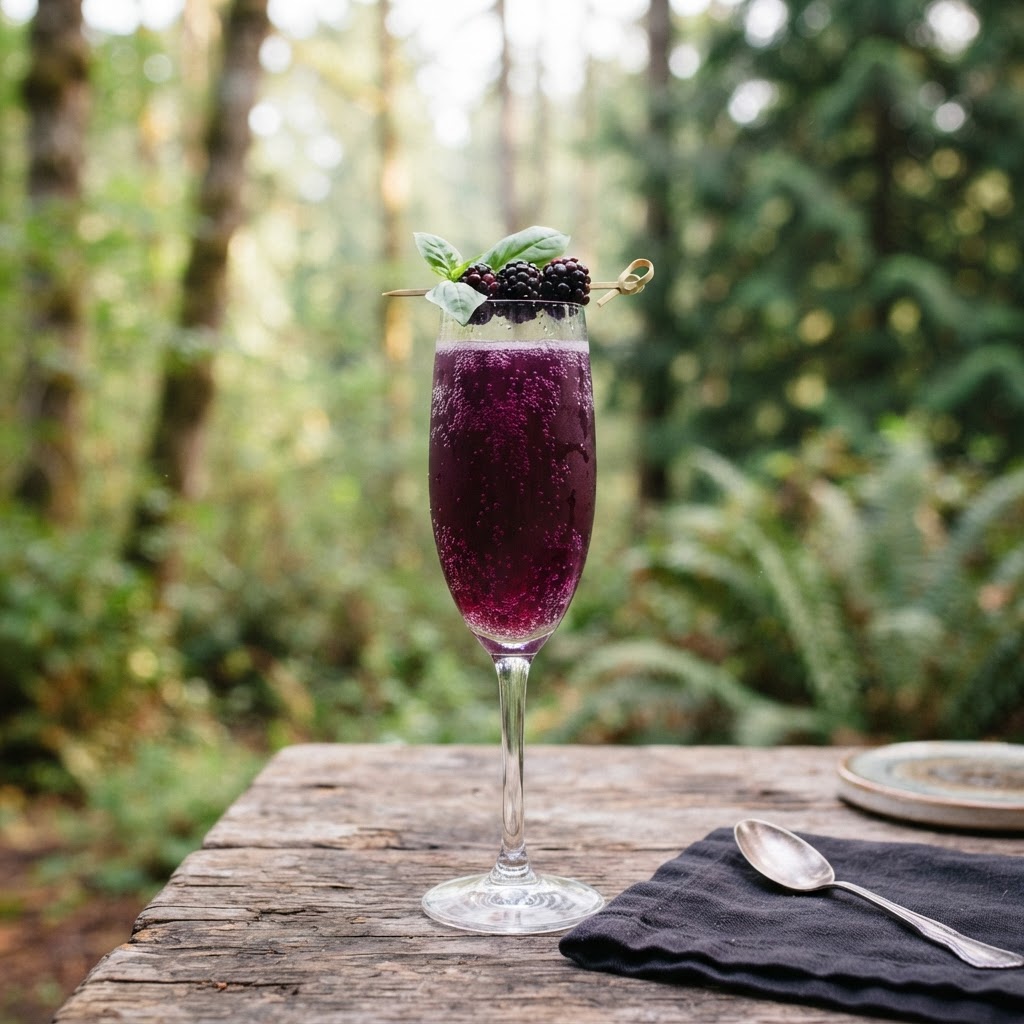
More than half of all blackberries grown in Oregon are of the Marion variety, and the berry is so identified with the state that it has become something of a regional icon. In a mimosa, the marionberry's deep purple juice produces a drink of striking color — a saturated indigo-violet that deepens as it meets the bubbles — and its complex tartness pairs unexpectedly well with fresh basil, whose anise-adjacent, slightly sweet herbaceousness brings out the berry's depth rather than competing with it. The combination is a Pacific Northwest original: dark, herbal, and unexpectedly sophisticated.
Ingredients (serves 6): - 1¼ cups fresh marionberry purée (about 10.6 oz fresh or frozen marionberries — blackberries are an acceptable substitute if marionberries are unavailable) - 2 oz fresh lemon juice - 2 tablespoons honey or simple syrup (to taste) - 8 large fresh basil leaves, plus sprigs for garnish - 1 bottle (3 ⅛ cups) chilled Prosecco Brut or Cava - Whole marionberries and basil sprigs for garnish
The Marionberry Purée: Combine the marionberries, lemon juice, and honey in a blender and blend until completely smooth. Strain through a fine-mesh sieve, pressing firmly with the back of a ladle to extract the deep purple juice and leave the seeds behind. Bruise the basil leaves between your palms to release their oils, stir them into the purée, and let stand 5 minutes. Remove the basil. Chill thoroughly.
Instructions: Chill champagne flutes for 5 minutes. Pour 2 oz of the marionberry-basil purée into each flute. Top slowly with chilled Prosecco, pouring gently down the side of the glass — the deep purple will swirl through the bubbles in a beautiful gradient. Do not stir. Thread 3–4 whole marionberries onto a cocktail pick and rest it across the rim, with a small basil sprig tucked alongside.
For a Mimosa Bar (serves 12): - 2½ cups marionberry purée - 4 oz fresh lemon juice - 3 tablespoons honey - 12 basil leaves (bruised and removed) - 2 bottles chilled Prosecco Brut
Variations: - Blackberry Sage: Swap the basil for 4 bruised fresh sage leaves for a more savory, earthy version. - Marionberry Lime: Replace the lemon juice with fresh lime juice for a brighter, more tropical acidity. - Marionberry Royale: Use Champagne Blanc de Blancs and add ½ oz crème de mûre (blackberry liqueur) for a richer, more decadent version.
Pairing: This mimosa pairs beautifully with lemon ricotta pancakes, berry-studded French toast, and any pastry featuring berries or cream. Its herbal complexity also makes it a fine companion to a cheese board with aged goat cheese and honey.
Reference Links: - Marionberry (USDA ARS, Oregon State University, 1956, Marion County): Wikipedia - Oregon berries — Marion variety history: Oregon Raspberries & Blackberries
Pro Tips: If you cannot find true marionberries, seek them frozen — Oregon growers freeze the harvest at peak ripeness, and frozen marionberries are available online and at specialty grocers year-round. Thaw completely and drain any excess liquid before blending for the most concentrated flavor. Strain the purée thoroughly — the seeds are the one element that separates a refined marionberry mimosa from a gritty one. Bruise the basil rather than muddling it; muddling shreds the leaves and releases chlorophyll, which makes the purée taste grassy rather than herbal.
Rate this recipe
Be the first to rate this recipe
to submit your rating.
Recent Posts

Couscous Royale: North Africa's Grand Platter of Lamb, Chicken, and Merguez
October 14, 2026

Seattle Cream Cheese Dog Bites: Hadley Long's 1989 Pioneer Square Invention
October 14, 2026

Khao Soi: Chiang Mai's Northern Thai Coconut Curry Noodles
October 13, 2026

Korean Bibimbap: Jeonju's Joseon Dynasty Mixed Rice
October 11, 2026

Spaghetti alla Carbonara: Rome's World War II Pasta of Eggs, Guanciale, and Pecorino
October 9, 2026