Oysters Kirkpatrick: Ernest Arbogast's Palace Hotel San Francisco Creation
March 28, 2026
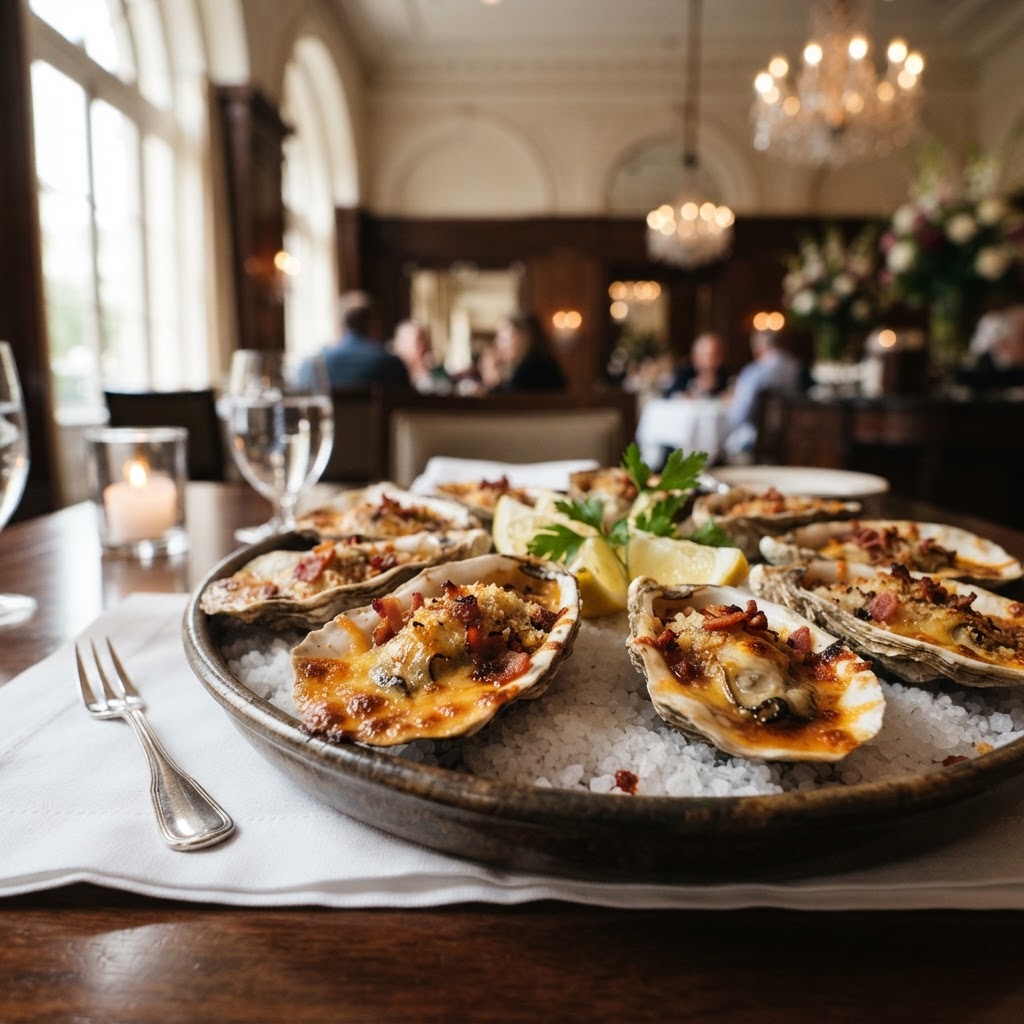
In the early 1900s, Ernest Arbogast, the chef of the Palm Court Restaurant at the Palace Hotel in San Francisco, created a baked oyster dish that he named after the hotel's manager, a Mr. Kirkpatrick. The dish consisted of fresh oysters on the half shell topped with bacon, a Worcestershire-based sauce, and cheese, then broiled until the bacon was crisp and the cheese was bubbling. It became a fixture of the Palm Court's menu and spread from there to restaurants across America.
Oysters Kirkpatrick is often confused with or conflated with Oysters Kilpatrick, an Australian dish that uses similar ingredients but is typically made with barbecue sauce rather than Worcestershire. The Palace Hotel version is the American original, and it is the one that established the combination of oysters, bacon, and melted cheese as a classic of American seafood cookery. The dish is simple to prepare but demands the best ingredients: fresh, briny oysters, good bacon, and sharp cheese.
About the Ingredients: The oysters should be fresh, small to medium East Coast or Gulf oysters, served on the half shell. The bacon should be thick-cut and smoky, partially cooked before it goes on the oysters so that it crisps under the broiler without overcooking the oyster. The sauce is a simple mixture of Worcestershire sauce and a little butter, though some versions add ketchup or chili sauce. The cheese is sharp cheddar or Parmesan, grated fine so it melts quickly.
Ingredients (serves 4–6 as a starter): - 2 dozen fresh oysters on the half shell - 8 strips thick-cut bacon, cut in half crosswise
The Sauce: - 3 tablespoons unsalted butter, melted - 2 tablespoons Worcestershire sauce - 1 teaspoon fresh lemon juice - 2 drops of Tabasco sauce (optional)
The Topping: - ¾ cup sharp cheddar cheese, finely grated - 2 tablespoons panko breadcrumbs - 2 tablespoons fresh parsley, minced - Rock salt for plating - Lemon wedges for serving
Instructions: Preheat the broiler to high. In a skillet over medium heat, cook the bacon halves for 3 to 4 minutes per side, until they are about halfway cooked and still flexible. They will finish cooking under the broiler. Drain on paper towels and cut each piece in half so you have 32 pieces total.
In a small bowl, whisk together the melted butter, Worcestershire sauce, lemon juice, and Tabasco if using.
Arrange the oysters on the half shell on a baking sheet filled with a bed of rock salt to keep them level. Spoon about a teaspoon of the butter mixture over each oyster. Place a piece of partially cooked bacon on top of each oyster. Sprinkle with grated cheddar and a pinch of panko breadcrumbs.
Place under the broiler for 4 to 5 minutes, until the bacon is crisp, the cheese is melted and bubbling, and the edges of the oysters are just beginning to curl. Watch carefully, as the broiler can take them from perfect to overcooked in seconds.
Transfer the oysters, still on the rock salt, to a serving platter. Sprinkle with minced parsley and serve immediately with lemon wedges.
The Mimosa Pairing Logic: The smoky bacon and briny oysters call for a mimosa with bright citrus and a touch of fruit. The Classic Champagne Mimosa is the ideal partner, its orange acidity cutting through the richness of the bacon and cheese. For a more adventurous pairing, the Grapefruit Rosemary Mimosa adds a bitter, herbal note that complements the Worcestershire sauce.
Reference Links: - Oysters Kilpatrick – Caroline's Cooking - Oysters Kilpatrick – Retro Food For Modern Times
Make-Ahead: The bacon can be partially cooked up to a day ahead and refrigerated. The sauce can be mixed ahead and kept at room temperature. The oysters should be shucked no more than 2 hours before baking and kept chilled on ice. Assemble and broil at the last minute, as the dish is at its best the moment it leaves the oven.
Pro Tips: The rock salt bed is essential for keeping the oysters level during broiling. Without it, the oyster liquor and sauce will spill out, and the oysters will cook unevenly. The bacon must be partially cooked before it goes on the oysters. If you put raw bacon on, it will not crisp before the oyster overcooks. The broiler should be watched constantly. Oysters go from perfectly cooked to rubbery in less than a minute. Take them out the moment the cheese starts to bubble and the bacon crisps.
Rate this recipe
Be the first to rate this recipe
to submit your rating.
Perfect Mimosa Pairings
Mimosas that pair perfectly with this dish
Recent Posts

Couscous Royale: North Africa's Grand Platter of Lamb, Chicken, and Merguez
October 14, 2026

Seattle Cream Cheese Dog Bites: Hadley Long's 1989 Pioneer Square Invention
October 14, 2026

Khao Soi: Chiang Mai's Northern Thai Coconut Curry Noodles
October 13, 2026

Korean Bibimbap: Jeonju's Joseon Dynasty Mixed Rice
October 11, 2026

Spaghetti alla Carbonara: Rome's World War II Pasta of Eggs, Guanciale, and Pecorino
October 9, 2026