Ossobuco alla Milanese with Gremolata
March 26, 2026
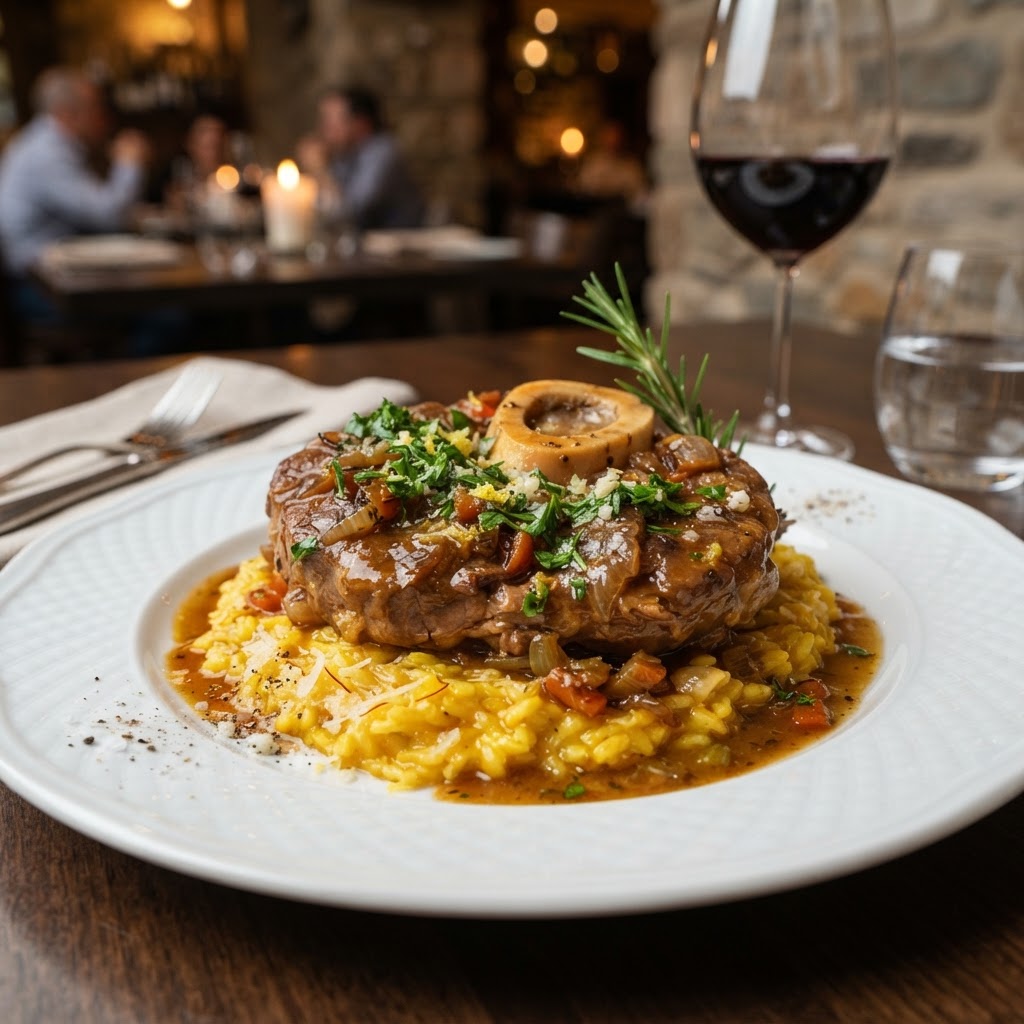
Ossobuco alla Milanese is a specialty of Lombard cuisine: veal shanks cross-cut into thick rounds, braised slowly in a soffritto of onions, carrots, and celery with white wine, tomatoes, and broth until the meat is so tender it falls from the bone, served with a bright gremolata of parsley, garlic, and lemon zest scattered over the top (Wikipedia). The dish takes its name from the Italian "osso buco," literally "bone with a hole," which refers to the marrow-filled cavity in the center of each veal shank cross-section. This marrow is the treasure of the dish, and a small spoon is traditionally provided so diners can scoop it out and spread it on toasted bread.
Ossobuco originated in Milan, the capital of Lombardy, where it has been a staple of the local cuisine since at least the 19th century. The first printed recipe appears in Giovanni Battista and Giovanni Ratto's *La Cucina Genovese* (1871), though the dish was certainly well-established in Milanese kitchens long before. The traditional accompaniment is risotto alla Milanese, saffron risotto, and the two dishes together form the most characteristic pairing in Lombard cooking. The gremolata, the bright, raw condiment of finely minced parsley, garlic, and lemon zest, is the essential finishing touch that cuts through the richness of the braised meat, and it is always added at the very end, just before serving, so its volatile aromatics are not destroyed by heat.
Ingredients (serves 6 as a main course): - 6 veal shanks, cross-cut into 2-inch thick rounds (ask the butcher for hind shanks — they are meatier than fore shanks) - Flour for dredging (seasoned with salt and pepper) - 4 tablespoons unsalted butter - 2 tablespoons olive oil
Soffritto: - 2 medium onions, finely diced - 2 carrots, finely diced - 2 celery stalks, finely diced - 4 garlic cloves, minced
Braising Liquid: - 1 cup dry white wine (a crisp Pinot Grigio or Soave) - ⅞ cup chicken or veal stock - 14 ⅛ oz canned crushed tomatoes (San Marzano) - 2 tablespoons tomato paste - 1 bouquet garni (2 bay leaves, 4 thyme sprigs, parsley stems) - 1 cinnamon stick (traditional — adds a warm, aromatic note that is characteristic of Milanese cooking) - Strip of lemon zest (from 1 lemon, in one piece) - Salt and pepper
Gremolata: - 1 large bunch fresh flat-leaf parsley, very finely chopped (about ½ cup) - 2 garlic cloves, very finely minced (almost a paste) - Zest of 1 lemon (preferably organic), finely grated - 1 tablespoon fresh thyme leaves (optional but traditional in some versions) - 1 tablespoon extra-virgin olive oil - Salt
To Serve: - Risotto alla Milanese (saffron risotto) — the traditional accompaniment - Or creamy polenta - Crusty bread for the marrow - Small espresso spoons (for scooping the marrow)
Dredging and Searing: Preheat oven to 325°F (320°F). Season the veal shanks generously with salt and pepper. Dredge lightly in seasoned flour, shaking off excess. Heat butter and olive oil in a large Dutch oven over medium-high heat. When the butter foams, add the shanks (work in batches — do not crowd). Sear 3–4 minutes per side until deeply golden brown. The searing is critical — it develops the Maillard flavors that form the foundation of the braise. Remove to a plate.
The Soffritto: Drain excess fat from the pot, leaving 2 tablespoons. Add the diced onions, carrots, and celery. Cook over medium heat 8–10 minutes until softened and lightly golden. Add the garlic and cook 1 minute. Add the tomato paste and cook 1 minute until darkened.
Deglazing and Braising: Return the veal shanks to the pot. Add the white wine and bring to a simmer, scraping up the browned bits from the bottom of the pot. Cook 2 minutes to burn off the alcohol. Add the crushed tomatoes, stock, bouquet garni, cinnamon stick, and lemon zest strip. The liquid should come about halfway up the shanks — add more stock if needed. Season with salt and pepper.
Bring to a simmer on the stovetop. Cover with a tight-fitting lid (or foil, then the lid). Transfer to the oven and braise at 325°F for 2 to 2.5 hours. The meat should be fork-tender and just beginning to pull away from the bone — it should not be falling apart entirely, as it needs to hold its shape for service. Baste the shanks with the braising liquid every 30 minutes. If the liquid level drops too low, add more stock.
The Gremolata: While the ossobuco braises, combine the finely chopped parsley, minced garlic, lemon zest, and thyme (if using) in a small bowl. Toss with olive oil and a pinch of salt. Do not make the gremolata ahead — it should be made close to service so the aromatics are bright and fresh. The lemon zest and garlic must be very finely minced — large pieces are harsh and unpleasant.
Finishing the Sauce: When the meat is done, remove the shanks to a serving platter and keep warm. Strain the braising liquid through a fine sieve into a saucepan, pressing on the vegetables to extract all their flavor. Skim the fat from the surface. Bring to a simmer and reduce by about one-third until the sauce coats the back of a spoon. Taste and adjust seasoning. (If the sauce is too thin, whisk in a beurre manié — 1 tablespoon flour mixed with 1 tablespoon cold butter — and simmer 3 minutes.)
Service: Place each veal shank on a bed of risotto alla Milanese or creamy polenta. Spoon the sauce generously over the meat. Scatter the gremolata over the top — do not stir it in. The gremolata should sit on top of the meat like a bright, fragrant crown, releasing its aromatics with each bite. Serve with crusty bread and a small spoon for the marrow.
The Mimosa Pairing Logic: The rich, braised character of ossobuco and the bright, citrusy gremolata call for a mimosa with both richness and bright acidity. A classic orange mimosa is the most natural pairing — the citrus echoes the lemon in the gremolata and the champagne's toasty depth mirrors the braised meat. A blood orange mimosa is exceptional — the slight bitterness of the blood orange creates a beautiful bridge with the cinnamon and the tomato in the braise. For a more aromatic pairing, a cardamom orange blossom mimosa creates a warm, spicy resonance with the cinnamon stick in the braising liquid. Avoid very sweet tropical mimosas — they clash with the savory, complex, slow-cooked flavors of the dish.
Reference Links: - Ossobuco alla Milanese recipe: La Cucina Italiana - Ossobuco history and technique: Memorie di Angelina - Gremolata guide: The Spruce Eats - Risotto alla Milanese recipe: Serious Eats
Make-Ahead: Ossobuco is actually better made a day ahead — the flavors deepen and the meat absorbs more of the braising liquid overnight. The braised shanks can be refrigerated in their sauce for up to 3 days. Reheat gently on the stovetop. The gremolata should always be made fresh, close to service. The risotto should be made à la minute.
Pro Tips: The veal shanks should be hind shanks (the upper part of the leg) — they are meatier and more tender than fore shanks. The cross-cut should be 2 inches thick — thinner cuts cook too quickly and the meat becomes dry before the connective tissue breaks down. The searing is the most important step — the deep golden crust on the meat develops the Maillard flavors that form the foundation of the entire dish. The cinnamon stick is a traditional and often-overlooked ingredient in Milanese ossobuco — it adds a warm, aromatic note that is characteristic of the dish. The gremolata must be added at the very end, never cooked — heat destroys the volatile aromatics of the lemon zest and parsley. The marrow in the center of the bone is the treasure of the dish — provide small spoons so guests can scoop it out and spread it on toast.
Rate this recipe
Be the first to rate this recipe
to submit your rating.
Recent Posts

Couscous Royale: North Africa's Grand Platter of Lamb, Chicken, and Merguez
October 14, 2026

Seattle Cream Cheese Dog Bites: Hadley Long's 1989 Pioneer Square Invention
October 14, 2026

Khao Soi: Chiang Mai's Northern Thai Coconut Curry Noodles
October 13, 2026

Korean Bibimbap: Jeonju's Joseon Dynasty Mixed Rice
October 11, 2026

Spaghetti alla Carbonara: Rome's World War II Pasta of Eggs, Guanciale, and Pecorino
October 9, 2026