Okonomiyaki (Osaka-Style): Japan's Savory Cabbage Pancake
May 12, 2026
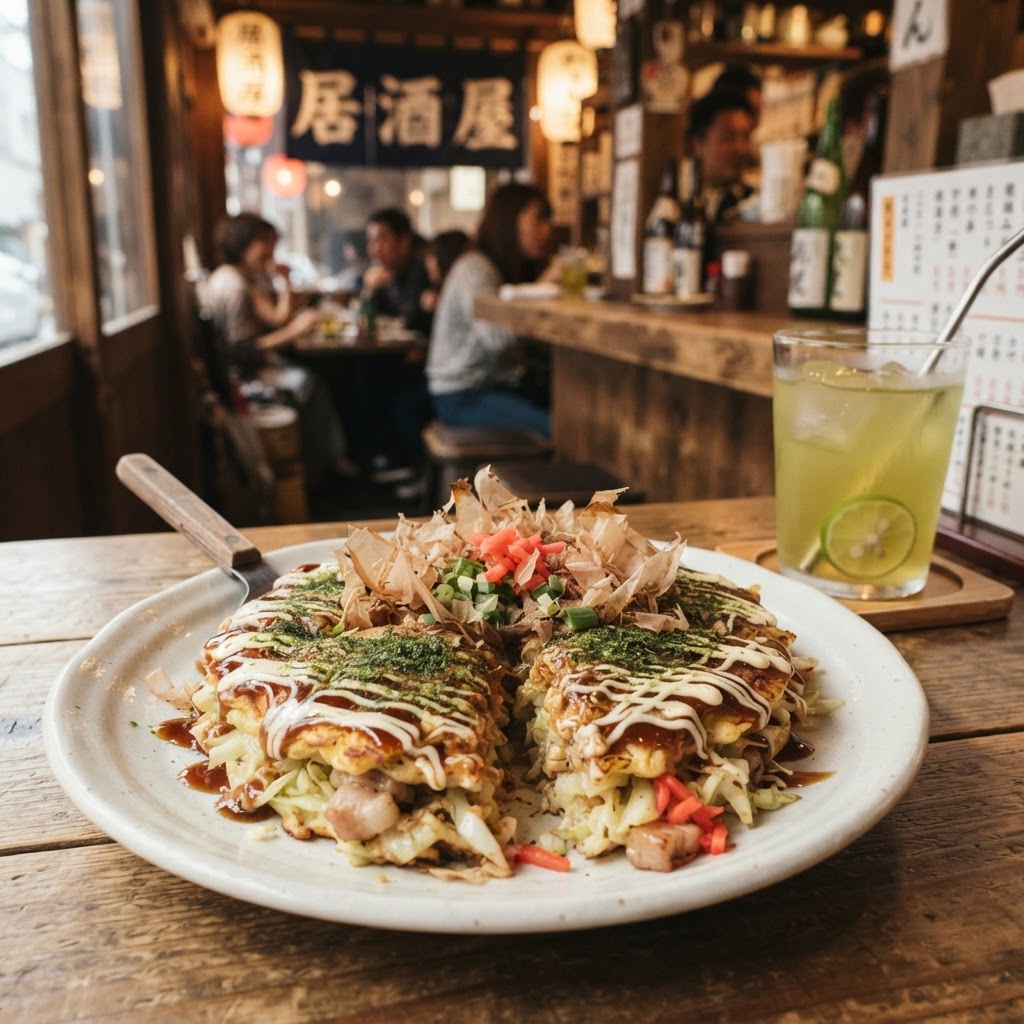
Okonomiyaki — often described as a Japanese savory pancake — is one of the most popular and widespread street foods in Japan. A thick, savory pancake made from a batter of flour, eggs, and dashi, loaded with shredded cabbage, and topped with a dramatic lattice of mayonnaise and sweet-savory okonomiyaki sauce, dancing bonito flakes, pickled ginger, and seaweed powder. The name okonomiyaki literally means "grilled as you like it" — okonomi meaning "how you like" and yaki meaning "grilled" — and it's a dish that invites endless customization.
The history of okonomiyaki traces back centuries, but the modern version emerged in the 20th century. The roots of the dish go back to the Edo period (1603–1868), where a sweet crepe-like pancake called funoyaki was served at Buddhist ceremonies. Over the centuries, this evolved into various forms of savory pancakes, and by the late 19th century, a dish called issen yōshoku (literally "one-coin Western food") — a thin pancake topped with green onions — became popular as a cheap snack in Tokyo.
The modern okonomiyaki as we know it emerged in the 1930s, and the first use of the word "okonomiyaki" is credited to a restaurant in Osaka. The dish became widespread during and after World War II, when rice was scarce and people turned to wheat flour and cabbage — both readily available — to create filling, nutritious meals. Okonomiyaki became a staple of Japanese home cooking and street food culture, and it has since become one of the most famous dishes in Japanese cuisine.
There are two main regional styles of okonomiyaki. Osaka-style (also called Kansai-style) mixes all the ingredients — batter, cabbage, meat, and other additions — together and cooks them as a single thick pancake. Hiroshima-style layers the ingredients separately: a thin crepe on the bottom, a mountain of cabbage, noodles (usually soba or udon), meat, and a fried egg on top, all flipped and assembled. The two styles have a friendly rivalry, and both are delicious, but Osaka-style is the more common version found in home cooking and most okonomiyaki restaurants.
The toppings are what make okonomiyaki visually spectacular. Okonomiyaki sauce — a thick, sweet, savory, umami-rich brown sauce similar to Worcestershire but sweeter and thicker — is drizzled in parallel lines. Japanese mayonnaise (Kewpie) is piped in perpendicular lines, creating a lattice pattern. Dried bonito flakes (katsuobushi) are sprinkled on top, and they dance and wave in the steam rising from the hot pancake — a mesmerizing effect that's as much a part of the okonomiyaki experience as the taste. Pickled red ginger (beni shoga) and ao-nori (seaweed powder) complete the presentation.
Our Mimosavated version makes classic Osaka-style okonomiyaki and pairs it with a refreshing iced green tea or, for a mimosa brunch, a bright Prosecco mimosa.
Ingredients (serves 4):
The Batter: - 3 ½ oz all-purpose flour - 1 teaspoon baking powder - A pinch of salt - ½ cup dashi stock (or water with 1 teaspoon dashi powder) - 2 large eggs - 7 oz cabbage, finely shredded (about 3 cups) - 4 green onions (scallions), finely chopped - 1 teaspoon grated ginger (optional) - 3 ½ oz bacon slices (or thin pork belly slices) - 2 tablespoons vegetable oil (for cooking)
The Toppings: - 4 tablespoons okonomiyaki sauce (or tonkatsu sauce) - 4 tablespoons Japanese mayonnaise (Kewpie) - 2 tablespoons dried bonito flakes (katsuobushi) - 2 tablespoons pickled red ginger (beni shoga) - 1 tablespoon ao-nori (seaweed powder) - Sesame seeds (optional)
Making the Batter: In a large bowl, whisk together the flour, baking powder, and salt. Add the dashi stock and eggs and whisk until smooth. Add the shredded cabbage and chopped green onions (and ginger, if using) and stir until well combined — the mixture will be thick and cabbage-heavy.
Cooking: Heat 1 tablespoon of oil in a large non-stick skillet over medium heat. Place a bacon slice in the pan (you'll cook two okonomiyaki at a time, or one at a time for easier handling). Spoon half of the cabbage-batter mixture on top of the bacon, spreading it into a round pancake about 6 inches in diameter and ¾ in (1 inch) thick. Don't spread it too thin — okonomiyaki should be thick and substantial.
Cook for 5–6 minutes, until the bottom is golden brown and crispy. Using a large spatula (or two), carefully flip the okonomiyaki. Cook for another 5–6 minutes, pressing down gently with the spatula, until the second side is golden and the pancake is cooked through — the cabbage should be tender and the batter set.
Adding the Toppings: Transfer to a plate. While still hot, drizzle the okonomiyaki sauce in parallel lines across the top. Pipe the mayonnaise in perpendicular lines to create a lattice pattern. Sprinkle with bonito flakes (they will dance in the steam), pickled red ginger, and ao-nori. Add sesame seeds if desired.
Serving: Serve immediately, piping hot. Cut into wedges at the table. The bonito flakes will wave and dance as long as the pancake is hot — it's a visual spectacle that's part of the okonomiyaki experience. Repeat with the remaining batter to make a second pancake.
The Mimosa Pairing Logic: Okonomiyaki is savory, rich, and umami-packed. The ideal mimosa pairing is a classic Prosecco mimosa — orange juice and Prosecco. The bright, acidic citrus cuts through the richness of the mayonnaise and the savory sauce, while the Prosecco's effervescence cleanses the palate between bites. A yuzu mimosa — yuzu juice and Prosecco — is even more thematic, as yuzu is a Japanese citrus that complements the Japanese flavors of the dish. Avoid heavy or sweet mimosas — the dish is savory and umami-rich, and you need something bright and acidic to balance it.
Reference Links: - Okonomiyaki on Wikipedia (Osaka, Hiroshima, Japanese origins): Wikipedia - The History of Okonomiyaki (Edo period, funoyaki): Food and Archaeology - Is Hiroshima the True Home of Okonomiyaki? (issen yōshoku): BBC Travel - Enjoy Japan's Pancake, Okonomiyaki (Edo period, 1930s Osaka): JPNEAZY - Beyond the Bomb: Hiroshima's Beloved Okonomiyaki Pancake: National Geographic
Make-Ahead: The batter can be mixed up to 1 hour ahead and kept refrigerated — don't let it sit longer, or the cabbage will release water and the batter will become too wet. The toppings can be prepared ahead. Okonomiyaki should be cooked and served immediately — the crisp exterior softens quickly. Reheat leftovers in a dry skillet over medium heat for 2–3 minutes per side — do not microwave, as the texture becomes rubbery. The assembled, cooked okonomiyaki can be frozen for up to 1 month — reheat from frozen in a 347°F/350°F oven for 10–12 minutes.
Pro Tips: Use dashi stock, not water — dashi (Japanese stock made from kombu seaweed and bonito flakes) is the backbone of Japanese cooking and gives the batter its characteristic umami flavor. If you can't make dashi from scratch, use instant dashi powder dissolved in water. Shred the cabbage finely — large pieces won't cook through and will make the pancake fall apart. Don't overmix the batter — mix just until combined; overmixing develops gluten and makes the pancake tough. Cook over medium heat, not high — okonomiyaki is thick and needs time to cook through; high heat will burn the outside before the inside is done. Don't press the pancake too hard when cooking — gentle pressure is fine, but pressing too hard squeezes out the air and makes it dense. The bonito flakes are added after cooking — they dance in the steam rising from the hot pancake, and this visual effect is part of the experience. Don't skip the toppings — okonomiyaki sauce, mayonnaise, bonito flakes, pickled ginger, and seaweed powder together create the signature okonomiyaki flavor. Without them, it's just a cabbage pancake. Serve immediately — the crisp exterior and the dancing bonito flakes are at their best the moment the pancake comes off the heat.
Rate this recipe
Be the first to rate this recipe
to submit your rating.
Recent Posts

Couscous Royale: North Africa's Grand Platter of Lamb, Chicken, and Merguez
October 14, 2026

Seattle Cream Cheese Dog Bites: Hadley Long's 1989 Pioneer Square Invention
October 14, 2026

Khao Soi: Chiang Mai's Northern Thai Coconut Curry Noodles
October 13, 2026

Korean Bibimbap: Jeonju's Joseon Dynasty Mixed Rice
October 11, 2026

Spaghetti alla Carbonara: Rome's World War II Pasta of Eggs, Guanciale, and Pecorino
October 9, 2026