New York-Style Cheesecake al Prosecco
January 22, 2026
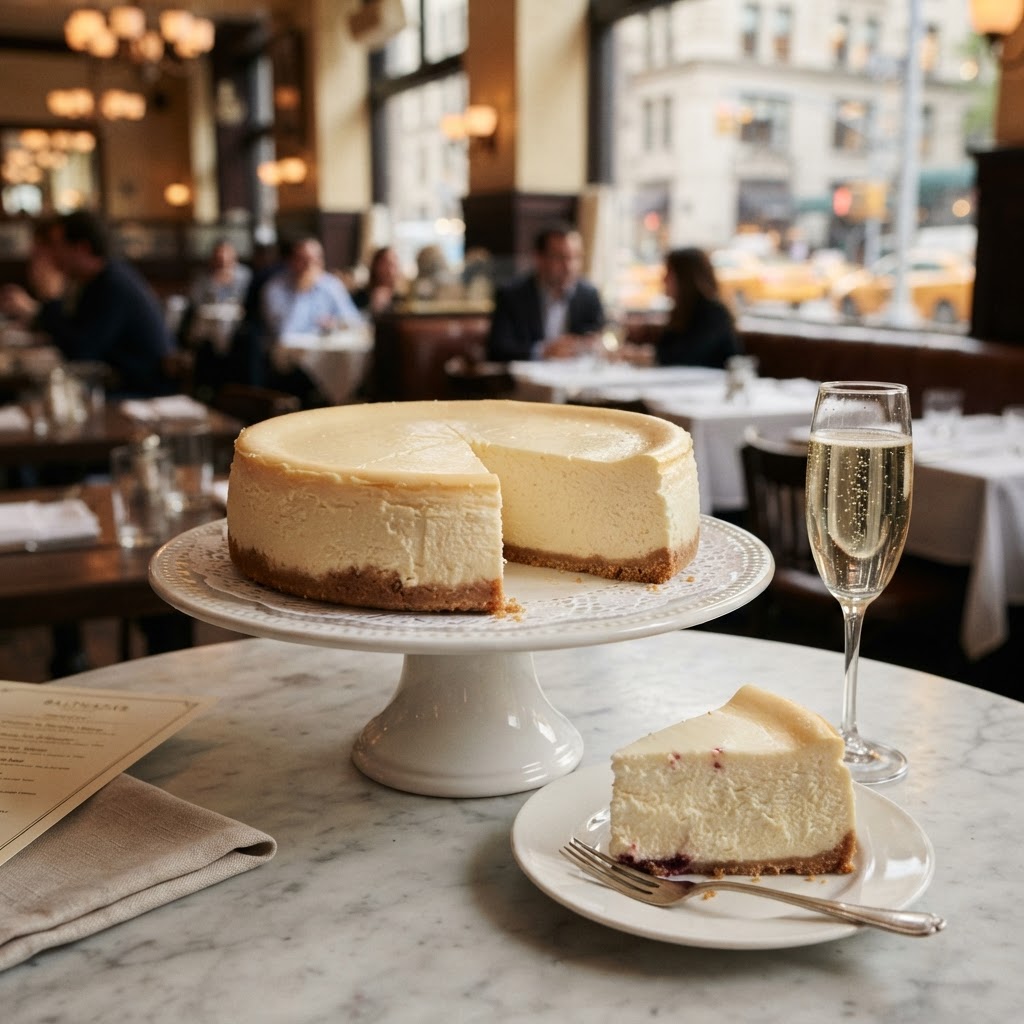
There is cheesecake, and then there is New York cheesecake. The difference is everything. A proper New York cheesecake is dense, tall, impossibly creamy, with a texture that's closer to a cloud made of cream cheese than to any cake you've encountered. It doesn't need fruit, chocolate, or caramel — though it accepts them graciously — because the cake itself is the point. And unlike the lighter, ricotta-based Italian cheesecake or the crustless French version, the New York cheesecake is built on a foundation of Philadelphia cream cheese and a graham cracker crust, baked in a tall springform pan until barely golden and still trembling in the center.
The credit for the New York cheesecake as we know it goes to Arnold Reuben (1883–1970), a German-born Jewish immigrant who owned Reuben's Restaurant and Delicatessen on East 58th Street in Manhattan. Reuben opened his restaurant in 1908, and by the late 1920s — most sources cite 1929 — he had developed the cream cheese cheesecake that would define the genre. According to Reuben's own account, he was served a cheese pie at a dinner party and was so unimpressed that he went home and experimented until he created something better. He substituted cream cheese for the traditional cottage or farmer's cheese, and the result was a richer, denser, silkier cake. When he served it at his restaurant to his high-profile clientele in the 1930s, it became a sensation. Junior's, the legendary Brooklyn cheesecake institution founded in 1950, further cemented New York as the cheesecake capital of America with the same cream cheese formula.
Our Mimosavated version adds Prosecco di Valdobbiadene to the batter — just enough to lighten the dense cream cheese filling with a faint floral brightness that makes the whole cake taste more alive. The Prosecco doesn't make it taste like sparkling wine; it makes it taste like the best cheesecake you've ever had, with an unnameable lift that keeps you going back for another bite.
Ingredients (serves 12):
The Graham Cracker Crust: - 8 ⅞ oz graham cracker crumbs (or digestive biscuit crumbs) - 4 ¼ oz unsalted butter, melted - 1 ¾ oz granulated sugar - 1 teaspoon ground cinnamon (optional)
The Prosecco Cheesecake Filling: - 2 lb full-fat cream cheese (Philadelphia, room temperature — this is non-negotiable) - 8 ⅞ oz granulated sugar - 4 large eggs, room temperature - 1 cup sour cream, room temperature - ⅓ cup Prosecco di Valdobbiadene (brut or extra dry) - 2 tablespoons all-purpose flour (or cornstarch) - 1 tablespoon vanilla extract - Zest of 1 organic lemon (grated) - A pinch of salt
Making the Crust: Preheat the oven to 347°F (350°F). In a bowl, combine the graham cracker crumbs, melted butter, sugar, and cinnamon. Press firmly into the bottom and slightly up the sides of a 9 in (9-inch) springform pan. Use the bottom of a glass to press the crumbs down tightly — a loose crust will crumble when sliced. Bake for 10 minutes, then let cool.
Making the Filling: Reduce the oven to 320°F (325°F). In the bowl of a stand mixer fitted with a paddle attachment, beat the cream cheese on medium speed until completely smooth — about 3 minutes. Scrape down the bowl. Add the sugar and beat until combined. Add the flour and salt.
Add the eggs one at a time, beating on low speed just until each is incorporated — overbeating eggs incorporates too much air and causes the cake to puff and crack. Add the sour cream, vanilla, lemon zest, and Prosecco. Mix on low just until combined. The batter should be silky and pourable.
Baking: Pour the filling over the cooled crust. Tap the pan gently on the counter a few times to release air bubbles. Place the springform pan inside a larger roasting pan and pour boiling water into the roasting pan to come halfway up the sides of the springform — this water bath ensures even, gentle baking and prevents cracking.
Bake for 55–70 minutes. The cheesecake is done when the edges are set and slightly golden but the center still wobbles like jelly when you gently shake the pan. Turn off the oven, crack the door open, and let the cheesecake cool inside for 1 hour — this gradual cooling prevents cracks.
Remove from the water bath and let cool to room temperature, then refrigerate for at least 8 hours, ideally overnight. A New York cheesecake that hasn't been chilled overnight is not yet a New York cheesecake.
Serving: Run a thin knife around the edge of the pan before releasing the springform. Slice with a hot, clean knife — dip in hot water and wipe between each cut for pristine slices. Serve plain, or with a simple berry compote.
The Mimosa Pairing Logic: Since the cheesecake contains Prosecco, pair with a classic Prosecco mimosa — orange juice and Prosecco. The bright citrus cuts through the dense richness of the cream cheese. For a more decadent brunch, a strawberry mimosa is wonderful — the berry complements the tanginess of the cheesecake. Avoid heavy or sweet mimosas — the cheesecake is already rich and dense, and you need something bright and acidic to refresh the palate.
Reference Links: - Origin of a Classic: New York Cheesecake (Arnold Reuben): Bake from Scratch - New York Cheesecake history and recipe: Tori Avey - Junior's Cheesecake 75-year history: National Geographic - Reuben's Restaurant and Delicatessen history: Doc Studio - Prosecco di Valdobbiadene: Wikipedia
Make-Ahead: The cheesecake must be made at least 8 hours ahead and ideally overnight. It can be refrigerated for up to 5 days. The crust can be baked a day ahead. The cheesecake can also be frozen for up to 1 month — thaw overnight in the refrigerator. Never serve a cheesecake warm; it must be thoroughly chilled to achieve the correct dense, creamy texture.
Pro Tips: All ingredients must be at room temperature — cold cream cheese will create lumps that you can never beat out. Use full-fat Philadelphia cream cheese — low-fat versions will never set properly and will taste flat. Don't overbeat the eggs — this is the number one cause of cracking. The water bath is not optional — it's what gives a New York cheesecake its crack-free surface and silky texture. The center should still wobble when you take it out — it will set as it cools. If the center is completely set when you remove it, you've overbaked it and it will be dry.
Rate this recipe
Be the first to rate this recipe
to submit your rating.
Recent Posts

Couscous Royale: North Africa's Grand Platter of Lamb, Chicken, and Merguez
October 14, 2026

Seattle Cream Cheese Dog Bites: Hadley Long's 1989 Pioneer Square Invention
October 14, 2026

Khao Soi: Chiang Mai's Northern Thai Coconut Curry Noodles
October 13, 2026

Korean Bibimbap: Jeonju's Joseon Dynasty Mixed Rice
October 11, 2026

Spaghetti alla Carbonara: Rome's World War II Pasta of Eggs, Guanciale, and Pecorino
October 9, 2026