New Orleans Pecan Pralines: The French Creole Candy of the French Quarter
June 24, 2026
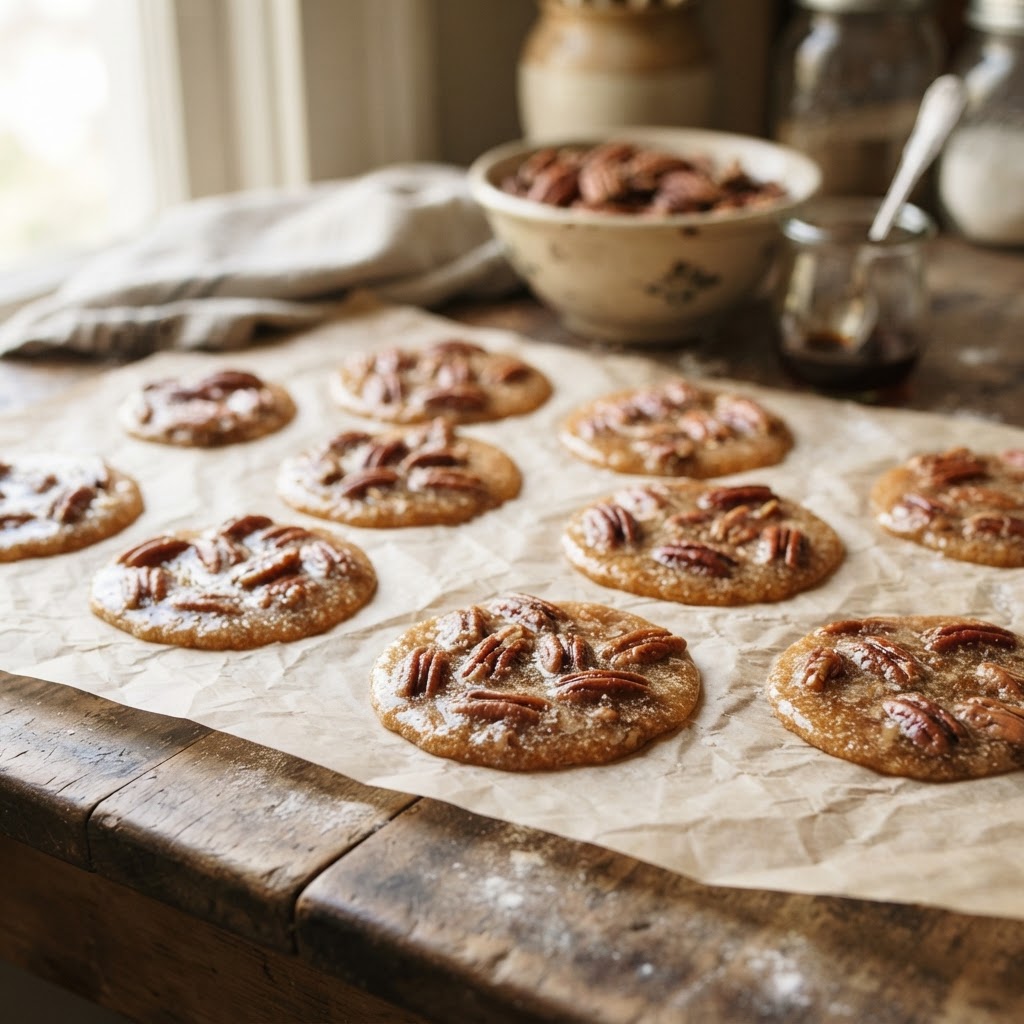
The praline is the candy of New Orleans — a flat, round, fudge-like patty of caramelized sugar, cream, and toasted pecans, spooned onto parchment to set into a rustic, crackling-edged disc, a confection born when French colonists brought their almond praline to Louisiana and, finding no almonds but pecans in abundance, swapped the nut and added cream, creating the soft, creamy, pecan-studded candy that is now inseparable from the French Quarter and the Creole kitchen. According to Wikipedia), pralines are confections containing nuts — usually almonds, pecans, and hazelnuts — and sugar; cream is often used, and in the United States pralines are associated with the South and especially New Orleans, where French settlers substituted the local pecan for the almond and added cream to produce the soft, fudge-like candy. New Orleans Historical records that pralines are thought to have originated in 17th-century France when the chef of César, Duc de Choiseul, Comte du Plessis-Praslin, coated almonds with caramelized sugar — the candy taking the duke's name, *praslin* — and that the confection traveled to New Orleans, where free women of color known as *les pralinières* sold them in the streets of the French Quarter, making the praline one of the oldest and most famous street foods of the city.
The genius of the New Orleans praline is the texture: it is neither a hard caramel nor a fudge but something between — creamy, crystalline, melting, with whole toasted pecans distributed throughout, the brown sugar and cream cooked to the soft-ball stage and beaten until it just begins to grain, then spooned out to set into rustic, crackling-edged patties. Eaten the day it is made, the praline is creamy and melting; eaten a day later, it crystallizes into a satisfying, sugary crunch.
About the Ingredients
Pecans — fresh pecan halves, toasted; the pecan is the nut that characterizes the New Orleans praline, substituted for the French almond because pecans are native to the Mississippi Valley and were abundant in Louisiana.
Brown sugar — dark or light brown sugar, the source of the praline's caramel flavor and its soft, creamy texture; brown sugar (with its molasses) makes a creamier praline than white.
White sugar — a blend of brown and white sugar controls the crystallization; all brown makes a softer, creamier candy, and a little white gives structure.
Cream and butter — heavy cream and a little butter enrich the candy and give it the melt-in-the-mouth creaminess that distinguishes a praline from a brittle; cream is the New Orleans addition to the French original.
Vanilla, salt, and a pinch of baking soda — vanilla for flavor, salt to balance, and a tiny pinch of baking soda to lighten the texture and encourage the creamy grain.
Ingredients (makes about 2 dozen pralines): - 1 1/2 cups pecan halves, toasted - 1 cup packed brown sugar - 1 cup granulated sugar - 1/2 cup heavy cream - 2 tbsp unsalted butter - 1 tsp vanilla extract - 1/4 tsp salt - A pinch of baking soda
Instructions: Line two baking sheets with parchment. In a heavy saucepan, combine the brown sugar, granulated sugar, cream, butter, and salt. Cook over medium heat, stirring, until the sugars dissolve and the mixture comes to a boil. Clip on a candy thermometer and cook, stirring occasionally, to 236°F (soft-ball stage). Remove from the heat.
Let the mixture cool undisturbed to 220°F, then stir in the vanilla, baking soda, and toasted pecans. Beat vigorously with a wooden spoon for 1–3 minutes, until the candy thickens, loses its gloss, and just begins to crystallize — it will change from shiny and pourable to creamy and slightly grainy. Working quickly, before it sets in the pan, spoon rounded tablespoons onto the parchment, spreading into rustic rounds. Let set until firm, 20–30 minutes.
The Mimosa Pairing Logic: The creamy, caramelized sugar and the toasted pecans want a bright, fruit-driven drink that cuts the sweetness and echoes the pecan's toast. A classic Champagne mimosa is the natural choice — the citrus acidity balances the sweet candy and the bubbles lift the cream. A peach bellini mimosa is equally lovely, its soft fruit a Southern echo of the pecan and a bright counter to the caramel. This is the brunch equivalent of a New Orleans praline and a cup of café au lait with chicory — a sparkling toast to the French Quarter and the *pralinières* who sold them.
Reference Links: - Praline (nut confection) (French origin, New Orleans pecan, cream): Wikipedia) - Praline or "Pecan Candy" (Duc de Praslin, les pralinières, French Quarter): New Orleans Historical
Make-Ahead: Pralines are best the day they are made, when they are creamy and melting, but they keep a week in an airtight container at room temperature, crystallizing into a pleasant crunch over time. They do not refrigerate well; the cold makes them weep and the cream seizes. Humidity is the enemy of pralines; make them on a dry day, and store them airtight. The toasted pecans can be prepped a day ahead.
Pro Tips: Toast the pecans before stirring them in; untoasted pecans are flat, and toasted pecans are deeply nutty and make a genuine difference. Use a candy thermometer; pralines are a candy, and the soft-ball stage (236°F) is non-negotiable — too cool and they never set, too hot and they are brittle and hard. Let the candy cool to 220°F before beating; beating too hot makes a grainy, separated mess, and beating too cool makes a rock in the pan. Beat just until the candy loses its gloss and thickens; over-beating makes the pralines stiff and dull, and under-beating makes them spread and never set. Spoon quickly once the candy is ready; it sets in the pan in a minute, and a pan of set praline cannot be re-spooned. Make them on a dry day; humidity prevents pralines from setting and makes them weep.
Rate this recipe
Be the first to rate this recipe
to submit your rating.
Recent Posts

Couscous Royale: North Africa's Grand Platter of Lamb, Chicken, and Merguez
October 14, 2026

Seattle Cream Cheese Dog Bites: Hadley Long's 1989 Pioneer Square Invention
October 14, 2026

Khao Soi: Chiang Mai's Northern Thai Coconut Curry Noodles
October 13, 2026

Korean Bibimbap: Jeonju's Joseon Dynasty Mixed Rice
October 11, 2026

Spaghetti alla Carbonara: Rome's World War II Pasta of Eggs, Guanciale, and Pecorino
October 9, 2026