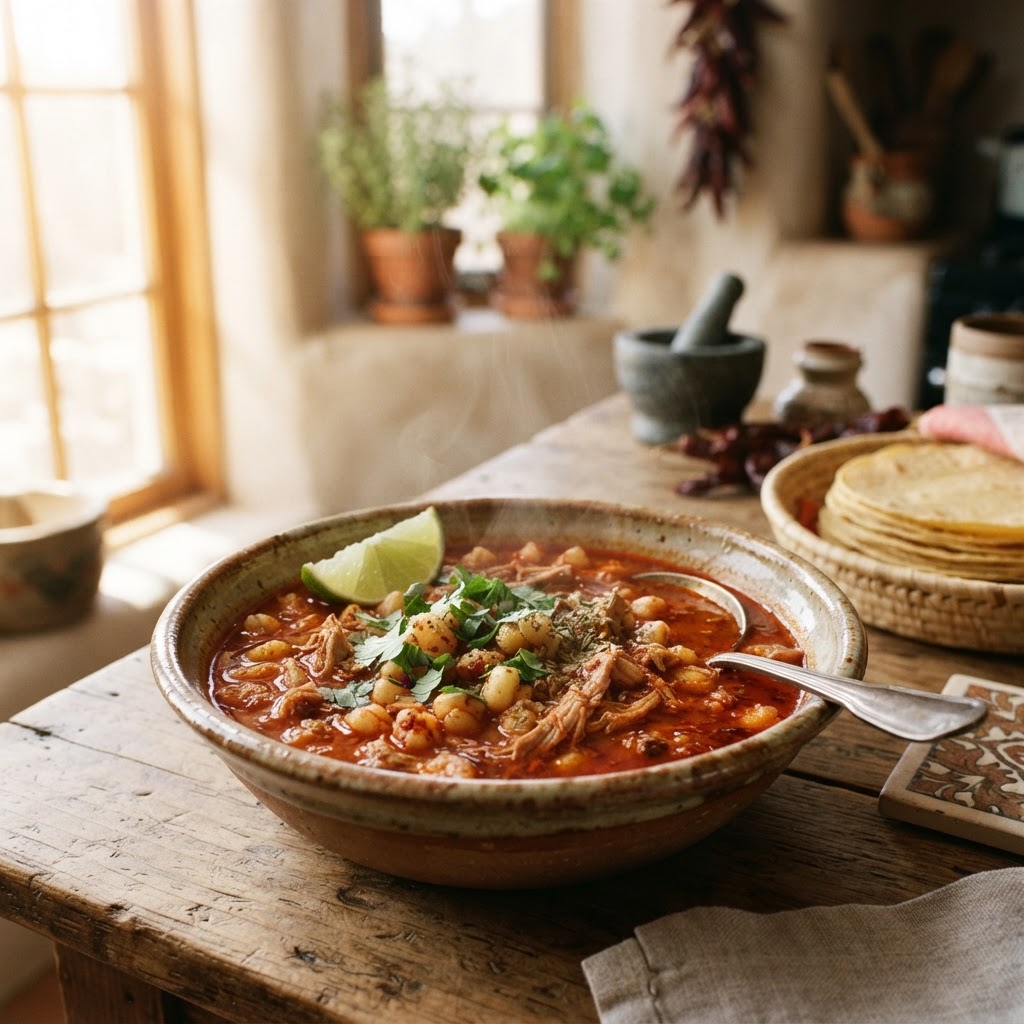
New Mexico Posole: Red Chile and Hominy from the Pueblo Tradition
March 18, 2026
Posole, sometimes spelled pozole, is one of the oldest dishes in New Mexico, with roots that reach back centuries before the arrival of the Spanish. The base of the dish is hominy, corn kernels that have been nixtamalized, a process of soaking in an alkaline solution of slaked lime or wood ash that softens the kernels, enhances their nutritional value, and gives them their distinctive earthy flavor. This process was developed by Indigenous peoples of the Americas and predates European contact by millennia. The Nahuatl word "pozolli" refers to the dish as it was known in pre-Columbian Mesoamerica, and the 16th-century Franciscan friar Bernardino de Sahagún documented it in the Florentine Codex.
In New Mexico, posole took on its own distinct character, shaped by the Pueblo peoples who have cultivated corn and chile along the Rio Grande for centuries. When Spanish settlers arrived in the late 16th and early 17th centuries, they introduced pork and European spices, which local cooks blended with the Indigenous corn and chile. The result is a simpler, chile-forward stew that differs from Mexican pozole. Where Mexican pozole often includes tomatillos, cabbage, and radishes, New Mexico posole is built on three ingredients: hominy, pork, and red or green chile. It remains a holiday tradition in Northern New Mexico, served at Christmas, New Year's Eve, and community gatherings throughout the winter.
About the Ingredients: Hominy is available dried, canned, or frozen. Dried hominy requires soaking and long cooking but has the best texture and flavor. Canned hominy is a practical substitute and works well. The pork should be bone-in pork shoulder or pork ribs, which contribute richness to the broth during the long simmer. The chile is the heart of the dish. New Mexico red chile, made from dried red chile pods that are rehydrated and blended into a smooth sauce, provides a deep, earthy heat that is the signature of New Mexican cooking. If New Mexico red chile is unavailable, guajillo and ancho chiles can be combined as a substitute, though the flavor will be different. Onions, garlic, and oregano complete the flavor base.
Ingredients (serves 8): - 1 lb dried hominy, soaked overnight (or 2 cans white hominy, drained) - 2 lbs bone-in pork shoulder, cut into 2-inch pieces - 1 large onion, quartered - 6 garlic cloves, peeled - 2 bay leaves - 1 tablespoon whole black peppercorns - 10 quarts water (divided)
The Red Chile Sauce: - 12 dried New Mexico red chile pods (or a mix of guajillo and ancho) - 4 garlic cloves - ½ large white onion, roughly chopped - 1 teaspoon dried Mexican oregano - 1 teaspoon ground cumin - ½ teaspoon salt - 2 cups chile-soaking water
To Serve: - Shredded cabbage - Sliced radishes - Diced white onion - Fresh cilantro, chopped - Lime wedges - Warm flour or corn tortillas
Instructions: If using dried hominy, drain the soaked hominy and place it in a large pot with the pork, quartered onion, garlic, bay leaves, peppercorns, and 8 quarts of water. Bring to a boil, then reduce to a simmer. Cook for 2–3 hours, skimming foam from the surface, until the hominy is tender and the pork is falling apart. If using canned hominy, cook the pork in 4 quarts of water with the aromatics for 1 hour, then add the drained hominy and cook 30 minutes more.
While the stew simmers, make the red chile sauce. Remove the stems and seeds from the dried chile pods. Place the pods in a bowl and cover with boiling water. Let soak for 20 minutes until soft. Transfer the softened chiles to a blender with the garlic, onion, oregano, cumin, salt, and 2 cups of the soaking water. Blend until smooth. Strain through a fine-mesh sieve into a bowl, pressing with a spoon to extract as much liquid as possible. Discard the solids.
When the hominy and pork are tender, remove the pork pieces and shred the meat, discarding the bones. Return the shredded pork to the pot. Pour the red chile sauce into the stew and stir well. Simmer for 30 minutes more, allowing the flavors to meld. Adjust seasoning with salt.
Serve in wide bowls with the garnishes on the side and warm tortillas.
The Mimosa Pairing Logic: The earthy, chile-forward heat of New Mexico posole calls for a mimosa with fruit and a touch of sweetness to balance the spice. The Pomegranate Mimosa is a natural match, its tart fruit echoing the deep red of the chile while providing a cooling counterpoint. The Cranberry Holiday Mimosa offers a similar tart-sweet balance that suits a winter holiday gathering.
Reference Links: - Pozole – Wikipedia - Why New Mexican Posole Is a Holiday Tradition – Tomasita's
Make-Ahead: Posole is one of those dishes that is genuinely better the next day. The flavors deepen overnight as the hominy absorbs the chile and the pork releases its richness into the broth. Make it up to 3 days ahead and refrigerate. Reheat gently on the stovetop, adding water if the stew has thickened too much. The red chile sauce can be made up to 5 days ahead and refrigerated separately.
Pro Tips: Do not rush the hominy. Dried hominy needs a full 2–3 hours of simmering to reach the tender, slightly chewy texture that defines a good posole. If the chile sauce tastes bitter, add a pinch of sugar to balance it. New Mexico red chile has an earthy, fruity heat that builds slowly. Taste the stew after adding the sauce, then adjust the amount if you prefer more or less heat. Serve the garnishes on the side so each guest can customize their bowl.
Rate this recipe
Be the first to rate this recipe
to submit your rating.
Perfect Mimosa Pairings
Mimosas that pair perfectly with this dish

Recent Posts

Couscous Royale: North Africa's Grand Platter of Lamb, Chicken, and Merguez
October 14, 2026

Seattle Cream Cheese Dog Bites: Hadley Long's 1989 Pioneer Square Invention
October 14, 2026

Khao Soi: Chiang Mai's Northern Thai Coconut Curry Noodles
October 13, 2026

Korean Bibimbap: Jeonju's Joseon Dynasty Mixed Rice
October 11, 2026

Spaghetti alla Carbonara: Rome's World War II Pasta of Eggs, Guanciale, and Pecorino
October 9, 2026