New England Indian Pudding: The Colonial Cornmeal and Molasses Dessert of America's First Settlers
March 8, 2026
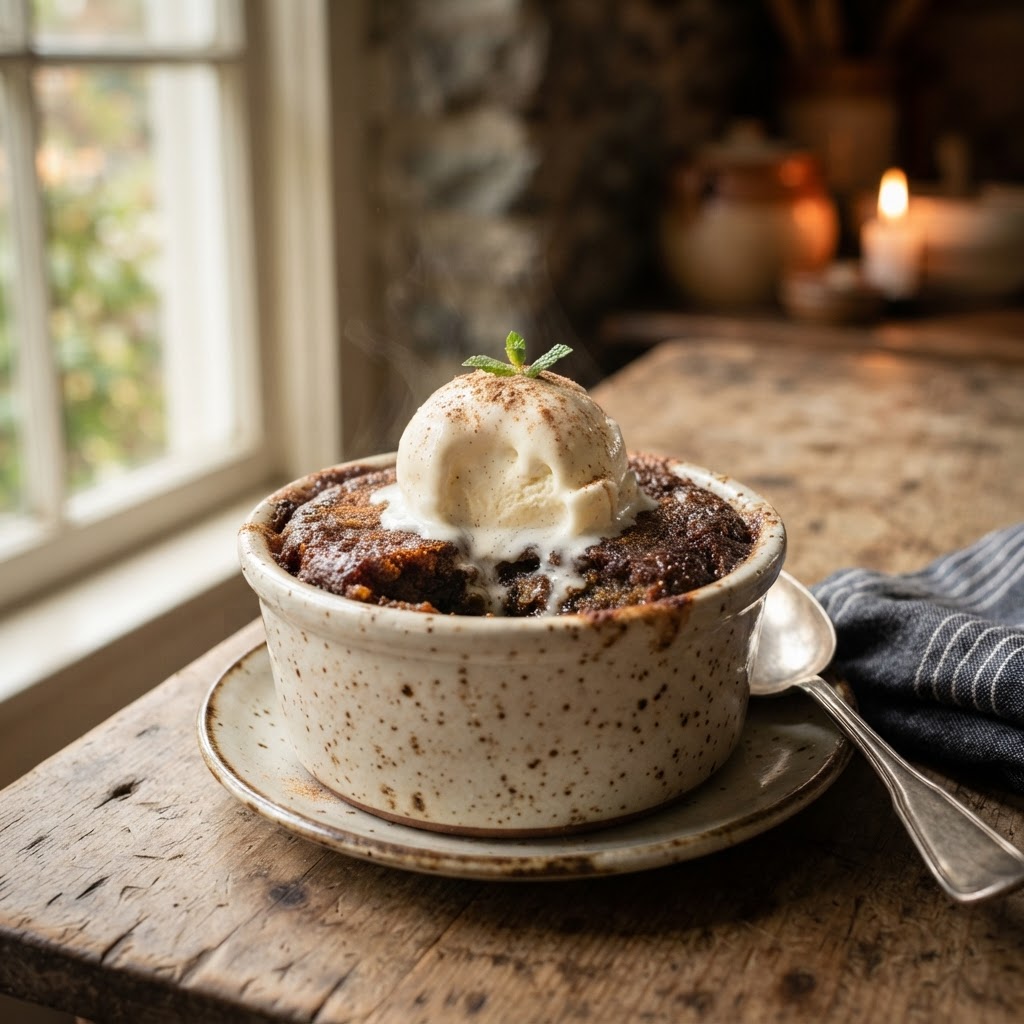
Indian pudding is the oldest dessert in America — a slow-baked, dark, molasses-sweetened cornmeal custard, scented with cinnamon, ginger, and nutmeg, baked for hours until the top is crinkled and the interior is soft, warm, and deeply spicy, served with a scoop of vanilla ice cream whose melt creates the sauce. It is a dish born of the New England colonists, who, lacking wheat flour, adapted the English "hasty pudding" by substituting the cornmeal they learned to use from the Native Americans — cornmeal they called "Indian meal," hence the name. According to Wikipedia, hasty pudding is a pudding or porridge of grains cooked in milk or water, and the American colonists, lacking wheat, substituted cornmeal, derived from their name for cornmeal, "Indian meal" — giving rise to Indian pudding. Yankee Magazine's New England Today records that Indian pudding dates back to the 17th century, when settlers were introduced to corn and cornmeal by Native Americans and referred to it as "Indian meal," flavoring the resulting mush to be either savory or sweet; and Epicurious calls Indian pudding "the history of New England in a single dish," a colonial-era dessert that has all but disappeared except at historic inns and a few old New England restaurants.
The genius of Indian pudding is the long, slow bake: the cornmeal, molasses, milk, eggs, and spices are combined and baked at a low temperature for hours, during which the cornmeal softens, the molasses deepens, and the pudding develops a complex, dark, almost toffee-like flavor that no faster method can produce. Eaten warm with ice cream, it is the most historically resonant dessert in American cooking — a direct taste of the 17th-century Puritan table.
About the Ingredients
Cornmeal — stone-ground yellow cornmeal; the colonists' "Indian meal," and the ingredient that gives the pudding its name and its slightly grainy, hearty texture. Stone-ground is far superior to degerminated supermarket cornmeal.
Molasses — dark, robust molasses (not blackstrap, which is too bitter), the primary sweetener and the source of the pudding's dark color and deep, minerally sweetness; molasses was the standard sweetener of colonial New England, where cane sugar was a luxury.
Milk and cream — whole milk (and sometimes cream) scalded and poured over the cornmeal to soften it; the long bake turns the dairy into a soft custard.
Eggs — a few eggs to bind the custard and give it body.
Spices — ground cinnamon, ginger, and nutmeg, the warming colonial spice trio that perfumes the pudding.
Butter and a pinch of salt — for richness and to balance the sweet molasses.
Ice cream — the modern, essential accompaniment; a scoop of vanilla ice cream melting over the warm pudding is the proper New England finish.
Ingredients (serves 6–8): - 4 cups whole milk - 1/2 cup yellow cornmeal - 1/2 cup molasses - 1/3 cup granulated sugar - 3 tbsp unsalted butter, melted - 2 large eggs, beaten - 1 tsp ground cinnamon - 1/2 tsp ground ginger - 1/4 tsp freshly grated nutmeg - 1/2 tsp salt - 1/2 cup raisins (optional) - Vanilla ice cream, to serve
Instructions: Preheat the oven to 300°F and butter a 1 1/2-quart baking dish. In a saucepan, scald 3 cups of the milk (heat until steaming but not boiling). Gradually whisk in the cornmeal and cook over low heat, whisking, until thickened, 5 minutes. Remove from the heat and whisk in the molasses, sugar, butter, eggs, spices, salt, and raisins if using. Stir in the remaining 1 cup of cold milk. Pour into the prepared dish.
Bake 1 hour, then stir the pudding to break up the skin. Bake another 1 1/2 to 2 hours, until the pudding is set around the edges but still slightly soft and trembly in the center and the top is dark and crinkled. The long, slow bake is the point — the cornmeal must fully soften and the molasses deepen. Serve warm, with a scoop of vanilla ice cream melting over the top.
The Mimosa Pairing Logic: The deep, dark molasses and the warm colonial spices want a bright, aromatic drink that echoes the spice and lifts the richness. A honeyed chamomile lemon prosecco mimosa is the inspired match — the chamomile and honey echo the warmth of the pudding and the lemon brightens the molasses. A classic Champagne mimosa is equally right, the orange a bright, acidic counter to the deep, sweet molasses the way the melting ice cream is. This is the brunch equivalent of a warm Indian pudding and a cup of strong New England coffee — a sparkling toast to the colonists and the oldest dessert in America.
Reference Links: - Hasty pudding (American colonists, cornmeal, "Indian meal"): Wikipedia - History of Indian Pudding (17th-century New England, Native American cornmeal): New England Today - The History of Indian Pudding for Thanksgiving (colonial-era dessert): Epicurious
Make-Ahead: Indian pudding keeps beautifully and is often better the next day, when the molasses and spice flavors have deepened; reheat gently, covered, in a 300°F oven. The pudding can be baked a day ahead and held refrigerated. The long bake is non-negotiable; a fast, high-temperature bake produces a grainy, harsh pudding, and only the slow, low bake softens the cornmeal and mellows the molasses. Stone-ground cornmeal benefits from an even longer bake than degerminated.
Pro Tips: Use stone-ground cornmeal if you can find it; the flavor and texture are far superior to supermarket degerminated cornmeal, which is bland and fine. Use robust molasses, not blackstrap; blackstrap is too bitter and astringent for a dessert, and the pudding will taste like medicine. Bake slowly at a low temperature; the long bake is the whole technique, and a rushed pudding is grainy and harsh. Stir once mid-bake to break the skin and distribute the heat; an unstirred pudding forms a thick, leathery top. Do not underbake; the cornmeal must cook until completely soft, and an undercooked pudding is gritty. Serve warm with ice cream; the contrast of the warm, spicy pudding and the cold, melting cream is the whole point.
Rate this recipe
Be the first to rate this recipe
to submit your rating.
Recent Posts

Couscous Royale: North Africa's Grand Platter of Lamb, Chicken, and Merguez
October 14, 2026

Seattle Cream Cheese Dog Bites: Hadley Long's 1989 Pioneer Square Invention
October 14, 2026

Khao Soi: Chiang Mai's Northern Thai Coconut Curry Noodles
October 13, 2026

Korean Bibimbap: Jeonju's Joseon Dynasty Mixed Rice
October 11, 2026

Spaghetti alla Carbonara: Rome's World War II Pasta of Eggs, Guanciale, and Pecorino
October 9, 2026