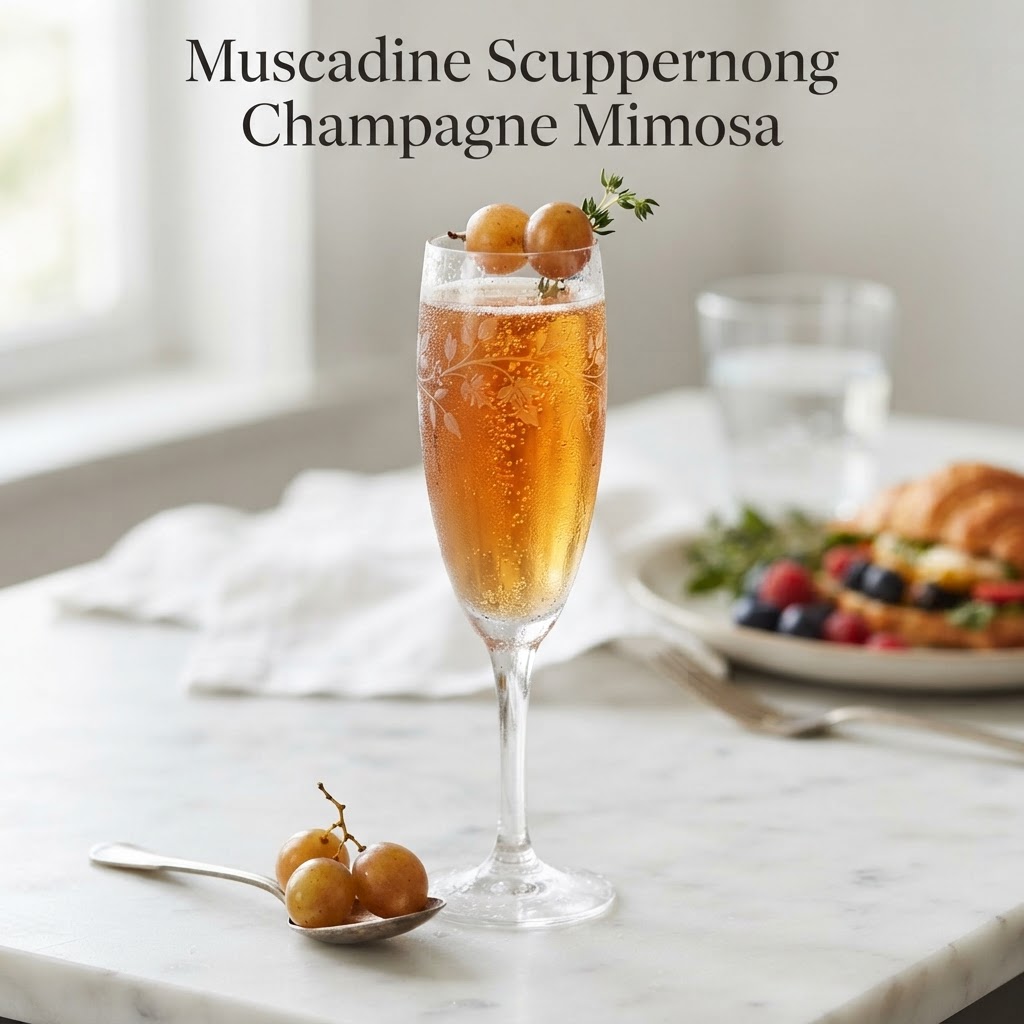
The Muscadine Scuppernong Champagne Mimosa
August 22, 2026
The muscadine grape (Vitis rotundifolia) is native to the southeastern United States and was the first native American grape species to be cultivated in North America, centuries before European vinifera cuttings arrived. Its bronze-fruited form, found growing along the Scuppernong River in northeastern North Carolina, was given the name 'Scuppernong' and is the official state fruit of North Carolina. The muscadine differs from European grapes in nearly every respect: its vines bear fruit in small, loose clusters rather than tight bunches, its berries have thick skins and a tough, gelatinous pulp, and its flavor is intensely aromatic — sweet, musky, and wild in a way that no cultivated European grape approaches.
It is this untamed, intensely aromatic character that makes a muscadine mimosa so distinctive. The grape's thick skin carries the highest concentration of the polyphenol resveratrol of any grape, and its juice is a deep, bronzy amber (for Scuppernong) or inky purple (for dark muscadines) with a perfume that fills the glass. Over Champagne, the muscadine's musky sweetness reads as Southern, sun-drenched, and unlike any mimosa made from ordinary grape juice.
About Muscadine and Scuppernong Grapes
Muscadines are a separate subgenus (Muscadinia) from all other grapes, with forty chromosomes where European grapes have thirty-eight, and they grow wild across the southeastern states from Florida to East Texas and north along the Mississippi to Missouri. They are remarkably resilient, tolerant of the heat, humidity, and pests that defeat European vines, which is why they thrived in the South when vinifera could not. The 'Scuppernong' cultivar, named for the North Carolina river, is a bronze female-flowered variety that requires a pollinator nearby to fruit. Reference: NC State Extension — Vitis rotundifolia
For a mimosa, fresh muscadine or Scuppernong juice is extraordinary but seasonal (September and October in the South). Outside the season, muscadine wine (such as a sweet Carlos or Noble) reduced briefly into a syrup, or a quality muscadine juice, is the substitute.
Muscadine Purée: - 3 cups fresh muscadine or Scuppernong grapes, rinsed - 1 tablespoon fresh lemon juice - 1 teaspoon honey (if grapes are tart)
Simmer the grapes in a saucepan over medium-low heat for 10–12 minutes, pressing occasionally, until the skins burst and the juices release. Press through a fine-mesh sieve or food mill, discarding the thick skins and seeds, to yield a smooth, aromatic purée. Stir in lemon juice and honey to taste. Chill thoroughly. The purée will be a bronzy golden-amber (Scuppernong) or deep purple (dark muscadines). Use within 3 days.
Ingredients (serves 6): - 1 cup muscadine purée (above) - 1 bottle (25 oz chilled Champagne Brut NV or Crémant de Loire (Crémant de Loire — such as Bouvet-Ladubay — provides a dry, mineral, appley character that complements the muscadine's musky sweetness; Champagne Brut provides more structure. Reference: Vins de Loire — official) - A few fresh muscadine grapes on the rim for garnish - Optional: ½ oz of muscadine wine (sweet Carlos or Noble) per serving for amplified muscadine depth
Instructions: Chill Champagne flutes for 5 minutes. Pour 1½ oz of the muscadine purée into each flute. Add muscadine wine if using. Top slowly with chilled Champagne or Crémant, pouring down the side. The bronzy purée will bloom through the pale wine in warm, golden-amber gradients. Garnish with a few fresh muscadine grapes on the rim.
For a Mimosa Bar (serves 12): - 2 cups muscadine purée - 3 oz muscadine wine (optional) - 2 bottles Champagne Brut or Crémant de Loire, chilled - Fresh muscadine grapes for garnish
Variations: - Use dark muscadines instead of bronze Scuppernong for a deep purple-magenta hue. - Replace Champagne with sparkling rosé for a richer, fruitier expression. - Add a sprig of fresh mint expressed over the glass for a cool, aromatic counterpoint.
Mimosa Pairing Logic: The muscadine's musky, intensely aromatic sweetness calls for a dry, mineral sparkling wine whose restraint lets the grape's wild character shine. The wine's acidity keeps the musky sweetness from cloying. For a related pour, the Concord Grape Champagne Mimosa is the New England cousin of this Southern original, and the Pomegranate Mimosa shares the dark, jewel-toned logic.
Reference Links: - Muscadine grape (native SE US, Scuppernong, NC state fruit): NC State Extension - The Muscadine Grape (IFAS, University of Florida): Ask IFAS
Make-Ahead: Muscadine purée (3 days, refrigerated). Assemble per glass just before serving.
Pro Tips: Muscadine grapes have thick skins and large seeds, so puréeing and straining is essential: unstrained pulp is unpleasant and gritty. The bronze Scuppernong produces a prettier, more golden mimosa; dark muscadines produce a deeper, more dramatic purple. The musky, foxy character is the whole point of this drink, so do not try to tame it with too much lemon or too much sweetener. If fresh muscadines are unavailable, a quality bottled muscadine juice or a reduction of sweet muscadine wine is the closest substitute. Crémant de Loire is an excellent, affordable alternative to Champagne here, as its dry, appley minerality balances the muscadine's richness beautifully.
Rate this recipe
Be the first to rate this recipe
to submit your rating.
Recent Posts

Couscous Royale: North Africa's Grand Platter of Lamb, Chicken, and Merguez
October 14, 2026

Seattle Cream Cheese Dog Bites: Hadley Long's 1989 Pioneer Square Invention
October 14, 2026

Khao Soi: Chiang Mai's Northern Thai Coconut Curry Noodles
October 13, 2026

Korean Bibimbap: Jeonju's Joseon Dynasty Mixed Rice
October 11, 2026

Spaghetti alla Carbonara: Rome's World War II Pasta of Eggs, Guanciale, and Pecorino
October 9, 2026