Miso-Glazed Black Cod (Nobu-Style)
May 2, 2026
Miso-glazed black cod is one of the most influential fish dishes in the history of modern fine dining. Nobuyuki "Nobu" Matsuhisa developed the preparation in the early 1980s at his Los Angeles restaurant, combining the ancient Japanese technique of marinating fish in miso (saikyo-zuke) with the American preference for sweeter, richer flavors. The dish became the signature of Nobu restaurants worldwide and is credited with introducing Japanese-American fusion cuisine to global fine dining.
The preparation itself is almost absurdly simple: a three-day marinade in sweet Kyoto saikyo miso, sake, and mirin, then a broil that caramelizes the sugars in the miso into a lacquered, deeply savory-sweet crust. The black cod — also called sablefish or butterfish — has a fat content similar to Chilean sea bass, which means it remains extraordinarily moist through cooking and carries the marinade beautifully.
Ingredients (serves 10–12 as a plated main): - 10–12 black cod (sablefish) fillets, 5–6 oz each, skin on - Fresh pickled ginger, shiso leaves, and lemon wedges for garnish
Nobu-Style Miso Marinade: - 10.6 oz white shiro miso (or the sweeter saikyo miso from Kyoto, if available — dramatically better) - ⅞ cup sake (use a drinking-quality junmai sake, not cooking sake) - ⅞ cup mirin (hon mirin — the real fermented variety, not "mirin-style seasoning") - 3 ½ oz superfine or granulated sugar
Accompaniments: - Steamed jasmine rice or crispy rice cakes - Bok choy or baby spinach, briefly sautéed in sesame oil - Pickled ginger and shiso leaves - Dashi broth (optional, for an elegant plating liquid) - Toasted sesame seeds
Miso Marinade: Combine sake and mirin in a small saucepan. Bring to a boil, reduce heat, simmer 3 minutes to cook off the alcohol. Add sugar and stir to dissolve. Add miso and whisk until completely smooth. Cool to room temperature. (Can be made up to 1 week ahead; refrigerate.)
Marinating (start 3 days ahead, minimum 2): Pat black cod fillets completely dry. Coat generously with the miso marinade, ensuring all surfaces are covered. Place in a non-reactive container or zip-lock bag. Refrigerate for 2–3 days — 3 days produces the best flavor penetration and the most lacquered result.
Cooking: Remove fish from marinade. Wipe off excess miso gently — a thin coating is ideal; thick coating burns. Pat surfaces dry.
Preheat the broiler or oven to its highest setting (525°F if available). Oil a foil-lined baking tray. Place fillets skin-side up or flesh-side up (both work; skin-side up produces a dramatic caramelized presentation).
Broil/roast 8–10 minutes until the surface is deeply caramelized — almost charred in spots — and the fish is cooked through. The Maillard reaction with the miso's amino acids creates a uniquely complex, sweet-savory crust. Watch carefully; the high sugar content means it can go from perfect to burnt in 60 seconds.
Alternatively: sear in a very hot cast iron pan flesh-side down 2–3 minutes until deeply caramelized, flip skin-side down, transfer to 400°F oven for 5–6 minutes to finish.
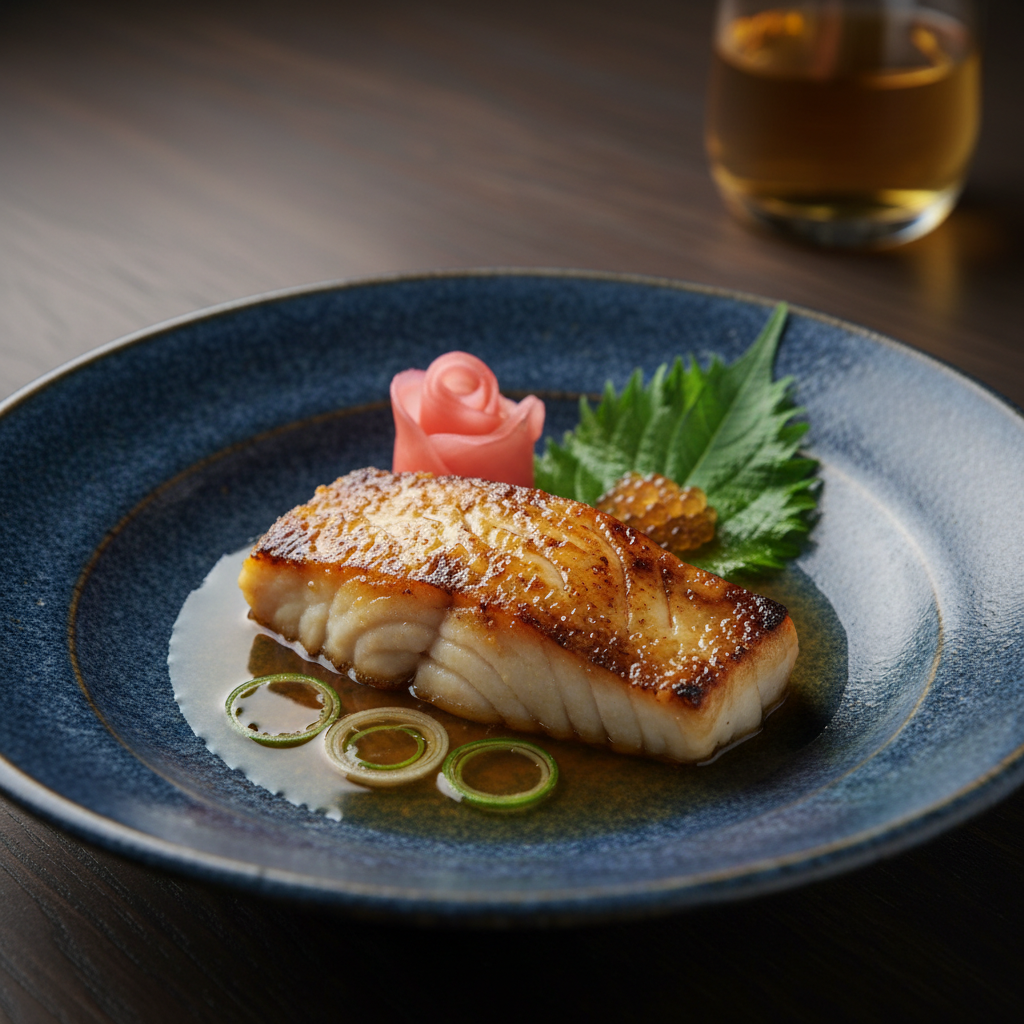
Plating: Place a small mound of sautéed bok choy or spinach on a warm plate or in a wide shallow bowl. Set the miso black cod skin-side up. Arrange 2–3 slices of pickled ginger alongside. Tuck a shiso leaf behind the fish. Scatter sesame seeds. If using dashi broth, pour a small amount of warm broth around (not over) the fish. Serve with steamed rice alongside.
Reference Links: - Saikyo miso (Kyoto sweet white miso): Wikipedia — Miso - Nobu and the miso black cod: Wikipedia — Nobu Matsuhisa
Sourcing Notes: Black cod/sablefish is caught primarily in the North Pacific (Alaska, British Columbia). Alaska-caught sablefish is rated "Best Choice" by Monterey Bay Aquarium Seafood Watch. Saikyo miso (Kyoto sweet white miso) is the authentic ingredient — available at Japanese grocery stores and online.
Pro Tips: The three-day marinade is not optional if you want the authentic result — a 24-hour marinade produces only surface flavor; 72 hours produces flavor penetration through the fillet. Wiping off excess marinade before cooking is critical — thick coating burns before the fish cooks through. The dish is essentially impossible to overcook given the fish's extraordinary fat content, making it more forgiving than most fine-dining fish preparations.
Rate this recipe
Be the first to rate this recipe
to submit your rating.
Recent Posts

Couscous Royale: North Africa's Grand Platter of Lamb, Chicken, and Merguez
October 14, 2026

Seattle Cream Cheese Dog Bites: Hadley Long's 1989 Pioneer Square Invention
October 14, 2026

Khao Soi: Chiang Mai's Northern Thai Coconut Curry Noodles
October 13, 2026

Korean Bibimbap: Jeonju's Joseon Dynasty Mixed Rice
October 11, 2026

Spaghetti alla Carbonara: Rome's World War II Pasta of Eggs, Guanciale, and Pecorino
October 9, 2026