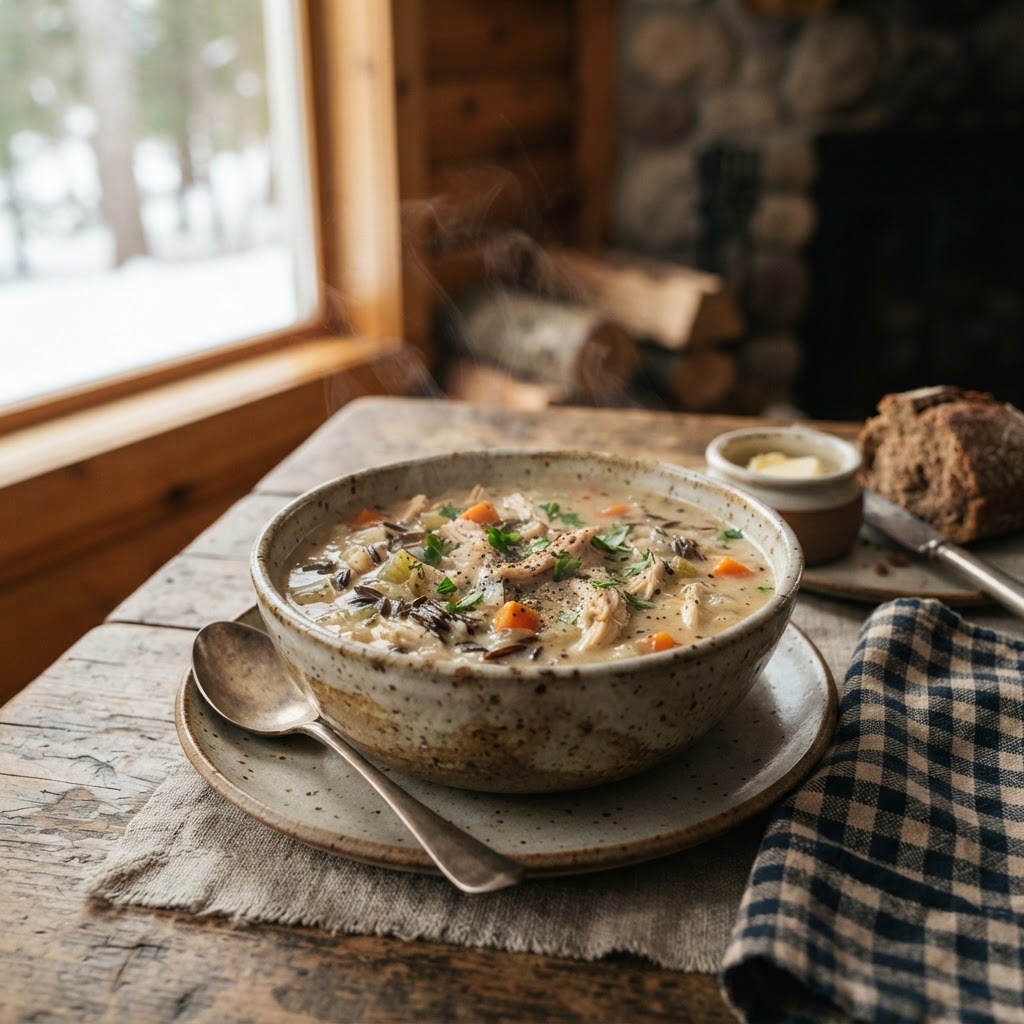
Minnesota Wild Rice Soup: The Ojibwe Manoomin Tradition
May 27, 2026
Wild rice, known to the Ojibwe people as manoomin, has grown in the lakes and rivers of northern Minnesota for thousands of years. The Ojibwe, or Anishinaabe, migrated westward into the Great Lakes region in search of "the food that grows on water," a prophecy that led them to the wild rice beds of what is now Minnesota. The annual wild rice harvest, conducted by hand from canoes using cedar knocking sticks, remains a sacred cultural practice for the Ojibwe people to this day. In 1977, the Minnesota legislature designated wild rice as the official state grain, recognizing its cultural and ecological significance.
The soup itself is a more recent creation. While wild rice has been a staple of Ojibwe diets for millennia, the creamy wild rice soup that most Americans know today emerged in the mid-20th century, when Minnesota restaurants and home cooks began combining the state's native grain with cream, chicken, and mushrooms to create a hearty, warming soup suited to the long Minnesota winters. The dish has become so associated with the state that it is often called Minnesota's unofficial state dish, served in supper clubs, diners, and home kitchens throughout the Upper Midwest.
About the Ingredients: True wild rice, harvested from natural lakes and rivers, is dark, long-grained, and has a complex, nutty, slightly smoky flavor that cultivated wild rice cannot match. Cultivated wild rice, grown in paddies, is more widely available and less expensive, though its flavor is milder and its texture less chewy. For the best soup, seek out hand-parched lake wild rice from a Minnesota source. The soup base is typically chicken stock enriched with cream, though a lighter version can be made with all stock. The classic additions are mushrooms, onion, celery, and carrots, with chicken or turkey for a heartier version. A small amount of flour or a potato helps thicken the soup to a silky consistency.
Ingredients (serves 6–8): - 1 cup wild rice, rinsed - 4 cups chicken stock - 2 cups water - 2 tablespoons unsalted butter - 1 large onion, diced - 2 carrots, diced - 2 celery stalks, diced - 8 oz cremini mushrooms, sliced - 3 garlic cloves, minced - ⅓ cup all-purpose flour - 3 cups additional chicken stock - 1 cup heavy cream - 2 cups cooked chicken, shredded (optional) - 1 teaspoon fresh thyme leaves - 2 tablespoons fresh parsley, chopped - Salt and freshly ground black pepper to taste
Instructions: Combine the wild rice, 4 cups chicken stock, and 2 cups water in a large pot. Bring to a boil, then reduce to a simmer. Cover and cook for 45–55 minutes until the rice is tender and the grains have split open. Drain any excess liquid and set the rice aside.
In the same pot, melt the butter over medium heat. Add the onion, carrots, and celery. Cook for 6–8 minutes until softened. Add the mushrooms and cook for 5 minutes more, until they release their moisture and begin to brown. Add the garlic and cook 1 minute.
Sprinkle the flour over the vegetables and stir to coat. Cook for 2 minutes. Gradually whisk in the 3 cups additional chicken stock, stirring constantly to prevent lumps. Bring to a simmer and cook for 10 minutes until the soup thickens slightly.
Stir in the cooked wild rice, heavy cream, shredded chicken if using, and thyme. Simmer for 5 minutes until heated through. Do not boil after adding the cream. Adjust seasoning with salt and pepper. Garnish with fresh parsley.
The Mimosa Pairing Logic: The earthy, nutty character of wild rice soup calls for a mimosa with complementary fruit and a light touch. The Lavender Elderflower Mimosa is a beautiful match, its elderflower echoing the herbal notes of the thyme and the nutty, earthy character of the wild rice. The Classic Champagne Mimosa provides a clean, simple contrast that lets the wild rice flavor shine.
Reference Links: - Wild Rice and the Ojibwe – MNopedia, Minnesota Historical Society - Wild Rice Soup – Pisoma Kitchen
Make-Ahead: The wild rice can be cooked up to 3 days ahead and refrigerated. The soup base, without the cream, can be made up to 2 days ahead. Reheat gently, then stir in the cream and cooked rice at the end. The soup also freezes well without the cream. Add the cream after reheating, off the heat, stirring until incorporated.
Pro Tips: Do not overcook the wild rice. It should be tender but still have a slight chew, with the grains split open like tiny flowers. Overcooked wild rice becomes mushy and loses its distinctive texture. True wild rice takes longer to cook than cultivated wild rice, so check it at 45 minutes and continue cooking if needed. The cream should go in at the very end, off the heat. Boiling cream causes it to break, producing a greasy, separated soup. If the soup is too thick after reheating, add a splash of chicken stock to loosen it.
Rate this recipe
Be the first to rate this recipe
to submit your rating.
Perfect Mimosa Pairings
Mimosas that pair perfectly with this dish

Recent Posts

Couscous Royale: North Africa's Grand Platter of Lamb, Chicken, and Merguez
October 14, 2026

Seattle Cream Cheese Dog Bites: Hadley Long's 1989 Pioneer Square Invention
October 14, 2026

Khao Soi: Chiang Mai's Northern Thai Coconut Curry Noodles
October 13, 2026

Korean Bibimbap: Jeonju's Joseon Dynasty Mixed Rice
October 11, 2026

Spaghetti alla Carbonara: Rome's World War II Pasta of Eggs, Guanciale, and Pecorino
October 9, 2026