Michigan Pasties: The Upper Peninsula's Cornish Miner Hand Pie
March 26, 2026
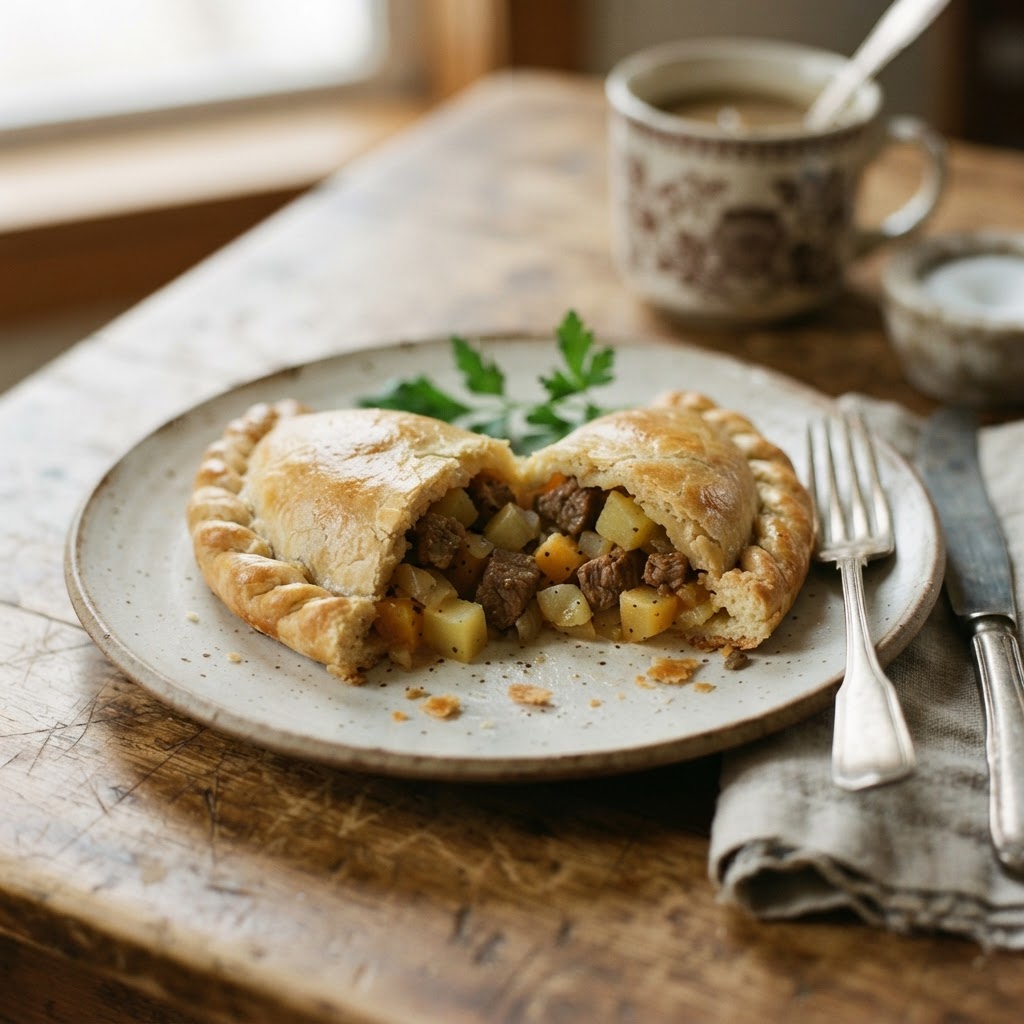
The Michigan pasty is the famous hand pie of the Upper Peninsula — a crescent of shortcrust pastry folded over a filling of diced beef, potato, rutabaga, and onion, crimped along the edge, and baked until golden. According to Wikipedia, the pasty is a British baked turnover associated with Cornwall; Cornish tin miners adopted it because its folded shape formed a complete meal that could be carried easily and eaten without cutlery, and it spread worldwide through the Cornish diaspora — variations are found in Australia, Mexico, the United States, and elsewhere. Michigan Tech preserves the tradition: the pasty came to Michigan's Upper Peninsula when Cornish miners immigrated in the 1840s for the region's developing iron and copper mines. Travel Ironwood traces the roots to the Cornish miners who immigrated to the Upper Peninsula in the 1800s, when these hard-working men needed a hearty, portable lunch they could carry into the mines.
The pasty was the original miner's lunch — a complete, sealed meal that stayed warm for hours and could be reheated on a shovel over a candle. It remains the signature food of the Upper Peninsula, served at pasty shops, church suppers, and family tables.
About the Ingredients
Beef — chuck or sirloin, diced small (not ground); the traditional Cornish filling uses beef skirt.
Potato — diced, the bulk of the filling.
Rutabaga — the secret ingredient that makes a pasty a pasty; called "turnip" in Cornwall. Its sweetness is essential.
Onion — diced, for moisture and savor.
Pastry — a sturdy shortcrust, made with butter (or butter and lard), strong enough to hold the filling and stay together in a hand.
Ingredients (makes 8 pasties): - 4 cups all-purpose flour - 1 tsp salt - 1 cup cold butter (or 1/2 cup butter + 1/2 cup lard), cut into cubes - 3/4 cup ice water - 1 lb beef chuck, diced small - 2 medium potatoes, diced - 1 small rutabaga, peeled and diced - 1 large onion, diced - 2 tbsp butter, cut into bits - Salt, black pepper, and a pinch of dried thyme - 1 egg beaten with 1 tbsp milk, for egg wash
Instructions: Make the pastry: cut the cold fat into the flour and salt until the mixture resembles coarse crumbs; add ice water a little at a time and bring together into a disk. Divide into 8, wrap, and rest 30 minutes in the refrigerator.
Preheat the oven to 400°F (392°F). In a bowl, toss the diced beef, potato, rutabaga, and onion with salt, pepper, and thyme.
Roll each pastry portion into an 8-inch round. Mound a generous 3/4 cup of filling on one half of each round; dot with a bit of butter. Fold the pastry over to form a crescent and crimp the edge firmly (a side crimp is traditional). Cut a slit for steam. Brush with egg wash.
Bake on a parchment-lined sheet 45–55 minutes until golden brown. Rest 10 minutes before eating. Traditionally served with ketchup or gravy on the side.
The Mimosa Pairing Logic: The hearty beef-and-root-vegetable filling and the buttery pastry want a bright, refreshing drink that can cut the richness and lift the root vegetables. A classic Champagne mimosa is the safe and perfect choice — the citrus balances the rich beef and the buttery crust, and the wine's effervescence refreshes the palate. A cranberry holiday mimosa is equally lovely for a cool-weather brunch, the cranberry a bright, tart mirror for the rutabaga. This pairing is, in its way, the brunch equivalent of a hot pasty and a thermos of coffee at a UP mine — a sparkling toast to the Cornish miners and the Copper Country.
Reference Links: - Pasty (Cornish origin, tin miners, worldwide diaspora): Wikipedia - Pasties and Pickled Eggs (UP Cornish miner history): Michigan Tech - History of a Pasty (Upper Peninsula heritage): Travel Ironwood
Make-Ahead: The pastry can be made up to 2 days ahead and refrigerated (or frozen for a month). The pasties can be assembled and held cold, unbaked, for a day, or baked ahead and reheated. Pasties are, in fact, one of the great make-ahead lunches — they reheat beautifully in a moderate oven and were made to be carried. They also freeze well, baked or unbaked.
Pro Tips: Dice the filling small and evenly so it cooks through in the time the pastry needs; large chunks stay raw. Do not skip the rutabaga — its sweetness is the defining note of a Michigan pasty. Crimp the edge firmly so the pasty stays sealed and the juices don't leak. Cut a good vent so the steam escapes. Rest the pasty before eating; a straight-from-the-oven pasty is a mouth-burn. Eat with ketchup (the Yooper way) or gravy.
Rate this recipe
Be the first to rate this recipe
to submit your rating.
Perfect Mimosa Pairings
Mimosas that pair perfectly with this dish
Recent Posts

Couscous Royale: North Africa's Grand Platter of Lamb, Chicken, and Merguez
October 14, 2026

Seattle Cream Cheese Dog Bites: Hadley Long's 1989 Pioneer Square Invention
October 14, 2026

Khao Soi: Chiang Mai's Northern Thai Coconut Curry Noodles
October 13, 2026

Korean Bibimbap: Jeonju's Joseon Dynasty Mixed Rice
October 11, 2026

Spaghetti alla Carbonara: Rome's World War II Pasta of Eggs, Guanciale, and Pecorino
October 9, 2026