Mexican Tacos Al Pastor: Lebanese Immigrants and the Puebla Trompo
July 5, 2026
During the late 19th and early 20th centuries, a wave of Lebanese immigrants, primarily Christian Lebanese who had no religious dietary restrictions on eating pork, arrived in Mexico. They brought with them the tradition of shawarma, the Levantine method of stacking marinated lamb on a vertical spit and roasting it slowly as it turns. By the 1920s, these immigrants and their Mexican-born children had begun opening restaurants in Puebla, serving lamb cooked on a vertical spit and tucked into a pita-like bread called pan arabe. The dish was known as tacos arabes, Arab tacos, and it is still served in Puebla today.
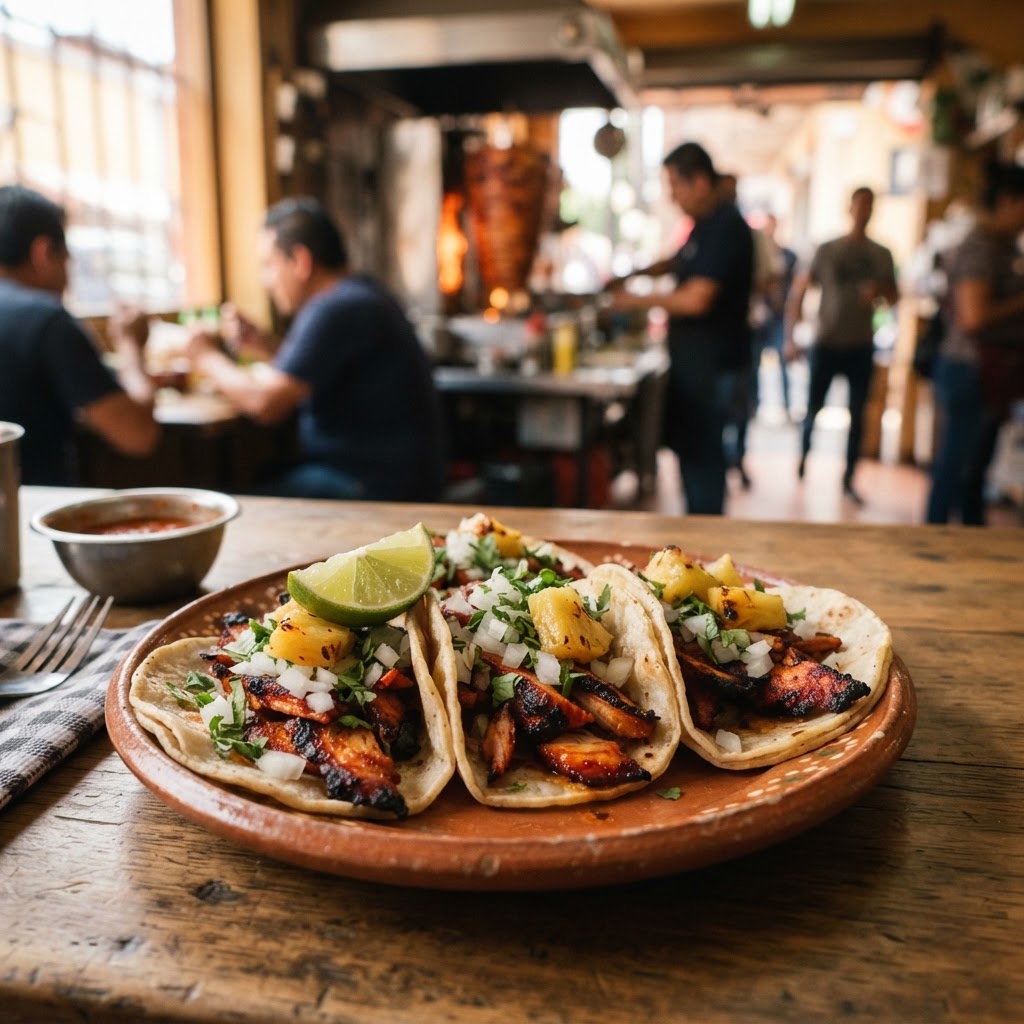
By the 1930s, the Mexican-born descendants of these Lebanese immigrants began adapting the dish to local tastes. They replaced the lamb with pork, which was more abundant and less expensive in Mexico. They marinated the pork in adobo, a Mexican marinade of dried red chiles, vinegar, and spices that gave the meat its distinctive deep red color. They switched from pita to corn tortillas. And they added a chunk of pineapple to the top of the spit, so that its juices would drip down and baste the meat as it turned. The vertical spit, called a trompo for its conical shape, became the visual centerpiece of taquerias throughout Mexico City. The dish was renamed tacos al pastor, "shepherd style tacos," a nod to the shepherds' origin of the shawarma technique. By the 1960s, tacos al pastor had become one of the most popular street foods in Mexico.
About the Ingredients: Pork shoulder is the correct cut for al pastor, as it has enough fat to remain juicy during the slow roasting. The marinade is the soul of the dish. Dried guajillo chiles provide a deep red color and mild, fruity heat. Ancho chiles add a darker, smokier note. Achiote (annatto) paste contributes additional color and an earthy flavor. Pineapple juice in the marinade tenderizes the meat and adds sweetness. The traditional spices include cumin, oregano, cloves, and cinnamon, a blend that reflects the dish's Lebanese and Mexican heritage. The corn tortillas should be small, about 5 inches, and warmed on a griddle just before serving. The garnishes are simple: diced white onion, fresh cilantro, a slice of grilled pineapple, and a squeeze of lime.
Ingredients (serves 6):
The Marinade: - 6 dried guajillo chiles, stems and seeds removed - 3 dried ancho chiles, stems and seeds removed - 3 garlic cloves - 1 small white onion, quartered - ½ cup pineapple juice - 2 tablespoons white vinegar - 1 tablespoon achiote paste - 1 teaspoon ground cumin - 1 teaspoon dried Mexican oregano - ¼ teaspoon ground cloves - ¼ teaspoon ground cinnamon - 1 teaspoon salt - 2 tablespoons vegetable oil
The Meat: - 3 lbs boneless pork shoulder, sliced very thin (about ⅛ inch)
To Serve: - 24 small corn tortillas (5 inch) - 1 cup diced white onion - 1 cup fresh cilantro, chopped - 1 pineapple, sliced into rings and grilled, then diced - 3 limes, cut into wedges - Salsa verde or salsa roja
Instructions: Toast the dried guajillo and ancho chiles in a dry skillet over medium heat for 30 seconds per side until fragrant. Do not burn. Transfer to a bowl and cover with boiling water. Soak for 20 minutes until soft.
Transfer the softened chiles to a blender with the garlic, onion, pineapple juice, vinegar, achiote paste, cumin, oregano, cloves, cinnamon, salt, and vegetable oil. Blend until completely smooth. Pour the marinade over the thinly sliced pork in a large bowl or zip-top bag. Toss to coat every piece. Marinate in the refrigerator for at least 4 hours, or up to 12 hours.
Since most home cooks do not have a vertical trompo spit, the meat can be cooked on a grill or in a large cast-iron skillet. Heat a grill or large skillet over high heat. Working in batches, spread a single layer of marinated pork in the pan. Cook for 3–4 minutes per side until the edges are charred and crisp and the meat is cooked through. Transfer to a cutting board and chop into small pieces. Repeat with the remaining meat.
To serve, warm the corn tortillas on a griddle for 30 seconds per side. Fill each tortilla with a generous spoonful of the chopped meat. Top with diced onion, cilantro, grilled pineapple, and a squeeze of lime. Serve with salsa on the side.
The Mimosa Pairing Logic: The smoky, sweet, and spicy character of tacos al pastor calls for a mimosa with tropical fruit and a bright, refreshing quality. The Tropical Mango Mimosa is a natural match, its mango sweetness complementing the pineapple in the dish. The Passionfruit Mimosa provides a tart, tropical contrast that refreshes the palate between bites of spicy, charred pork.
Reference Links: - Al pastor – Wikipedia
Make-Ahead: The marinade can be made up to 5 days ahead and refrigerated. The pork should be marinated for at least 4 hours but no more than 12, as the acid in the pineapple juice will begin to break down the meat fibers if left too long. The chopped grilled pineapple, diced onion, and cilantro can be prepped up to 4 hours ahead and held at room temperature. The meat should be cooked and served immediately for the best texture and flavor.
Pro Tips: The pork must be sliced very thin, almost like bacon, so that it chars quickly at the edges while remaining tender inside. If the slices are too thick, the outside will burn before the center cooks through. The char is essential. The crispy, caramelized edges of the pork are what distinguish a great taco al pastor from a mediocre one. Do not skip the grilled pineapple. The sweetness of the fruit against the smoky, spicy meat is the defining flavor of the dish. If you do not have a grill, char the pineapple rings in a cast-iron skillet over high heat until caramelized.
Rate this recipe
Be the first to rate this recipe
to submit your rating.
Perfect Mimosa Pairings
Mimosas that pair perfectly with this dish
Recent Posts

Couscous Royale: North Africa's Grand Platter of Lamb, Chicken, and Merguez
October 14, 2026

Seattle Cream Cheese Dog Bites: Hadley Long's 1989 Pioneer Square Invention
October 14, 2026

Khao Soi: Chiang Mai's Northern Thai Coconut Curry Noodles
October 13, 2026

Korean Bibimbap: Jeonju's Joseon Dynasty Mixed Rice
October 11, 2026

Spaghetti alla Carbonara: Rome's World War II Pasta of Eggs, Guanciale, and Pecorino
October 9, 2026