Maritozzo con Panna: Rome's Ancient Cream-Filled Breakfast Bun
May 21, 2026
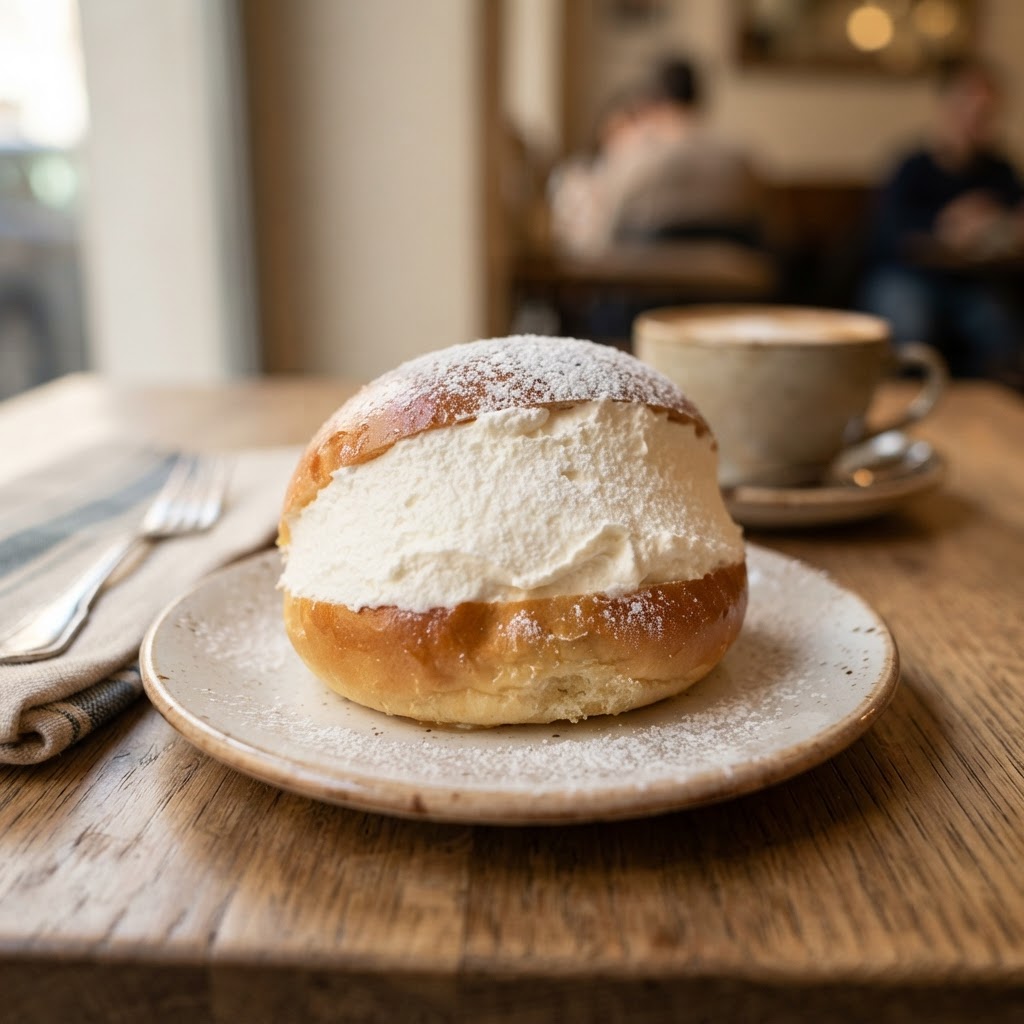
The maritozzo con panna is Rome's great breakfast pastry — a soft, sweet, lightly enriched bun, split down the middle and stuffed with a generous mountain of fresh whipped cream, eaten standing at the bar with an espresso. According to Wikipedia, the maritozzo is a traditional Italian cream bun, typical of Roman, Marche, and Abruzzo cuisine; the origins date back to ancient Rome, when honey-sweetened buns were given to laborers, and the name derives from the custom of men offering the bun to their girlfriends on the first Friday of March — the future brides called the donor *maritozzo* (from the word for "husband"). Memorie di Angelina describes it as Rome's most famous pastry: a brioche bun enriched with oil rather than butter, scented with honey, orange zest, and vanilla, then split and filled with whipped cream. Honest Cooking provides a definitive recipe for the cream-filled buns.
In Medieval Rome, maritozzi were one of the only sweets permitted during Lent, because they could be made with olive oil in place of animal fat; the Lenten version was called *maritozzo quaresimale*, nicknamed "the holy maritozzo." Today the whipped-cream version is the one you find in every Roman bar, eaten for breakfast.
About the Ingredients
The dough — an enriched dough of flour, eggs, sugar, milk, and olive oil (the Roman touch), scented with honey, orange zest, and vanilla, and often studded with raisins and pine nuts. It needs two rises.
The cream — lightly sweetened, freshly whipped heavy cream, kept cold and piled generously. The cream should be only barely sweetened; the bun is the sweet part.
Ingredients (makes 8 maritozzi): For the dough: - 3 1/4 cups all-purpose flour - 1/3 cup sugar - 1 tsp salt - 1 packet (2 1/4 tsp) active dry yeast - 3/4 cup warm milk - 2 large eggs - 1/4 cup extra-virgin olive oil - 1 tbsp honey - Zest of 1 orange - 1/2 tsp vanilla extract - 1/3 cup raisins, soaked and drained (optional)
For the cream: - 1 1/4 cups cold heavy cream - 2 tbsp powdered sugar - 1/2 tsp vanilla extract
Instructions: Combine the warm milk, yeast, and a pinch of sugar; let stand 5 minutes. In a large bowl, mix the flour, sugar, and salt. Add the yeast mixture, eggs, oil, honey, orange zest, and vanilla; knead 8–10 minutes until soft and elastic. Knead in the raisins. Cover and let rise until doubled, about 1 1/2 hours.
Divide the dough into 8 pieces and shape into ovals. Place on a parchment-lined sheet, cover, and let rise 45 minutes until puffy. Preheat the oven to 375°F (374°F). Brush with a little milk and bake 14–16 minutes until golden. Cool completely on a rack.
Whip the cream with the powdered sugar and vanilla to soft peaks. Split each bun down the middle, leaving a hinge. Pipe or spoon a generous mound of cream into the opening so it overflows. Dust with powdered sugar. Serve immediately, with espresso.
The Mimosa Pairing Logic: The sweet, orange-scented bun and the barely-sweet cream want a bright, aromatic drink that can echo the orange and lift the richness. A lavender elderflower mimosa is a beautiful choice — the floral elderflower echoes the honey and the orange zest, and the wine's effervescence refreshes the palate of the rich cream. A peach bellini mimosa is equally lovely, the peach a nod to the sweetness of the bun. This pairing is, in its way, the brunch equivalent of maritozzo and espresso at a Roman bar — a sparkling toast to the Eternal City.
Reference Links: - Maritozzo (Roman cream bun, ancient Roman and medieval origins): Wikipedia - Maritozzi (Roman style brioche bun with whipped cream): Memorie di Angelina - Maritozzi con la Panna (Cream-Filled Italian Buns): Honest Cooking
Make-Ahead: The buns can be baked up to 1 day ahead and kept in an airtight container; refresh briefly in a warm oven. The dough can be made the day before and risen overnight in the refrigerator; bring to room temperature before shaping. Whip the cream and fill the buns just before serving; once filled, they soften quickly.
Pro Tips: Use olive oil, not butter, for the Roman character — the oil makes a lighter, more tender bun. Give the dough its full two rises; under-risen buns are dense. Do not overwhip the cream — soft peaks fill better than stiff peaks, and overwhipped cream turns grainy. Fill generously; the cream should overflow the bun. Eat at once, standing, like a Roman — a maritozzo con panna waits for no one.
Rate this recipe
Be the first to rate this recipe
to submit your rating.
Recent Posts

Couscous Royale: North Africa's Grand Platter of Lamb, Chicken, and Merguez
October 14, 2026

Seattle Cream Cheese Dog Bites: Hadley Long's 1989 Pioneer Square Invention
October 14, 2026

Khao Soi: Chiang Mai's Northern Thai Coconut Curry Noodles
October 13, 2026

Korean Bibimbap: Jeonju's Joseon Dynasty Mixed Rice
October 11, 2026

Spaghetti alla Carbonara: Rome's World War II Pasta of Eggs, Guanciale, and Pecorino
October 9, 2026