Lobster Pot Pie (New England Classic with Puff Pastry)
April 1, 2026
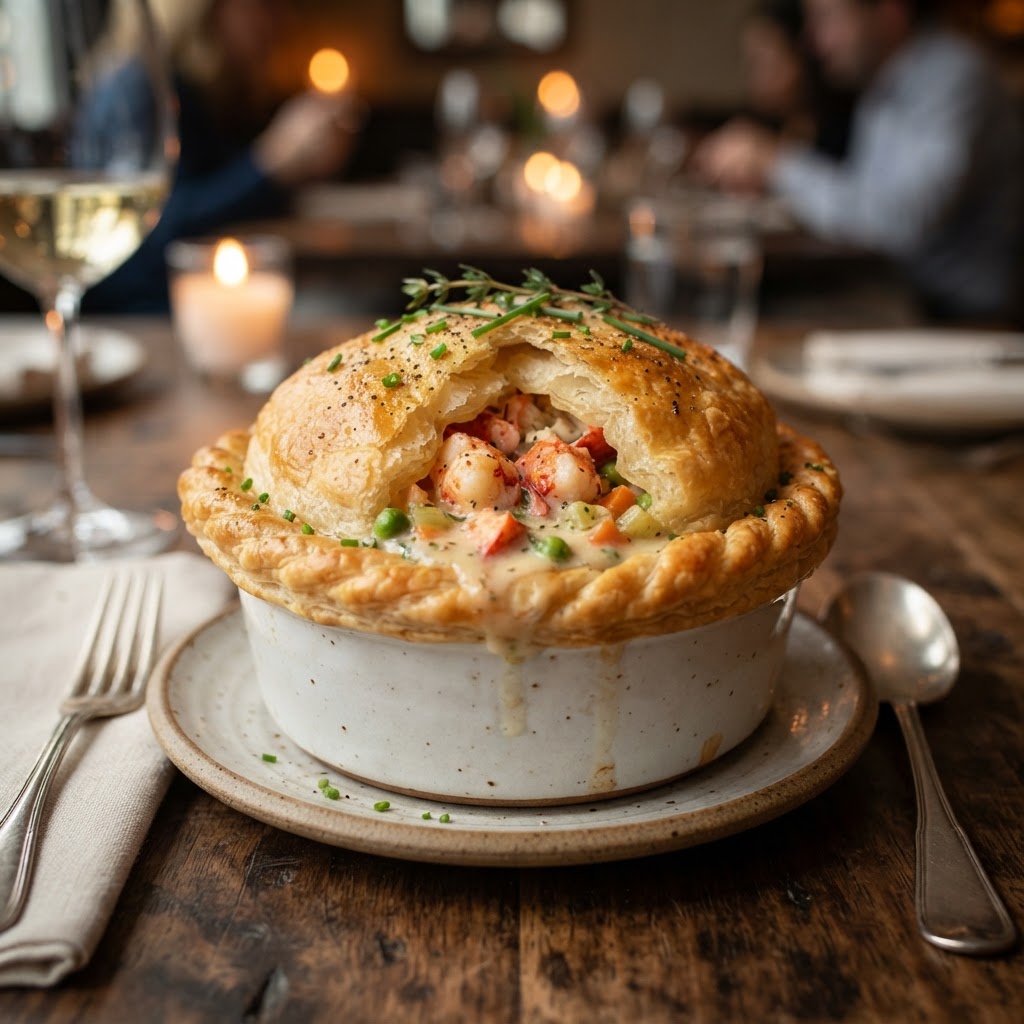
The lobster pot pie is the most luxurious expression of one of New England's most popular ingredients — sweet, tender Maine lobster enveloped in a creamy sherry sauce with vegetables, crowned with a golden dome of puff pastry. The dish is an American adaptation of the classic pot pie, elevated from humble chicken to the shellfish that characterizes the New England coast. It has been a staple of New England fine dining and coastal restaurants since the mid-20th century, and it remains one of the most elegant ways to serve lobster for a crowd.
The pot pie itself is one of the oldest preparations in American cooking — a baked dish of meat and vegetables in a sauce, topped with a pastry crust. The crust was traditionally a simple biscuit or pie dough, but the lobster pot pie is almost always made with puff pastry, which rises into a dramatic, flaky dome that puffs impressively in the oven and is cracked open at the table to reveal the steaming lobster filling beneath. The contrast between the buttery, shatteringly crisp pastry and the rich, creamy lobster filling is what makes the dish so memorable.
The key to a great lobster pot pie is the sauce — it must be rich and velvety, gently scented with sherry (the traditional flavoring), brightened with a touch of lemon, and not so heavy that it masks the sweetness of the lobster. The vegetables — typically pearl onions, carrots, peas, and sometimes potatoes — should be cooked separately and added to the sauce just before assembly, so they retain their individual character. And the lobster must be cooked just until done — overcooked lobster is rubbery and tasteless, and it is the single most common failure in a lobster pot pie.
Ingredients (serves 6 as individual pot pies or 8 as a shared pot pie):
The Lobster: - 4 live lobsters (1½ lbs each), or 4 cups cooked lobster meat (tails and claws), cut into large chunks - If cooking live: bring a large pot of salted water to a boil, cook 8 minutes, plunge into ice bath, then remove meat
The Sauce (Sauce Velouté with Cream): - 6 tablespoons unsalted butter - 6 tablespoons all-purpose flour - 4 cups fish stock or lobster stock (made from the lobster shells if cooking live) - 1 cup heavy cream - ½ cup dry sherry (amontillado or oloroso) - 2 tablespoons cognac (optional) - 2 tablespoons tomato paste (optional, for color and depth) - 1 tablespoon fresh lemon juice - 1 teaspoon fresh thyme leaves - Salt, white pepper, and a pinch of cayenne
The Vegetables: - 7 oz pearl onions, peeled - 2 large carrots, diced - 1 cup fresh or frozen peas - 2 medium potatoes, peeled and diced (optional) - 2 tablespoons butter - 1 tablespoon olive oil - 1 tablespoon fresh parsley, chopped
The Pastry: - 2 sheets all-butter puff pastry, thawed - 1 egg beaten with 1 tablespoon water (egg wash) - Flaky sea salt (for the crust)
The Equipment: - 6 individual ramekins or ovenproof bowls (8 oz each) or 1 large ovenproof dish (2 quart)
Cooking the Lobster: If using live lobsters, bring a large pot of generously salted water to a boil. Plunge the lobsters in headfirst, cover, and cook 8 minutes for 1½ lb lobsters. Plunge immediately into an ice bath. Once cool, crack the shells and remove the tail and claw meat in large pieces. Cut into generous chunks. Reserve the shells for the stock if making your own. (Lobster can be cooked up to 4 hours ahead; refrigerate.)
The Sauce: In a heavy saucepan, melt 6 tablespoons butter over medium heat. Whisk in the flour and cook 2 minutes, stirring constantly — this is the roux. Gradually whisk in the fish or lobster stock, whisking constantly to prevent lumps. Bring to a simmer and cook 5 minutes until thickened. Add the sherry, cognac (if using), tomato paste (if using), and thyme. Simmer 5 minutes. Remove from heat and whisk in the cream, lemon juice, salt, white pepper, and cayenne. Taste and adjust — the sauce should be rich, gently nutty from the sherry, and bright from the lemon.
The Vegetables: In a skillet, heat 2 tablespoons butter and 1 tablespoon olive oil. Add the pearl onions and carrots; cook 10 minutes, rolling occasionally, until golden. Add ½ cup water, cover, and simmer 8 minutes until tender. Add the peas and potatoes (if using); cook 3 minutes until the peas are bright green and the potatoes are tender. Drain and add to the sauce. Stir in the parsley.
Assembly: Preheat oven to 400°F (392°F). Divide the lobster chunks among the ramekins (or place in the large dish). Spoon the sauce and vegetables over the lobster, filling to just below the rim. Cut the puff pastry into circles slightly larger than the ramekins. Brush the rims of the ramekins with egg wash and lay a pastry circle over each, pressing the edges to seal. Brush the pastry generously with egg wash and sprinkle with flaky sea salt. Cut a small slit in the center of each to allow steam to escape.
Baking: Bake 20–25 minutes until the pastry is deeply golden and puffed, and the filling is bubbling at the edges. The pastry should be dramatically risen — this is the visual payoff of the dish.
Service: Bring the pot pies to the table immediately. The pastry should be cracked open at the table — the release of steam and the reveal of the lobster filling is part of the ceremony. Serve with a spoon and a small knife for cutting the pastry. Garnish with fresh parsley and lemon wedges.
The Mimosa Pairing Logic: The rich, creamy, sherry-scented character of the lobster pot pie calls for a mimosa with bright acidity that cuts through the richness while complementing the lobster's sweetness. A classic orange mimosa is the most natural pairing — the citrus brightens the palate and the champagne's toasty notes echo the sherry in the sauce and the golden pastry crust. A peach bellini mimosa is inspired — the peach's sweetness mirrors the lobster and the prosecco's fruitiness complements the cream. For a more structured pairing, a blood orange mimosa provides a slightly bitter counterpoint. Avoid very dry or tannic mimosas — they clash with the rich sauce.
Reference Links: - Lobster pot pie recipe: The New York Times Cooking - Maine lobster guide: Monterey Bay Aquarium Seafood Watch - Puff pastry technique: Serious Eats - New England lobster history: New England Today
Make-Ahead: The sauce can be made up to 2 days ahead and refrigerated. The vegetables can be cooked 1 day ahead. The lobster can be cooked and picked up to 4 hours ahead. Assemble the pot pies up to 2 hours ahead and refrigerate, then bake just before service. The pastry should be brushed with egg wash just before baking.
Pro Tips: The puff pastry must be all-butter — margarine-based puff pastry does not puff or taste the same, and the difference is immediately apparent. The pastry must be kept cold until assembly — warm pastry does not puff. The slit in the center of the pastry is essential — without it, steam builds up and blows the pastry off the ramekin. The lobster must be just-cooked — overcooked lobster is rubbery and ruins the dish. If using pre-cooked lobster, simply warm it gently in the sauce; do not re-cook it. The sherry is the traditional and essential flavoring — it gives the sauce its nutty, slightly oxidized depth that characterizes the dish. Do not substitute cooking sherry, which is salted and flat.
Rate this recipe
Be the first to rate this recipe
to submit your rating.
Recent Posts

Couscous Royale: North Africa's Grand Platter of Lamb, Chicken, and Merguez
October 14, 2026

Seattle Cream Cheese Dog Bites: Hadley Long's 1989 Pioneer Square Invention
October 14, 2026

Khao Soi: Chiang Mai's Northern Thai Coconut Curry Noodles
October 13, 2026

Korean Bibimbap: Jeonju's Joseon Dynasty Mixed Rice
October 11, 2026

Spaghetti alla Carbonara: Rome's World War II Pasta of Eggs, Guanciale, and Pecorino
October 9, 2026