Kouign-Amann: Brittany's Caramelized Butter Pastry
May 21, 2026
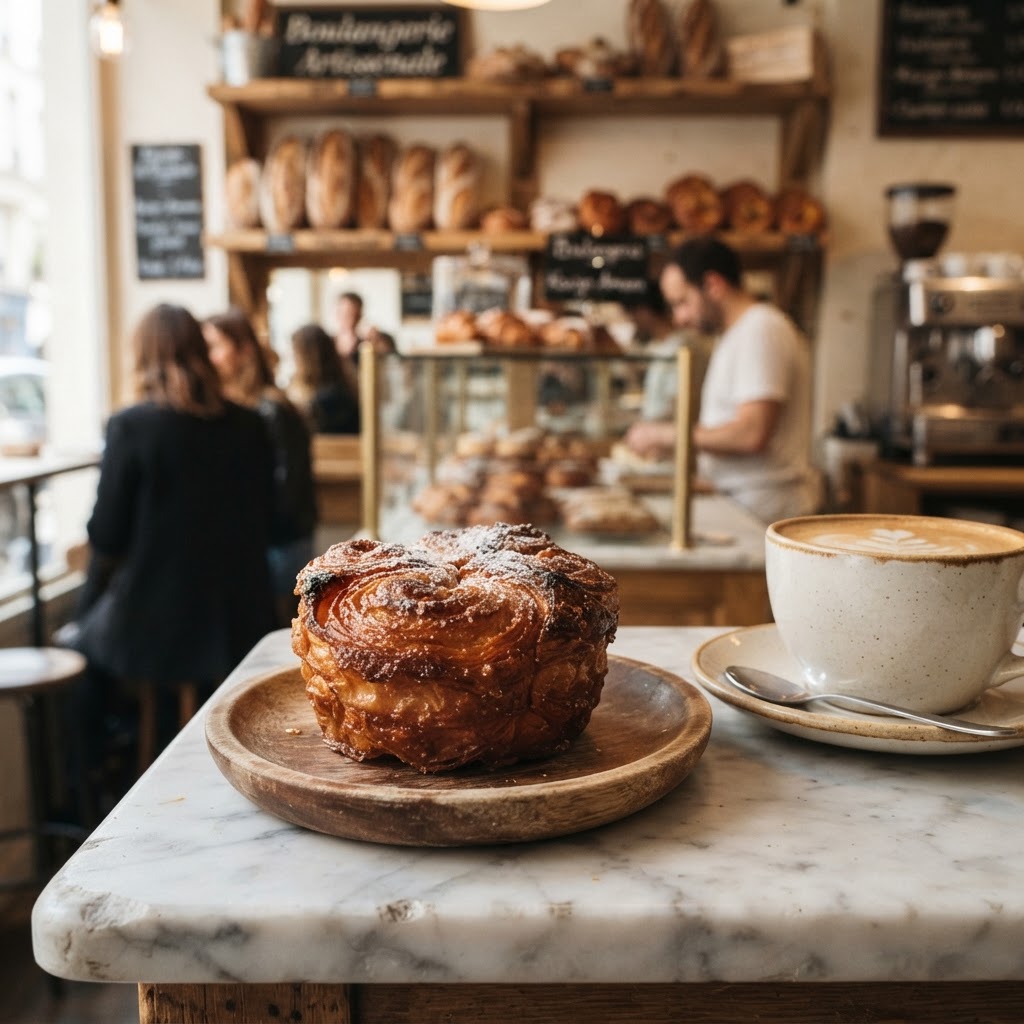
Kouign-amann is the great pastry of Brittany — a round of bread dough layered with Breton butter and sugar, folded and baked slowly until the sugar caramelizes and the butter steams the dough into a crisp, golden, caramelized crown. According to Wikipedia, kouign-amann is a sweet, round Breton laminated dough baked product, originally made with bread dough but also made with viennoiserie dough, containing layers of butter and incorporated sugar, slowly baked until the sugar caramelizes; it is a specialty of the town of Douarnenez in Finistère, Brittany, where it originated around 1860, and is attributed to Yves-René Scordia. The name comes from the Breton words for "cake" (*kouign*) and "butter" (*amann*); in 2011 the *New York Times* described it as "the fattiest pastry in all of Europe." Food52 tells the story of France's most extraordinary pastry, and 196 flavors provides a traditional recipe.
The strict original Douarnenez recipe requires 40 percent bread dough, 30 percent butter, and 30 percent sugar — a ratio so rich it borders on absurd. The slow bake is the magic: the sugar caramelizes against the hot butter, and the dough puffs and crisps in layers, so the finished pastry is half croissant, half caramel, all Breton.
About the Ingredients
Bread dough — a simple yeast dough of flour, water, salt, and a little yeast; it is the base that puffs in the butter and sugar.
Breton butter — cultured, salted Breton butter is the traditional note; the salt in the butter is what makes a kouign-amann a kouign-amann. Use the best European-style salted butter you can find.
Sugar — a generous amount, folded into the layers, caramelizes in the slow bake into the dark, crisp crust.
Ingredients (makes 1 large kouign-amann, 8 servings): For the dough: - 2 cups bread flour - 1 tsp salt - 1 tsp instant yeast - 3/4 cup warm water - 1 tbsp softened butter
For the laminating: - 3/4 cup (1 1/2 sticks) cold salted European-style butter - 3/4 cup sugar, plus more for the pan
Instructions: Make the dough: combine the flour, salt, yeast, and warm water; knead 8 minutes until smooth. Add the softened butter and knead until incorporated. Cover and let rise 1 hour until doubled. Flatten, wrap, and refrigerate 1 hour.
Roll the cold dough into a 10×12 rectangle. Grate the cold butter over two-thirds of the dough; fold the unbuttered third over the center, then fold again like a letter. Roll out to a rectangle, scatter half the sugar over the top, fold in thirds, and fold in thirds again. (This is a rough lamination — the sugar is folded in, not just spread.) Repeat once more with the remaining sugar.
Butter a 9-inch round cake pan and scatter the bottom with sugar. Shape the dough into a round to fit the pan and set it in. Cover and let rise 45 minutes. Preheat the oven to 400°F (392°F). Bake 35–40 minutes until the top is deep golden and caramelized and the sugar has darkened at the edges. (Watch closely at the end — the caramel can go from perfect to burnt in a minute.) Invert onto a plate; serve warm, in wedges.
The Mimosa Pairing Logic: The buttery, caramelized kouign-amann wants a bright, refreshing drink that can cut the richness and echo the caramel. A classic Champagne mimosa is the safe and perfect choice — the citrus cuts the butter and the caramel, and the wine's effervescence refreshes the palate of the rich pastry. A burnt caramel pear champagne mimosa is equally lovely, the caramel a beautiful mirror for the caramelized crust. This pairing is, in its way, the brunch equivalent of a kouign-amann and a cup of Breton café au lait — a sparkling toast to Brittany.
Reference Links: - Kouign-amann (Brittany, Douarnenez, 1860, Yves-René Scordia): Wikipedia - The Story of France's Most Extraordinary Pastry: Food52 - Kouign Amann (Traditional French Recipe): 196 flavors
Make-Ahead: The dough can be made a day ahead and refrigerated overnight after the first rise; the long cold rest makes the lamination easier. The baked kouign-amann is best the day it is made, warm from the oven; it loses its crisp caramel crust by the next day. Reheat leftovers gently in a warm oven to re-crisp the crust.
Pro Tips: Use salted European-style butter; the salt in the butter is the Breton signature. Keep the butter cold as you grate it; warm butter melts into the dough and the layers disappear. The sugar caramelizes aggressively at the end — watch closely and pull the pastry the moment the edges are deep golden, or the caramel will turn bitter. Invert the pastry onto a plate while still warm, or the caramelized sugar will glue it to the pan. Eat warm; the contrast of the crisp caramel crust and the soft buttery interior is the whole pastry.
Rate this recipe
Be the first to rate this recipe
to submit your rating.
Recent Posts

Couscous Royale: North Africa's Grand Platter of Lamb, Chicken, and Merguez
October 14, 2026

Seattle Cream Cheese Dog Bites: Hadley Long's 1989 Pioneer Square Invention
October 14, 2026

Khao Soi: Chiang Mai's Northern Thai Coconut Curry Noodles
October 13, 2026

Korean Bibimbap: Jeonju's Joseon Dynasty Mixed Rice
October 11, 2026

Spaghetti alla Carbonara: Rome's World War II Pasta of Eggs, Guanciale, and Pecorino
October 9, 2026