Korean Galbi Jjim
August 3, 2026
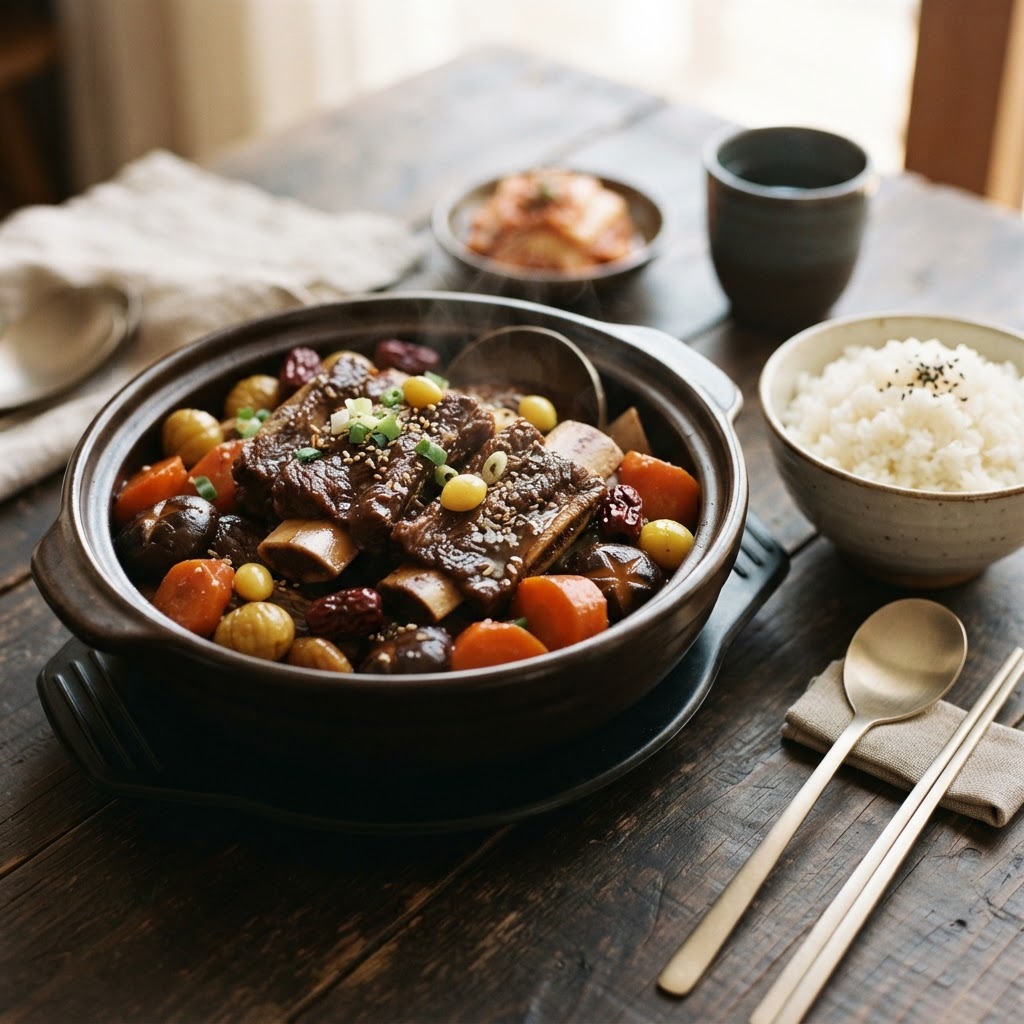
Galbi jjim is a Korean braised beef short rib dish, glossy and fall-off-the-bone tender, simmered in a sweet-savory soy sauce with Asian pear, garlic, ginger, and vegetables. The name comes from galbi (ribs) and jjim (steamed or braised), a cooking technique that originally referred to steaming in an earthenware siru but now means a long, slow braise in a reduced sauce. The dish was historically considered a royal and celebratory food, too expensive for everyday meals, and it remains the dish served at Korean holidays, weddings, and family gatherings such as Chuseok (the autumn harvest festival) and Seollal (the lunar new year). The Asian pear and kiwi in the marinade contain enzymes that tenderize the meat, and the long braise produces ribs that are meltingly soft, coated in a dark, glossy, sweet-savory glaze (Wikipedia — Jjim; Food52 — Galbi Jjim).
Galbi jjim is an event dish by tradition: it is the celebration food of Korea, made for the holidays and for the occasions that bring a family together, and the long, patient braise and the dramatic presentation make it a centerpiece worth gathering around.
Ingredients (serves 6): - 3½ lb Korean-style beef short ribs (flanken cut), soaked in cold water 1 hour - ½ onion, diced - ½ Asian pear, peeled and diced - ½ kiwi, peeled and diced (tenderizer) - 5 cloves garlic - ½ cup soy sauce - 3 tablespoons dark brown sugar - 3 tablespoons mirin (or Korean rice wine) - 1 teaspoon ginger paste - 1 teaspoon black pepper - 2 carrots, cut into chunks - ¾ lb Korean radish (mu) or daikon, cut into chunks - 6 dried shiitake mushrooms, rehydrated - 2 tablespoons vegetable oil - 1 tablespoon sesame oil - 1 tablespoon sesame seeds - Steamed short-grain rice, for serving
Instructions: Blend the onion, pear, kiwi, garlic, soy sauce, brown sugar, mirin, ginger, and pepper into a marinade. Drain the ribs and rinse. Place the ribs in a pot, cover with water, bring to a boil, and blanch for 10 minutes to remove impurities; drain and rinse. Return the ribs to the clean pot. Add the marinade and 2 cups of water. Bring to a boil, then reduce to a simmer, cover, and cook for 1 hour. Add the carrots, radish, and shiitake mushrooms; cook 30 minutes more, until the ribs are very tender and the sauce is glossy and reduced. Stir in the sesame oil and sesame seeds. Serve in a large bowl with steamed rice.
For a Crowd (serves 12): - 7 lb short ribs, double all ingredients; use a large Dutch oven or two pots. - Braise the day before; the ribs and sauce improve overnight. Reheat gently.
Variations: - Royal Galbi Jjim: Add jujube (Korean dates), chestnuts, ginkgo nuts, and whole button mushrooms for the traditional celebratory presentation. - Spicy Galbi Jjim: Add 2 tablespoons of gochugaru (Korean chili flakes) or gochujang for a spicy version. - Instant Pot Galbi Jjim: Pressure-cook the ribs for 45 minutes after blanching, then reduce the sauce on the stovetop, for a faster home version.
Pairing: Galbi jjim pairs with a medium-bodied red wine such as a Merlot or a Pinot Noir, or with a cold Korean lager such as Cass or Hite. For a daytime or brunch gathering, a sparkling wine or a makgeolli (Korean rice wine) also works. Serve with steamed short-grain rice, kimchi, and a few banchan (side dishes).
Reference Links: - Jjim (Korean steamed/braised dishes, galbi-jjim as a variety): Wikipedia - Galbi Jjim (Korean Braised Short Ribs) recipe: Food52
Pro Tips: The kiwi and Asian pear contain enzymes (actinidin) that tenderize the beef; do not marinate longer than overnight, because the enzymes can make the meat mushy if left too long. The blanching step is essential, because it removes the bone fragments and the scum that would otherwise cloud the sauce. Cut the radish into large chunks, because it softens and sweetens into the sauce over the long braise. Cook uncovered for the last 20 minutes to reduce the sauce to a glossy glaze; the sauce should coat the ribs like lacquer. For the most traditional presentation, garnish with julienned scallions and toasted sesame seeds, and serve in the same heavy pot it was braised in.
Rate this recipe
Be the first to rate this recipe
to submit your rating.
Recent Posts

Couscous Royale: North Africa's Grand Platter of Lamb, Chicken, and Merguez
October 14, 2026

Seattle Cream Cheese Dog Bites: Hadley Long's 1989 Pioneer Square Invention
October 14, 2026

Khao Soi: Chiang Mai's Northern Thai Coconut Curry Noodles
October 13, 2026

Korean Bibimbap: Jeonju's Joseon Dynasty Mixed Rice
October 11, 2026

Spaghetti alla Carbonara: Rome's World War II Pasta of Eggs, Guanciale, and Pecorino
October 9, 2026