Knafeh al Moscato

July 12, 2026
Knafeh is a warm, gooey cheese pastry soaked in sweet sugar syrup, with a golden, crispy top layer of shredded pastry, and it is served throughout the Levant, Turkey, and the Arab world, where it is particularly associated with the Palestinian city of Nablus. The most famous version, Knafeh Nabulseyeh, originated in Nablus and is filled with the city's trademark firm, white, salty nabulsi cheese, covered with a sweet syrup called qatir, and dyed with orange food coloring for its characteristic vibrant orange-gold appearance. It is prepared upside down, the cheese on the bottom and the pastry on top, then flipped, and served warm, straight from the oven, on a large round tray, cut into squares or wedges (Wikipedia).
The history of knafeh stretches back centuries. A common story, which dates in writing to the tenth century, holds that the dessert was created to satisfy the hunger of caliphs during Ramadan, the holy month of fasting, variously placed in Fatimid Egypt or in the Umayyad Caliphate in Damascus, where Levantine dessert makers are said to have prepared it for Mu'awiya I. The thirteenth-century Andalusian Arabic cookbook *Kitab al tabikh fi-l-Maghrib wa-l-Andalus* gives recipes for a knafeh described as a thin pancake, layered with fresh cheese, baked, and topped with honey and rose syrup. According to the food historian Mary Isin, cheese-filled knafeh does not appear in any historical record before the nineteenth century; an 1844 dictionary of Syrian and Egyptian Arabic by the Swedish orientalist Jacob Berggren mentions a knafeh of string dough and qaymaq, a cooked cream, and the food historian Daniel Newman cites an 1885 Beirut cookbook, *Ustadh al-Tabbakhin* by Khalil Khattar Sarkis, as the earliest documented cheese-filled variant, with four recipes: cheese-filled, burma (rolled), mafroukeh (rubbed by hand), and knafeh basma (two layers of pastry). Associations between Nablus and knafeh date to at least 1923, when Khalil Totah described knafeh as "a part of a Nabulsi's life," and in 2009 Nablus set a Guinness World Record for the largest knafeh ever made, 75 metres long and 1,771 ⅔ lb.
Our Mimosavated version adds a splash of Moscato d'Asti to the sugar syrup, the fragrant, lightly sparkling sweet wine of Piedmont, whose peach, orange-blossom, and honeysuckle aromas complement the traditional rose water and orange blossom water in the syrup.
Ingredients (serves 10):
The Knafeh: - 14 ⅛ oz kadayif (shredded filo pastry — available at Middle Eastern grocers) - 10.6 oz mozzarella cheese, shredded (traditional nabulsi cheese is hard to find outside the Middle East; mozzarella is a common substitute) - 3 ½ oz ricotta cheese - 5 ¼ oz unsalted butter, melted - 1 tablespoon sugar - 1 teaspoon orange food coloring (optional, for the traditional orange color)
The Moscato Sugar Syrup (Attar): - 10.6 oz granulated sugar - ⅞ cup water - 3 ⅓ tbsp Moscato d'Asti - 1 tablespoon rose water - 1 tablespoon orange blossom water - 1 tablespoon lemon juice
For Garnish: - 1 ¾ oz crushed pistachios - A pinch of ground cardamom (optional)
Preparing the Pastry: Preheat the oven to 374°F (375°F). Butter a 11 in (11-inch) round cake pan or baking dish.
If the kadayif is frozen, thaw it completely. Using your hands, separate the shredded pastry strands, pulling them apart gently until they are all loosened and fluffy. Toss the kadayif with the melted butter and orange food coloring (if using), making sure all the strands are evenly coated.
Assembling: In a bowl, mix the mozzarella and ricotta cheese. Spread half of the butter-coated kadayif evenly across the bottom of the prepared pan, pressing it down firmly. Spread the cheese mixture evenly over the kadayif layer, leaving a ¾ in border around the edges. Top with the remaining kadayif, pressing down gently.
Baking: Bake for 35–40 minutes, until the top is deep golden brown and crispy. The cheese should be melted and bubbling at the edges.
Making the Moscato Sugar Syrup: While the knafeh is baking, combine the sugar, water, and lemon juice in a saucepan. Bring to a boil over medium heat, then reduce to a simmer and cook for 10 minutes, until the syrup is slightly thickened. Remove from heat and stir in the Moscato, rose water, and orange blossom water. The syrup should be warm but not hot when the knafeh comes out of the oven.
Serving: As soon as the knafeh comes out of the oven, pour the warm sugar syrup evenly over the entire surface — the knafeh should sizzle and absorb the syrup immediately. Let sit for 5–10 minutes to allow the syrup to soak in, then cut into squares or wedges. Garnish with crushed pistachios and a pinch of ground cardamom. Serve warm — the contrast between the crispy golden top, the gooey melted cheese, and the sweet floral syrup is the entire point.
The Mimosa Pairing Logic: Since the syrup contains Moscato d'Asti, pair with a peach bellini mimosa — peach purée and Prosecco. The peach echoes the Moscato and complements the sweet, floral syrup. A pomegranate mimosa is also excellent — the pomegranate is a Middle Eastern ingredient that pairs beautifully with the rose water and orange blossom water in the syrup. Avoid heavy or dry mimosas — knafeh is sweet, warm, and intensely flavored, and you need something light and floral to complement it.
Reference Links: - Knafeh on Wikipedia (Nablus, nabulsi cheese, 1885 Beirut cookbook): Wikipedia - Knafeh Nabulseyeh origin (Nablus Palestine, history): Al Jazeera - The History of Knafeh (Middle Eastern dessert, caliphs, Ramadan): Culture Trip - Moscato d'Asti wine guide: Wine Folly
Make-Ahead: Knafeh is best served immediately after baking — the crispy top layer softens quickly once the syrup is added, and the cheese sets as it cools. However, you can assemble the knafeh (without baking) up to 1 day ahead and refrigerate — bake just before serving. The sugar syrup can be made up to 1 week ahead and stored at room temperature — gently warm before using. Do not freeze assembled knafeh — the texture of the cheese and pastry will suffer. Leftover knafeh can be reheated in a 347°F/350°F oven for 5–8 minutes to partially restore the crispness, though it will never be as good as fresh.
Pro Tips: Separate the kadayif thoroughly — clumps of pastry will create dense spots in the knafeh. Use your hands and be patient. Press the bottom layer firmly — this creates a solid base that holds together when the knafeh is cut and served. The cheese mixture should be at room temperature — cold cheese won't melt properly during baking. Pour the syrup while both the knafeh and the syrup are warm — the warm knafeh absorbs the warm syrup, and the sizzle you hear is the sign of a proper knafeh. Don't skimp on the syrup — the knafeh should be thoroughly soaked; a dry knafeh is a failed knafeh. Serve immediately — knafeh is at its absolute best in the first 10–15 minutes after the syrup is added, while the top is still crispy and the cheese is still gooey. The crushed pistachios are not just garnish — they add a nutty flavor and a textural contrast that is essential to the knafeh experience. Use rose water and orange blossom water sparingly — they are intensely fragrant, and too much will make the syrup taste like perfume.
Rate this recipe
Be the first to rate this recipe
to submit your rating.
Recent Posts
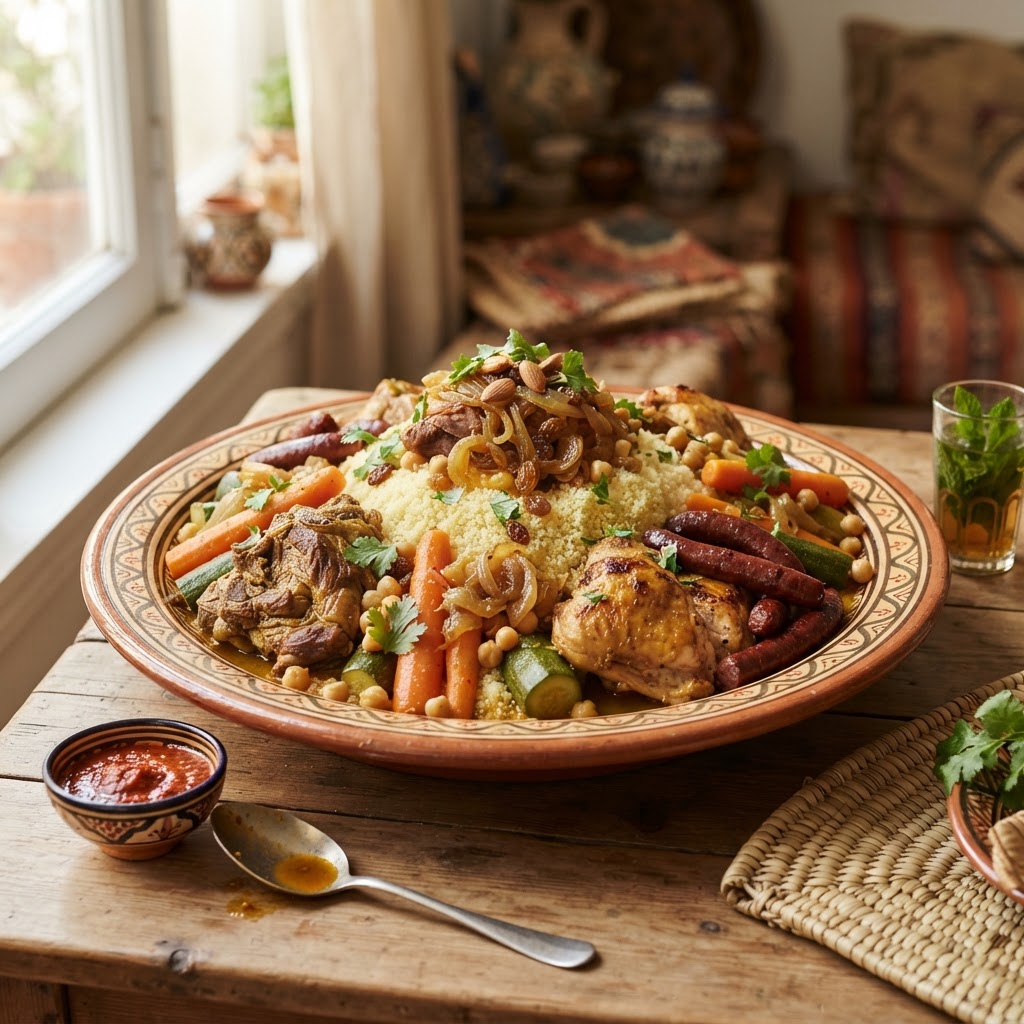
Couscous Royale: North Africa's Grand Platter of Lamb, Chicken, and Merguez
October 14, 2026
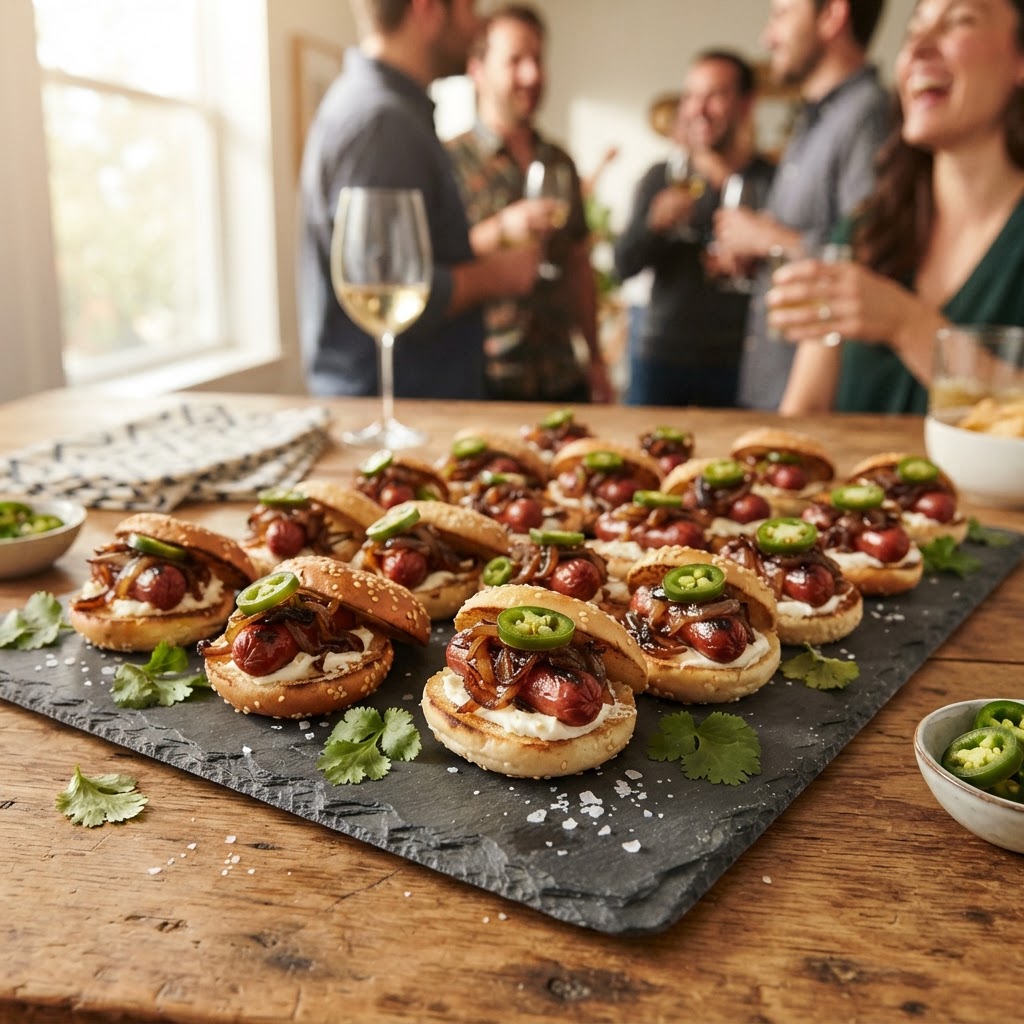
Seattle Cream Cheese Dog Bites: Hadley Long's 1989 Pioneer Square Invention
October 14, 2026
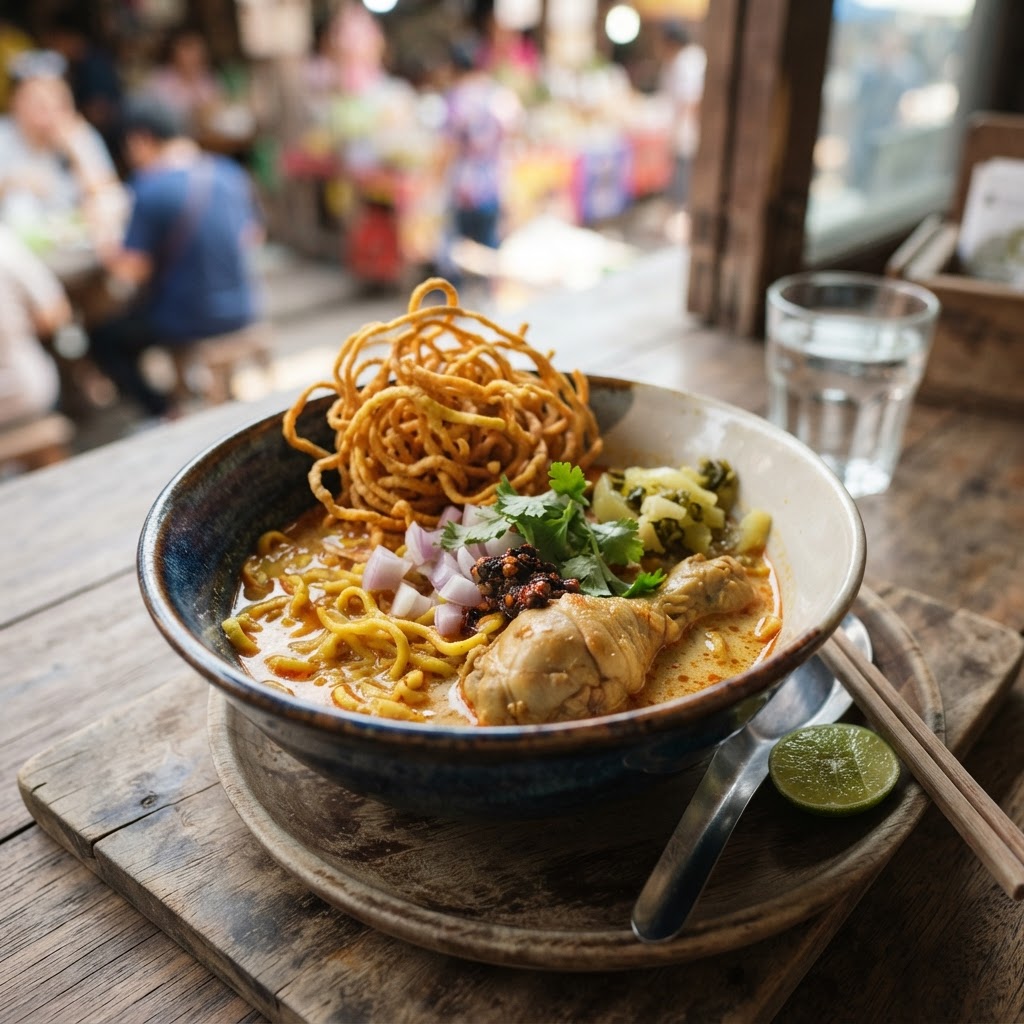
Khao Soi: Chiang Mai's Northern Thai Coconut Curry Noodles
October 13, 2026
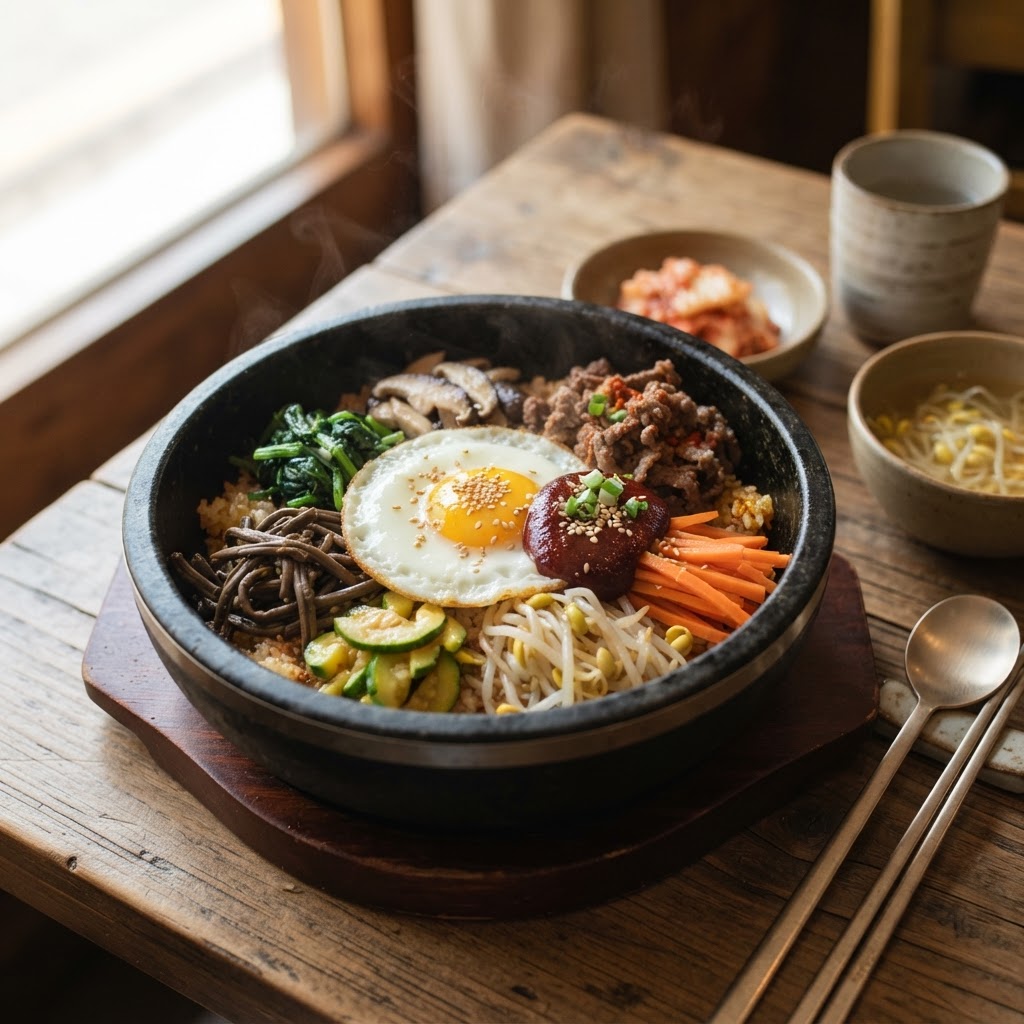
Korean Bibimbap: Jeonju's Joseon Dynasty Mixed Rice
October 11, 2026
Spaghetti alla Carbonara: Rome's World War II Pasta of Eggs, Guanciale, and Pecorino
October 9, 2026