Kaya Toast and Soft-Boiled Eggs: The Singaporean Breakfast Icon
May 22, 2026
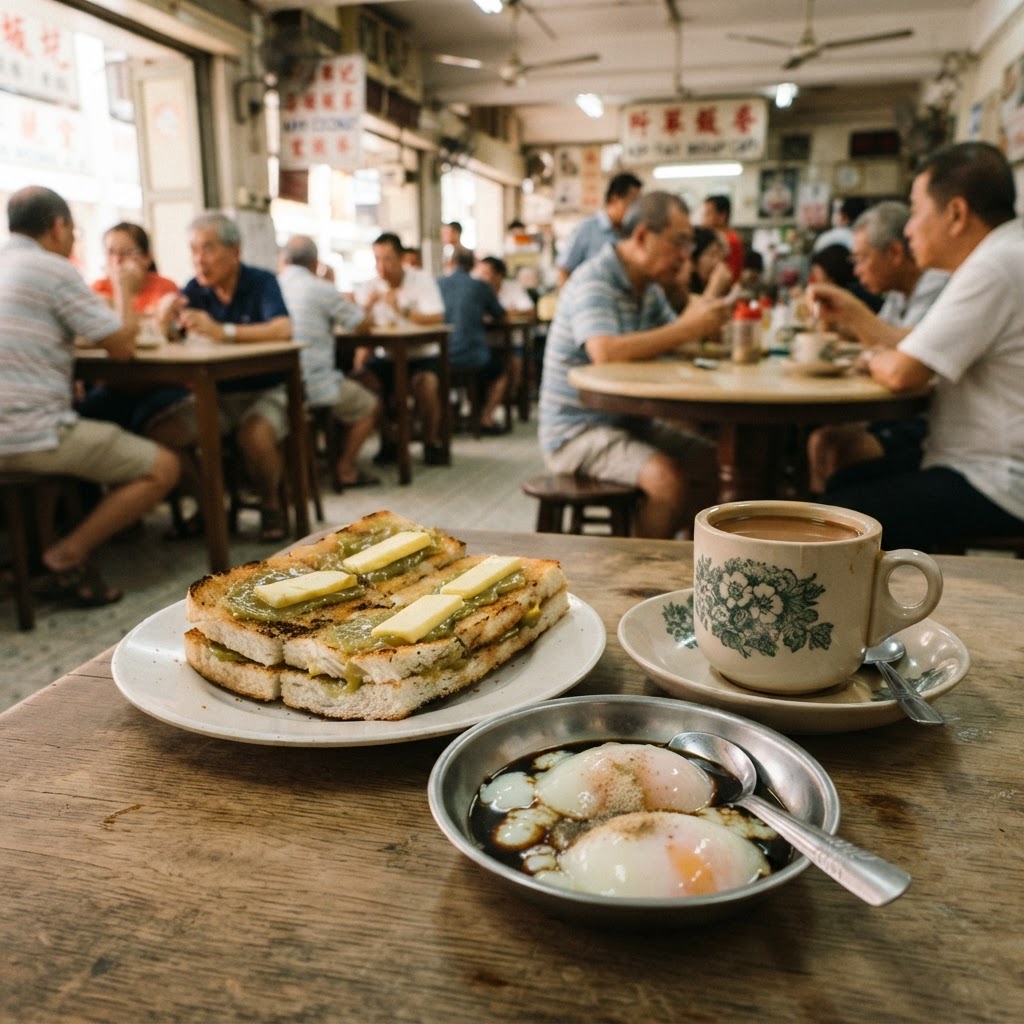
Kaya toast and soft-boiled eggs — served with a cup of strong, sweet kopi (coffee) — is the classic Singaporean breakfast. Thinly sliced, toasted bread spread with green kaya (coconut egg jam) and cold butter, served alongside two soft-boiled eggs seasoned with dark soy sauce and white pepper. It's a breakfast that's at once simple and deeply evocative — a dish that carries the history of Singapore's immigrant communities and the evolution of a nation's food culture.
The origins of kaya toast trace back to the Hainanese immigrants who came to Singapore (then part of the British Straits Settlements) in the 19th and early 20th centuries. Many Hainanese immigrants worked as cooks on British ships and in the homes and hotels of the colonial British in Singapore. From the British, the Hainanese learned the tradition of toast and jam for breakfast. But the British jams — marmalade, strawberry, and the like — were expensive and unfamiliar to the Hainanese. So they created their own jam using the ingredients available to them: coconut milk, eggs, sugar, and pandan leaves. The result was kaya — a rich, fragrant, green (from the pandan) coconut-and-egg jam that became the defining spread of Singaporean and Malaysian kopitiams (coffee shops).
The word "kaya" means "rich" in Malay — a fitting name for this luxurious, coconutty spread. Kaya is made by slowly cooking coconut milk, eggs, sugar, and pandan leaves over a double boiler for hours, until the mixture thickens into a smooth, spreadable jam with the fragrance of coconut and pandan. The green color comes from the pandan leaves, which are also used to flavor many Southeast Asian desserts. There are two main styles of kaya: the Nonya (Peranakan) version, which is green from pandan juice, and the Hainanese version, which is brown from caramelized sugar.
Kaya toast became a staple of Singapore's kopitiam culture in the early 20th century, and by the 1920s, the classic Singaporean breakfast of kaya toast, soft-boiled eggs, and kopi was firmly established. The dish is served in kopitiams and in chains like Ya Kun Kaya Toast (founded in 1944) and Killiney Kopitiam (founded in 1919), which have popularized the breakfast across Singapore and internationally.
The soft-boiled eggs are an essential part of the experience. Two eggs are cracked into a bowl, still runny and warm, and seasoned with a drizzle of dark, sweet soy sauce and a sprinkle of white pepper. The traditional way to eat the breakfast is to dip strips of kaya toast into the seasoned eggs — the contrast between the crisp, sweet, buttery toast and the warm, savory, peppery eggs is one of the great breakfast combinations.
Our Mimosavated version makes kaya toast with homemade kaya (with a shortcut method for those short on time) and serves it with the traditional soft-boiled eggs.
Ingredients (serves 4):
The Kaya (Coconut Jam): - ⅞ cup coconut cream (full-fat, not light) - 3 large eggs - 5 ¼ oz granulated sugar - 4 pandan leaves, tied into knots (or 1 teaspoon pandan extract) - A pinch of salt
The Toast: - 8 slices of white bread (traditional Singaporean bread is sliced very thin — use a dense white loaf and slice it thin, about ⅓ in) - 3 ½ oz unsalted butter, softened (cold enough to spread but soft enough to be spreadable)
The Soft-Boiled Eggs: - 8 large eggs (very fresh) - Dark soy sauce (sweet, thick Malaysian style is best) - White pepper
The Coffee (Kopi): - Strong coffee (traditionally brewed in a sock strainer with robusta beans, sweetened with condensed milk)
Making the Kaya: In a heatproof bowl, whisk together the coconut cream, eggs, sugar, and salt until the sugar is dissolved. Add the knotted pandan leaves. Place the bowl over a saucepan of simmering water (double boiler) and cook, stirring constantly with a wooden spoon or whisk, for 45–60 minutes. The mixture will gradually thicken and turn a darker green (or brown, if using caramelized sugar). The kaya is done when it has the consistency of a thick custard or jam — it should coat the back of a spoon. Remove the pandan leaves. Strain through a fine sieve into a clean jar. Let cool — it will thicken further as it cools.
*(Shortcut method: For a faster kaya, use a microwave: cook the mixture in 1-minute intervals, stirring between each, for about 8–10 minutes total, until thickened. Or, use a store-bought kaya — many Asian markets carry good quality kaya.)*
Toasting the Bread: Toast the bread slices until golden and crisp — traditionally, the bread is grilled over charcoal, which gives it a distinctive smoky flavor, but a toaster or oven works fine. For the authentic Singaporean experience, the bread should be sliced very thin and toasted until shatteringly crisp.
Making the Soft-Boiled Eggs: Bring a pot of water to a boil. Gently lower the eggs into the water. Reduce heat to maintain a gentle simmer and cook for exactly 5 minutes (for large eggs at room temperature — adjust time for refrigerator-cold eggs to 6 minutes). Remove the eggs and immediately place them in a bowl of cold water for 10 seconds to stop the cooking. Crack the eggs into individual serving bowls — the whites should be just barely set and the yolks should be warm and runny.
Serving: Spread a generous layer of kaya on one slice of toast, then top with thin slices of cold butter. Top with a second slice of toast. Cut the sandwich in half diagonally. Serve the kaya toast alongside the bowls of soft-boiled eggs. Season the eggs with a drizzle of dark soy sauce and a sprinkle of white pepper, and stir gently. Serve with a cup of strong, sweet kopi.
To eat the traditional way: dip a corner of the kaya toast into the seasoned soft-boiled eggs, then eat. The combination of crisp, sweet, coconutty, buttery toast and warm, savory, peppery eggs is the essence of the Singaporean breakfast.
The Mimosa Pairing Logic: Kaya toast and soft-boiled eggs is sweet, savory, and rich with coconut. The ideal mimosa pairing is a classic Prosecco mimosa — orange juice and Prosecco. The bright, acidic citrus cuts through the richness of the kaya and the butter, while the Prosecco's effervescence provides a refreshing contrast to the sweet, coconutty toast. A passionfruit mimosa is also excellent — the tropical passionfruit complements the pandan and coconut flavors. Avoid heavy or bitter mimosas — the dish is sweet and rich, and you need something bright and fruity to balance it.
Reference Links: - Kaya toast on Wikipedia (Hainanese immigrants, Straits Settlements): Wikipedia - The Anatomy of the Quintessential Singaporean Breakfast (kopitiam, kaya): Michelin Guide - Kaya - Singapore (Hainanese, kopitiam, early 20th century): National Library Board Singapore - Kaya Toast Recipe (Hainanese, sericaia origins): Serious Eats - Origin of kaya toast and half-boiled eggs in Singapore (1920s): Singapore Heritage
Make-Ahead: The kaya can be made up to 1 week ahead and refrigerated — it actually improves after a day as the flavors meld. Bring to room temperature before spreading. The bread should be toasted just before serving — it loses its crispness quickly. The soft-boiled eggs must be made just before serving — they need to be warm and runny. Assemble the kaya toast and eggs at the last minute. Leftover kaya can be refrigerated for up to 2 weeks and used on toast, in yogurt, or as a filling for cakes.
Pro Tips: Use full-fat coconut cream — light coconut milk doesn't have enough fat to make a proper kaya, and the jam won't set properly. Use pandan leaves if you can find them — they give kaya its distinctive green color and floral, vanilla-like fragrance. If you can't find fresh pandan leaves, use pandan extract (available in Asian markets), though the flavor won't be as fresh. Cook the kaya over a double boiler, not direct heat — direct heat will scramble the eggs. Stir constantly — the kaya must be stirred throughout cooking to prevent the eggs from curdling. Be patient — kaya takes 45–60 minutes to cook properly; it's a slow process, but the result is far superior to store-bought. Slice the bread very thin — traditional Singaporean kaya toast uses bread sliced to about ⅓ in (less than ½ inch), and the thinness is key to the crisp texture. Toast until shatteringly crisp — the contrast between the crisp bread and the soft kaya and butter is essential. Use cold butter — the contrast between the cold butter and the warm toast is part of the experience. The eggs must be very fresh — fresh eggs hold their shape better and the whites are cleaner. Time the eggs precisely — 5 minutes for large eggs at room temperature gives the perfect soft-set white and runny yolk. Serve immediately — the toast must be crisp and the eggs warm; this is a dish that doesn't wait.
Rate this recipe
Be the first to rate this recipe
to submit your rating.
Recent Posts
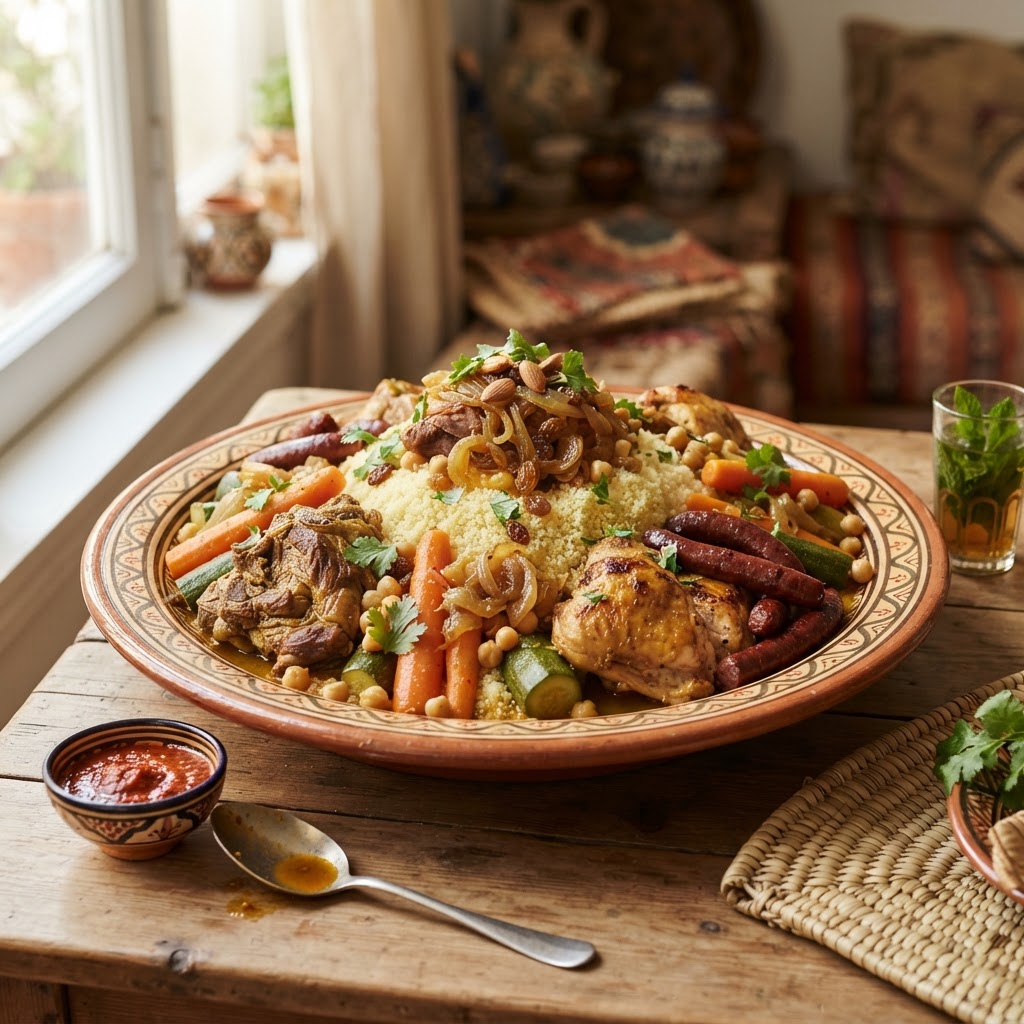
Couscous Royale: North Africa's Grand Platter of Lamb, Chicken, and Merguez
October 14, 2026

Seattle Cream Cheese Dog Bites: Hadley Long's 1989 Pioneer Square Invention
October 14, 2026
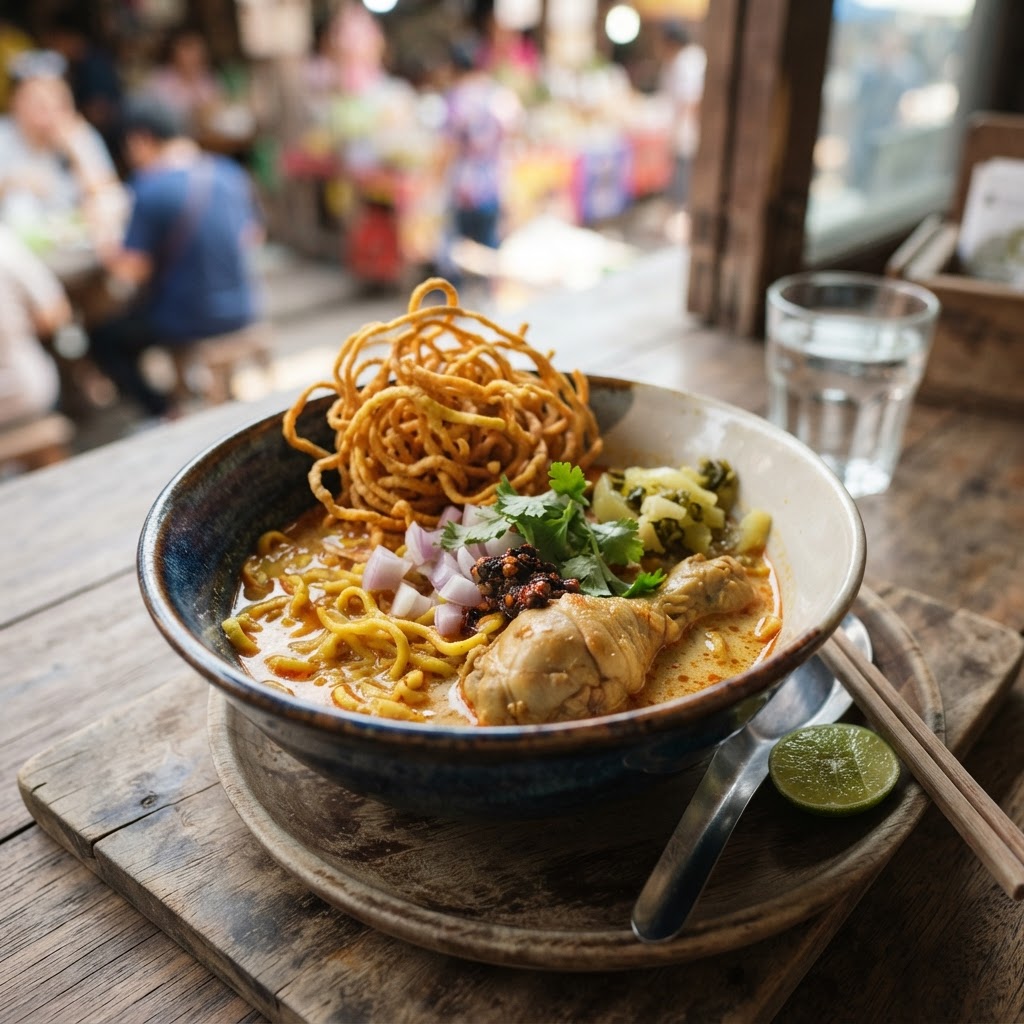
Khao Soi: Chiang Mai's Northern Thai Coconut Curry Noodles
October 13, 2026
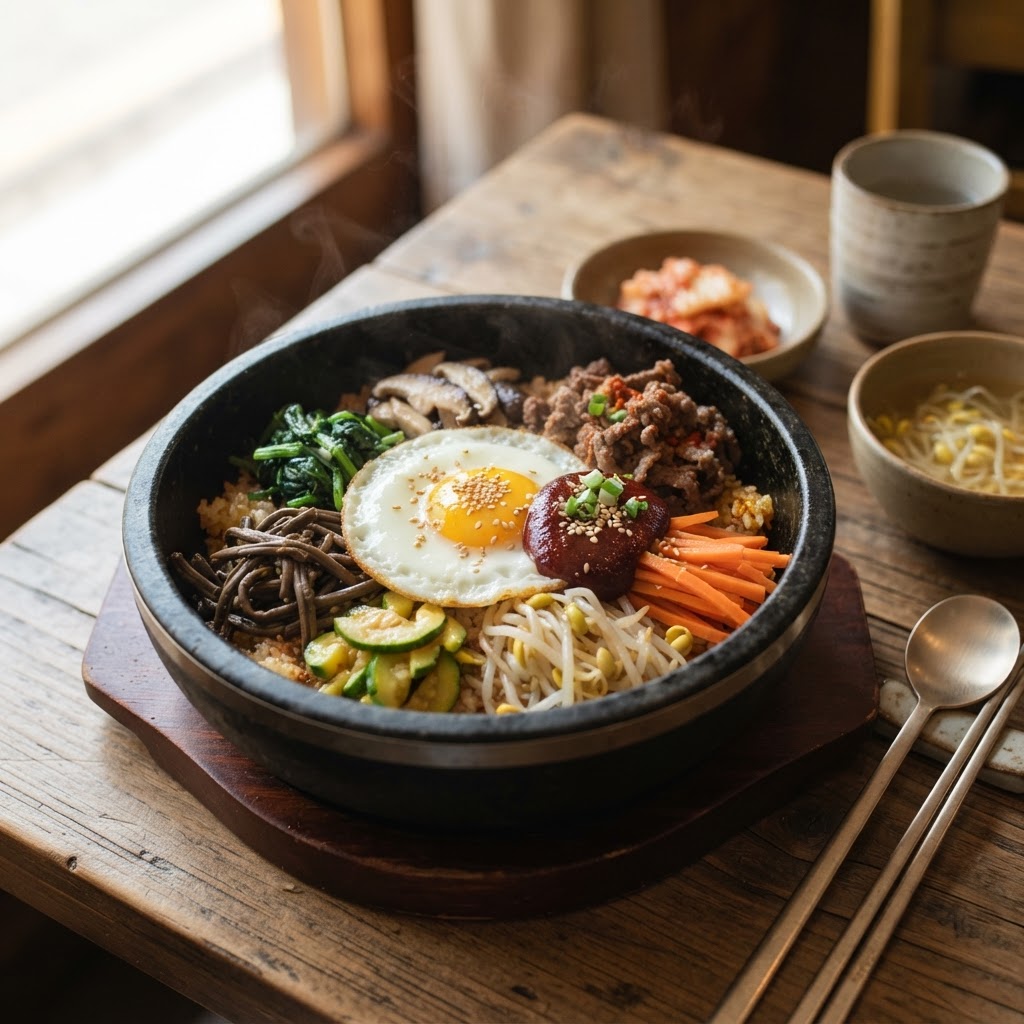
Korean Bibimbap: Jeonju's Joseon Dynasty Mixed Rice
October 11, 2026
Spaghetti alla Carbonara: Rome's World War II Pasta of Eggs, Guanciale, and Pecorino
October 9, 2026