Japanese Soufflé Cheesecake al Prosecco
August 7, 2026
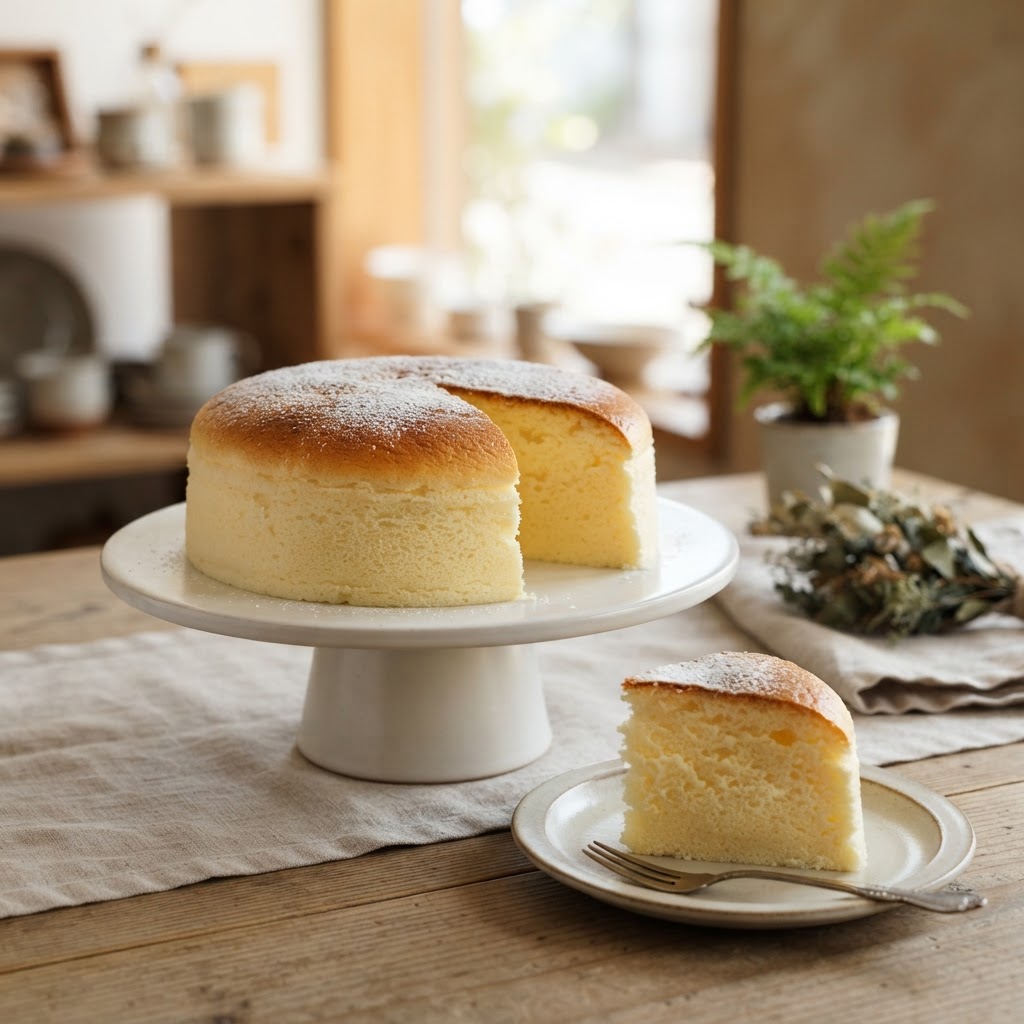
Japanese soufflé cheesecake — also called cotton cheesecake or light cheesecake — is a tall, jiggly, cloud-like cheesecake with a golden top and an airy, chiffon-like interior that melts on the tongue. It is lighter, less sweet, and less dense than a New York-style cheesecake, and it is the signature dessert of the Japanese bakery chain Uncle Tetsu, which popularized it around the world.
According to Wikipedia, Japanese cheesecake (soufflé-style cheesecake, cotton cheesecake, or light cheesecake) is a variety of cheesecake that is usually lighter in texture and less sweet than North American varieties, with a characteristically wobbly and airy texture similar to a soufflé when fresh out of the oven and a chiffon-cake-like texture when chilled. The recipe was created by Japanese chef Tomotaro Kuzuno, who was inspired by a local *käsekuchen* cheesecake (a German variant) during a trip to Berlin in the 1960s. The cake is made with cream cheese, butter, sugar, and eggs; similar to chiffon cake or soufflé, Japanese cheesecake has a fluffy texture produced by whipping egg white and egg yolk separately. It is traditionally made in a bain-marie (water bath). The cake is the signature dish of Uncle Tetsu's Cheesecake, a Japanese bakery chain that originated in Hakata-ku, Fukuoka. As the Uncle Tetsu site recounts, the bakery was founded by Tetsushi Mizokami, and the small neighborhood bakery grew into an international sensation thanks to one singular creation: the light, fluffy, and gently sweet Japanese cheesecake.
What makes Japanese soufflé cheesecake distinctive is its technique. Unlike a dense, baked New York cheesecake, the Japanese version is a hybrid of cheesecake and soufflé. The cream cheese, butter, and egg yolks are melted together into a smooth mixture, then flour is folded in; separately, the egg whites are whipped to soft peaks and gently folded into the yolk mixture in three additions. This is what gives the cake its signature airy, cottony, cloud-like texture. The cake is baked in a bain-marie — a water bath — which provides gentle, even heat that keeps the cake moist and allows it to puff dramatically and develop its signature jiggle. The top caramelizes to a golden brown, while the interior remains pale, soft, and wobbly. Fresh from the oven, the cake jiggles like a soufflé; chilled, it sets to a chiffon-like texture. It is gently sweet, with a delicate cream cheese flavor, and is often dusted with powdered sugar or served with fresh fruit. It is far less rich than a Western cheesecake, which is why it is popular in Japan and increasingly around the world — it is a cheesecake you can eat a whole slice of and still feel light.
Our Mimosavated version adds a splash of Prosecco di Valdobbiadene to the cream cheese mixture — the bright, slightly acidic wine lifts the richness and adds a subtle fruity note that complements the delicate cream cheese.
Ingredients (serves 8):
The Soufflé Cheesecake: - 8 ⅞ oz cream cheese, room temperature - 2 ⅛ oz unsalted butter - ½ cup whole milk - 3 ⅓ tbsp Prosecco di Valdobbiadene - 4 large eggs, separated (room temperature) - 3 ½ oz granulated sugar (for the yolks) - 2 ⅞ oz granulated sugar (for the whites) - 2 ⅛ oz cake flour (or all-purpose flour) - 1 teaspoon lemon juice - 1 teaspoon vanilla extract - A pinch of salt - Cream of tartar (a pinch, for the whites)
Preparing the Pan and Water Bath: Preheat the oven to 320°F (320°F). Line a 7 ⅞ in (8-inch) round cake pan with parchment paper on the bottom and sides (the cake will stick without it). Wrap the outside of the pan in two layers of heavy-duty aluminum foil to make it waterproof for the water bath. Boil a kettle of water for the bain-marie.
Making the Cream Cheese Mixture: In a heatproof bowl set over a saucepan of barely simmering water (double boiler), combine the cream cheese, butter, and milk. Heat gently, stirring constantly, until the cream cheese is melted and the mixture is smooth and glossy. Remove from heat and whisk in the Prosecco. Let cool to lukewarm.
In a separate bowl, whisk the egg yolks with 3 ½ oz of the sugar until pale and slightly thickened. Gradually whisk the lukewarm cream cheese mixture into the yolks in a steady stream. Whisk in the lemon juice and vanilla. Sift in the flour and salt and whisk just until smooth — don't overmix.
Whipping the Egg Whites: In a clean, grease-free bowl, beat the egg whites with the cream of tartar until soft peaks form. Gradually add the remaining 2 ⅞ oz of sugar, beating until firm but not dry peaks — the whites should be glossy and hold a soft, slightly drooping peak.
Folding and Baking: Fold one-third of the whipped egg whites into the yolk mixture to lighten it, then gently fold in the remaining whites in two additions — use a large spatula and fold in light, sweeping motions from the bottom up; don't stir or you'll deflate the batter.
Pour the batter into the prepared pan and smooth the top. Place the pan in a larger roasting pan and pour the boiling water from the kettle into the roasting pan to come about halfway up the sides of the cake pan (the bain-marie). Bake for 60–70 minutes, until the top is golden brown and the cake is set but still has a slight jiggle in the center when gently shaken. Turn off the oven and let the cake sit in the warm oven with the door slightly ajar for 15 minutes — this prevents the cake from collapsing too quickly. Remove from the oven and let cool completely in the pan.
Serving: Unmold the cooled cake and dust the top with powdered sugar. Serve at room temperature or slightly chilled. Japanese soufflé cheesecake is wonderful with fresh berries and a cup of green tea or coffee.
The Mimosa Pairing Logic: Since the cream cheese mixture contains Prosecco di Valdobbiadene, pair with a classic Prosecco mimosa — orange juice and Prosecco. The bright citrus complements the delicate cream cheese and the lemon. A strawberry mimosa is also excellent — the strawberry and the lightly sweet, cloud-like cheesecake is a beautiful, delicate pairing. Avoid heavy or dry mimosas — Japanese soufflé cheesecake is light, airy, and gently sweet, and you need something equally light and bright to complement it; a heavy drink would overwhelm its delicacy.
Reference Links: - Japanese cheesecake (soufflé-style, cotton cheesecake, Tomotaro Kuzuno, Berlin 1960s, Uncle Tetsu, bain-marie): Wikipedia - The Uncle Tetsu Story (Tetsushi Mizokami, Hakata Fukuoka, light fluffy cheesecake): Uncle Tetsu - Japanese Cheesecake recipe (soufflé cheesecake, water bath, jiggly): Just One Cookbook - Prosecco di Valdobbiadene: Wikipedia
Make-Ahead: The cheesecake can be baked up to 2 days ahead and stored, covered, in the refrigerator — it actually develops a firmer, chiffon-like texture when chilled, which some prefer. The cake is best served at room temperature; let it sit out for 30 minutes before serving to soften. The cake can be frozen for up to 1 month — wrap well in plastic wrap then foil; thaw in the refrigerator overnight. The cheesecake is at its most dramatic (tall and jiggly) the day it is baked, but its texture improves and becomes more chiffon-like after a day in the refrigerator.
Pro Tips: The egg whites are the key to the airy, cottony texture — whip them to firm but not dry peaks (glossy and holding a soft, slightly drooping peak), and fold them in gently with a large spatula in sweeping motions from the bottom up; never stir or beat, or you'll deflate the batter and lose the lift. The bain-marie (water bath) is essential — it provides gentle, even, moist heat that keeps the cake from cracking and allows it to puff dramatically and develop its signature jiggle; don't skip it, and make sure the foil wrapping is watertight so the cake doesn't get a soggy bottom. Line the pan with parchment on the bottom and sides — this cake will stick without it, and you want to unmold it cleanly. Bake at a moderate temperature and don't overbake — the center should still have a slight jiggle when gently shaken; overbaking makes it dry and dense. Let the cake cool in the warm oven with the door ajar after baking — this gradual cooling prevents the cake from collapsing too dramatically. Don't be alarmed if the cake sinks slightly as it cools — a small sink is normal; a large sink means the egg whites were over-whipped or the cake was overbaked. Use room-temperature cream cheese and eggs — cold ingredients won't blend smoothly and will give a lumpy batter. The lemon juice brightens the flavor and helps stabilize the egg whites — don't skip it.
Rate this recipe
Be the first to rate this recipe
to submit your rating.
Perfect Mimosa Pairings
Mimosas that pair perfectly with this dish
Recent Posts

Couscous Royale: North Africa's Grand Platter of Lamb, Chicken, and Merguez
October 14, 2026

Seattle Cream Cheese Dog Bites: Hadley Long's 1989 Pioneer Square Invention
October 14, 2026

Khao Soi: Chiang Mai's Northern Thai Coconut Curry Noodles
October 13, 2026

Korean Bibimbap: Jeonju's Joseon Dynasty Mixed Rice
October 11, 2026

Spaghetti alla Carbonara: Rome's World War II Pasta of Eggs, Guanciale, and Pecorino
October 9, 2026