Jamaican Jerk Chicken Skewers
May 14, 2026
Jerk is the most famous cooking tradition of Jamaica — a method of seasoning and cooking meat that originated with the indigenous Taíno people and was refined by the Jamaican Maroons, descendants of enslaved Africans who escaped into the mountainous interior of Jamaica. The word "jerk" is believed to derive from the Spanish *charqui* (dried meat), but the technique itself is distinctly Caribbean. Meat — traditionally wild boar, but now most commonly chicken or pork — is rubbed or marinated with a fiery blend of allspice (pimento), Scotch bonnet peppers, thyme, scallions, ginger, and other spices, then slow-cooked over pimento (allspice) wood.
The two ingredients that define jerk are allspice and Scotch bonnet peppers, both native to Jamaica. Allspice (the dried unripe berry of the *Pimenta dioica* tree) provides the warm, sweet, complex aroma that is the backbone of jerk seasoning. Scotch bonnet peppers — one of the hottest chiles in the world — provide the searing heat. The traditional cooking method uses pimento wood for the fire, which infuses the meat with a smoky, sweet aroma that cannot be replicated by any other wood.
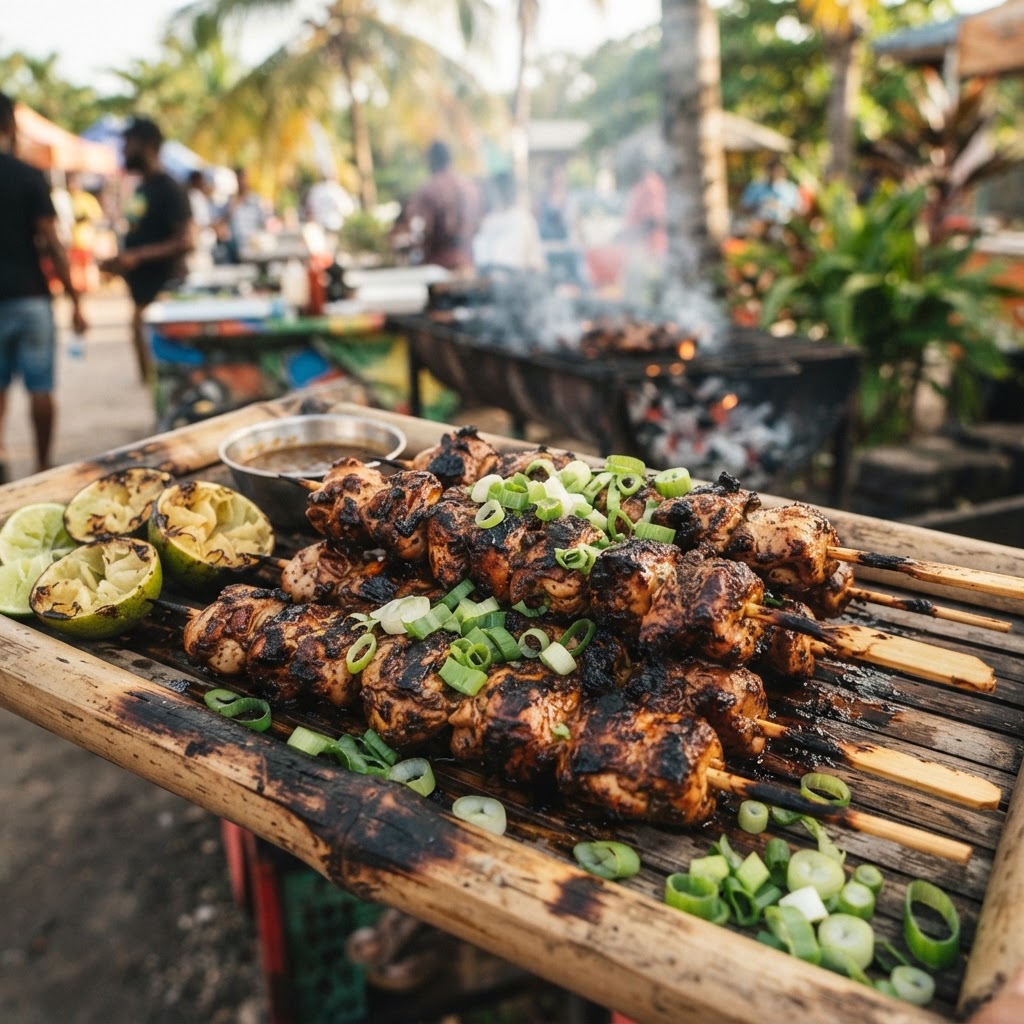
For a party, jerk-marinated chicken pieces threaded onto skewers and grilled are an ideal, portable, intensely flavored appetizer that pairs beautifully with a bright, refreshing mimosa.
About the Ingredients
Chicken should be boneless, skinless thighs — juicier and more flavorful than breasts, and better able to withstand the intense marinade without drying out. Cut into 1½-inch cubes for skewering.
Allspice (pimento) should be whole berries, freshly ground, or high-quality ground allspice. Spice Islands or Penzeys are reliable brands. Allspice is irreplaceable in jerk seasoning — it is the single most important spice.
Scotch bonnet peppers are essential for authentic jerk heat. They are one of the hottest chiles in the world (100,000–350,000 Scoville units). Handle with gloves and wash hands thoroughly. If unavailable, habanero peppers are the closest substitute. Adjust the quantity to your heat tolerance — even one pepper provides significant heat.
Thyme and scallions are the fresh aromatics that distinguish jerk from other spicy marinades. Jamaican thyme (a more pungent variety) is traditional, but standard thyme works well. Scallions should include the green and white parts.
Soy sauce is a modern addition that adds umami depth and is standard in contemporary jerk marinades.
Ingredients (makes approximately 30 skewer pieces):
Jerk marinade: - 4 Scotch bonnet peppers, stems removed (adjust to taste) - 6 scallions, chopped - 6 cloves garlic - 1 tablespoon fresh ginger, grated - 1 tablespoon whole allspice berries (or 1 teaspoon ground allspice) - 1 teaspoon dried thyme (or 1 tablespoon fresh) - 1 teaspoon black peppercorns - ½ teaspoon ground cinnamon - ½ teaspoon ground nutmeg - 2 tablespoons soy sauce - 2 tablespoons vegetable oil - 1 tablespoon brown sugar - 1 tablespoon lime juice - 1 teaspoon salt
Chicken: - 2 lbs boneless, skinless chicken thighs, cut into 1½-inch cubes - Bamboo skewers (soaked in water for 30 minutes)
Garnish: - Lime wedges - Sliced scallions - Fresh thyme sprigs
Instructions: In a blender or food processor, combine all the marinade ingredients. Blend until smooth, scraping down the sides as needed. The marinade should be thick and intensely aromatic.
Place the chicken cubes in a large bowl or zip-top bag. Pour the marinade over the chicken and toss to coat thoroughly. Marinate for at least 4 hours, preferably overnight, in the refrigerator.
Preheat a grill to medium-high heat (about 375°F / 374°F). Thread the chicken cubes onto soaked bamboo skewers — 4–5 pieces per skewer. Discard the remaining marinade.
Grill the skewers for 4–5 minutes per side, turning once, until the chicken is charred at the edges and cooked through (internal temperature 165°F / 165°F). The char is desirable — it is part of the jerk flavor profile.
Transfer to a platter. Squeeze fresh lime juice over the skewers and garnish with sliced scallions and thyme sprigs. Serve immediately.
The Mimosa Pairing Logic: The fiery, smoky, complex jerk seasoning calls for a bright, fruity mimosa that can stand up to the heat while refreshing the palate. A pomegranate mimosa or a passionfruit mimosa is ideal — the tart, sweet fruit provides a cooling counterpoint to the Scotch bonnet's searing heat, while the wine's acidity cuts through the char and the marinade's oil. The tropical fruit echoes the Caribbean origins of jerk cooking, creating a cohesive bridge between food and drink. The bubbles provide a palate-cleansing effect between each intensely spiced bite.
Reference Links: - Jerk cooking history and technique: Wikipedia — Jerk (cooking)) - Jerk chicken skewers recipe: Daring Gourmet - Jamaican cuisine guide: TasteAtlas
Make-Ahead: The marinade can be made up to 1 week ahead and refrigerated. The chicken can be marinated for up to 24 hours — longer and the acid will begin to break down the meat fibers. The skewers can be assembled and refrigerated for up to 4 hours before grilling. Cooked skewers can be reheated on the grill for 2 minutes per side. The marinade can be frozen for up to 3 months.
Pro Tips: Scotch bonnet peppers are extremely hot — always wear gloves when handling them and never touch your eyes. The marinade is also very spicy — taste a tiny amount before coating the chicken and adjust the pepper quantity to your tolerance. The longer the chicken marinates, the deeper the flavor — overnight is ideal. The grill grates should be clean and oiled to prevent sticking. The char on the chicken is desirable — it adds a smoky depth that is part of the jerk flavor profile. Do not overcook the chicken — thighs are forgiving, but dry chicken is the enemy of any grilled dish.
Rate this recipe
Be the first to rate this recipe
to submit your rating.
Perfect Mimosa Pairings
Mimosas that pair perfectly with this dish
Recent Posts

Couscous Royale: North Africa's Grand Platter of Lamb, Chicken, and Merguez
October 14, 2026

Seattle Cream Cheese Dog Bites: Hadley Long's 1989 Pioneer Square Invention
October 14, 2026

Khao Soi: Chiang Mai's Northern Thai Coconut Curry Noodles
October 13, 2026

Korean Bibimbap: Jeonju's Joseon Dynasty Mixed Rice
October 11, 2026

Spaghetti alla Carbonara: Rome's World War II Pasta of Eggs, Guanciale, and Pecorino
October 9, 2026