Israeli Falafel with Tahini: The Egyptian-Origin Chickpea Fritter That Became the Levantine Street Food
July 11, 2026
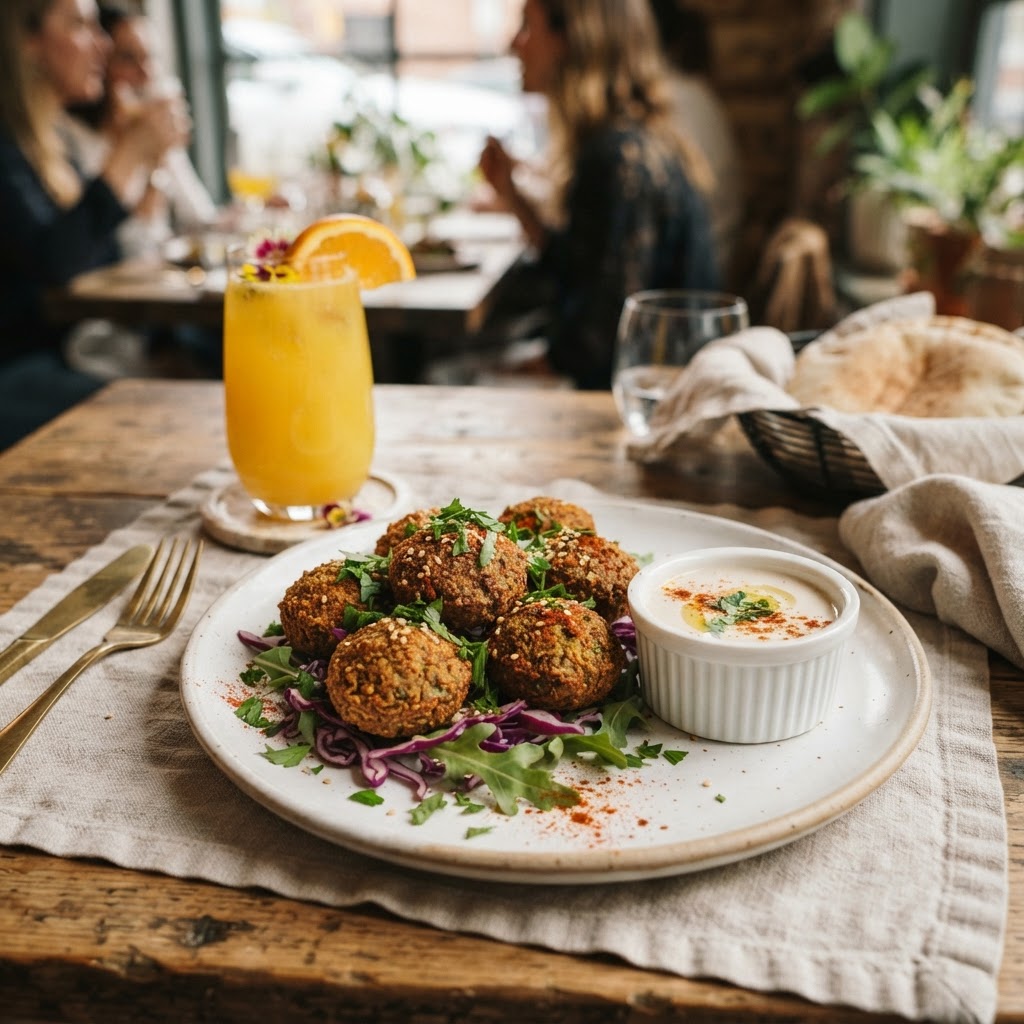
Falafel with tahini is the Levantine street food that crossed borders — golden, crispy chickpea fritters served with a drizzle of creamy tahini sauce, a sprinkle of sesame seeds, and a dusting of paprika. It is the appetizer that carries a thousand years of history, from ancient Egypt to the streets of Tel Aviv, in a single crispy ball.
The History of Falafel
The origin of falafel is uncertain and contested. According to Wikipedia, the dish most likely originated in Egypt, though the earliest written references from Egyptian sources date only to the 19th century. History Today notes that despite all the claims and counter-claims from Israelis, Palestinians, Lebanese, and Yemenis, "falafel was almost certainly developed in Egypt." The name itself likely derives from the Egyptian Arabic *fūl* (fava beans) — the original Egyptian falafel, called *ta'miyya*, was made with fava beans, not chickpeas.
The theory, as History Today explains, is that British officers stationed in Egypt, having acquired a taste for fried vegetable croquettes in India (similar to *vada* and *bonda*), may have asked their Egyptian cooks to prepare a version using local ingredients. From Alexandria — then Egypt's principal port and home to the largest concentration of British and European troops — falafel spread throughout the country and then the region. Shortly after World War I, it reached Lebanon; in 1933, Mustafa Sahyoun opened his falafel shop in Beirut. The chickpea-based version, common in Levantine cuisines including Israeli and Palestinian, became widely recognized as a national dish in Israel, where it is a popular street food, popularized after Israel's independence by Jewish Yemeni refugees in the 1950s.
About the Ingredients
Chickpeas — dried chickpeas, soaked overnight but not cooked; this is the critical difference between good and bad falafel — canned chickpeas make a mushy fritter, soaked dried chickpeas make a crisp, textured one.
Herbs and spices — fresh parsley and cilantro, garlic, cumin, coriander, and a pinch of baking soda for lightness; the herbs give the interior its green color and fresh flavor.
Tahini sauce — tahini paste thinned with lemon juice, water, garlic, and salt; the sauce should be smooth, pourable, and garlicky.
Sesame seeds and paprika — the traditional garnish, for nuttiness and color.
Ingredients (makes 16 falafel balls): - 1 cup dried chickpeas, soaked overnight (not canned) - 1/2 cup fresh parsley leaves - 1/2 cup fresh cilantro leaves - 1 small onion, roughly chopped - 4 cloves garlic - 1 tsp ground cumin - 1 tsp ground coriander - 1/2 tsp salt, 1/4 tsp black pepper - 1/2 tsp baking soda - 1 tbsp all-purpose flour (if mixture is too wet) - Neutral oil for frying - 1/3 cup tahini paste - 2 tbsp lemon juice - 1 clove garlic, minced - 3–4 tbsp cold water - Salt to taste - Sesame seeds, paprika, fresh parsley for garnish
Instructions: Drain the soaked chickpeas and pat dry. In a food processor, combine the chickpeas, parsley, cilantro, onion, garlic, cumin, coriander, salt, and pepper. Pulse until finely chopped but not pureed — the texture should be like coarse sand, not a paste. Stir in the baking soda and, if the mixture is too wet, a tablespoon of flour. Let the mixture rest 30 minutes. Shape into 16 small balls. Heat 2 inches of oil to 375°F. Fry in batches 3–4 minutes, until deep golden and crisp. Drain on paper towels. Make the tahini sauce: whisk the tahini, lemon juice, garlic, and salt, then thin with cold water until pourable. Drizzle the tahini over the falafel, sprinkle with sesame seeds, paprika, and parsley. Sixteen balls, each one a crispy, green-centered bite of the Levant.
The Mimosa Pairing Logic: Spiced, herbaceous falafel and bright sparkling wine is a Mediterranean brunch match. A pomegranate mimosa is the jewel pick — the pomegranate's tartness echoes the lemon in the tahini and its seeds mirror the sesame. A hibiscus lime mimosa is the exotic alternative — the hibiscus's tart, floral notes play against the cumin and coriander in the falafel. Either way, eat the falafel hot, while the crust is crisp and the interior is green and tender, and raise the glass to the Levant.
Reference Links: - Falafel (Egyptian origin, 19th century, Israeli popularization): Wikipedia - The Origin of Falafel (Alexandria, British-Indian theory): History Today
Make-Ahead: The falafel mixture can be made a day ahead and kept refrigerated — the rest actually improves the texture. The falafel balls can be shaped hours ahead, kept on a tray covered in the refrigerator. The tahini sauce can be made a day ahead. But fry to order — a falafel that sits after frying loses its crunch. Fry in small batches, drain well, drizzle with tahini, and pass hot.
Pro Tips: Use soaked dried chickpeas, never canned — this is the single most important rule. Don't over-process the mixture — it should be textured, not a paste. Let the mixture rest before shaping — the baking soda needs time to activate. Oil at a steady 375°F — too cool and the falafel drinks oil. And don't crowd the pot. The falafel is ready when it's deep golden, crisp on the outside, and green and tender on the inside.
Rate this recipe
Be the first to rate this recipe
to submit your rating.
Recent Posts

Couscous Royale: North Africa's Grand Platter of Lamb, Chicken, and Merguez
October 14, 2026

Seattle Cream Cheese Dog Bites: Hadley Long's 1989 Pioneer Square Invention
October 14, 2026

Khao Soi: Chiang Mai's Northern Thai Coconut Curry Noodles
October 13, 2026

Korean Bibimbap: Jeonju's Joseon Dynasty Mixed Rice
October 11, 2026

Spaghetti alla Carbonara: Rome's World War II Pasta of Eggs, Guanciale, and Pecorino
October 9, 2026