Indian Punjabi Samosa with Potato and Peas
January 26, 2026
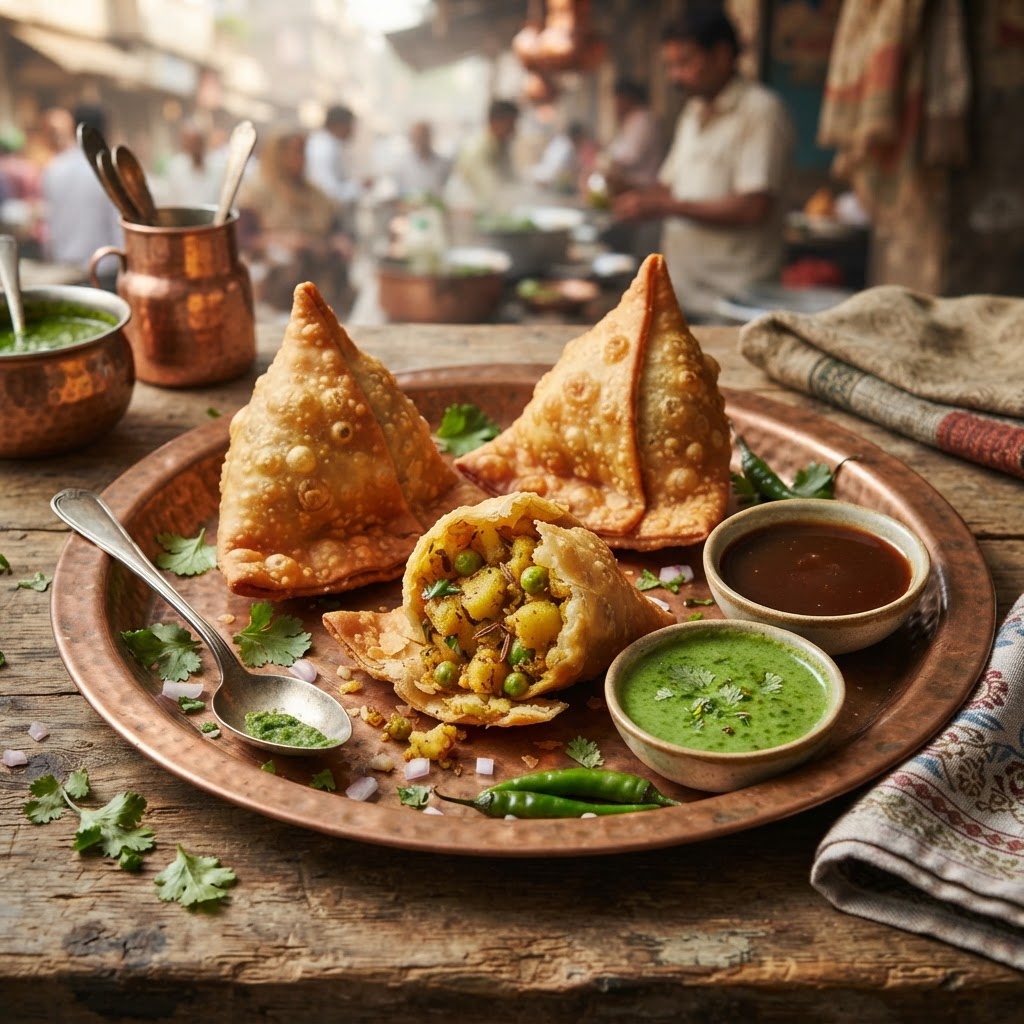
The samosa is one of the world's great portable foods — a triangular fried pastry with a crisp, flaky crust and a spiced potato-and-pea filling, eaten across the Indian subcontinent and beyond. According to Indian Healthy Recipes, the Punjabi samosa — the version most familiar in the West — is a deep-fried, flaky, blistered pastry filled with a spicy potato and green pea mixture scented with cumin, coriander, garam masala, and green chilli. The samosa's history stretches back over a thousand years; it travelled from the Middle East (where the *sambusak* is its ancestor) to the Indian subcontinent along trade routes, and by the 13th century it was a staple of the Delhi Sultanate's court. Today it is the most ubiquitous snack in India, eaten at every street corner, railway station, and tea break.
What makes a great samosa is the dough. Unlike a pie crust or a puff pastry, samosa dough is made with oil (or ghee) rubbed into flour with a little carom seed (ajwain) and salt, then bound with water. The dough is kept stiff, and the oil creates the characteristic flaky, blistered, almost-puff-pastry texture when fried. Serious Eats provides an authoritative aloo (potato) samosa recipe with detailed technique, and Veg Recipes of India is the definitive Punjabi samosa guide.
About the Ingredients
The dough is a simple stiff dough of all-purpose flour, oil or ghee, salt, carom seeds (ajwain), and water. The key technique is * moyen* — rubbing the oil into the flour until it resembles coarse crumbs before adding water. This is what creates the flaky, blistered crust. Holy Cow Vegan provides a clear explanation of the technique.
Potatoes are boiled, peeled, and diced (not mashed — the filling should have texture). Green peas (fresh or frozen) are added for sweetness and colour.
Spices are the soul of the filling: cumin seeds (tempered in hot oil), coriander, garam masala, turmeric, fennel, and amchur (dried mango powder) for tang. A green chilli and grated ginger add heat and fragrance. The spices are bloomed in hot oil before being folded into the potatoes.
Chutneys for serving: a bright green mint-cilantro chutney and a dark, sweet-sour tamarind chutney are the traditional accompaniments.
Ingredients (makes 12 samosas):
Dough: - 2 cups all-purpose flour - 3 tablespoons oil or ghee - 1/2 teaspoon carom seeds (ajwain) - 1/2 teaspoon salt - 1/3 to 1/2 cup water (as needed)
Potato and Pea Filling: - 3 medium potatoes, boiled, peeled, and diced - 1/2 cup green peas (fresh or frozen) - 2 tablespoons oil - 1 teaspoon cumin seeds - 1 tablespoon grated fresh ginger - 1 green chilli, finely chopped - 1 teaspoon ground coriander - 1/2 teaspoon garam masala - 1/2 teaspoon turmeric - 1 teaspoon amchur (dried mango powder) or 1 tablespoon lemon juice - 1 teaspoon fennel seeds (optional) - 2 tablespoons chopped fresh cilantro - Salt to taste
For frying: - Vegetable oil for deep frying
For serving: - Mint-cilantro chutney - Tamarind chutney
Instructions: Prepare the dough: in a bowl, combine the flour, carom seeds, and salt. Add the oil and rub it in with your fingers until the mixture resembles coarse crumbs (this is the *moyen* step). Gradually add the water, a little at a time, and knead into a stiff dough. Cover and rest for 30 minutes.
Prepare the filling: heat the oil in a skillet over medium heat. Add the cumin seeds and let them sizzle for 30 seconds. Add the grated ginger and green chilli and cook for 30 seconds. Add the coriander, garam masala, turmeric, and fennel and stir for 30 seconds. Add the diced potatoes and peas and stir to coat with the spices. Cook for 2–3 minutes, mashing lightly. Stir in the amchur (or lemon juice), cilantro, and salt. Remove from heat and let cool completely.
To shape: divide the dough into 6 equal pieces. Roll each into a ball, then roll out into an oval about 6 inches long. Cut each oval in half crosswise. Take one half, moisten the straight edge with water, and form into a cone, pinching the seam to seal. Fill the cone with a generous tablespoon of the cooled filling. Moisten the top edge and pinch closed to form a triangle. Set on a baking sheet. Repeat with the remaining dough and filling.
Heat the oil in a deep pot to 350°F (347°F). Fry the samosas in batches of 3–4 for 4–5 minutes until deep golden brown and crisp, turning occasionally. (Alternatively, for the flakiest crust, fry at a lower 325°F / 320°F for 8–10 minutes.) Drain on paper towels. Serve warm with mint-cilantro and tamarind chutneys.
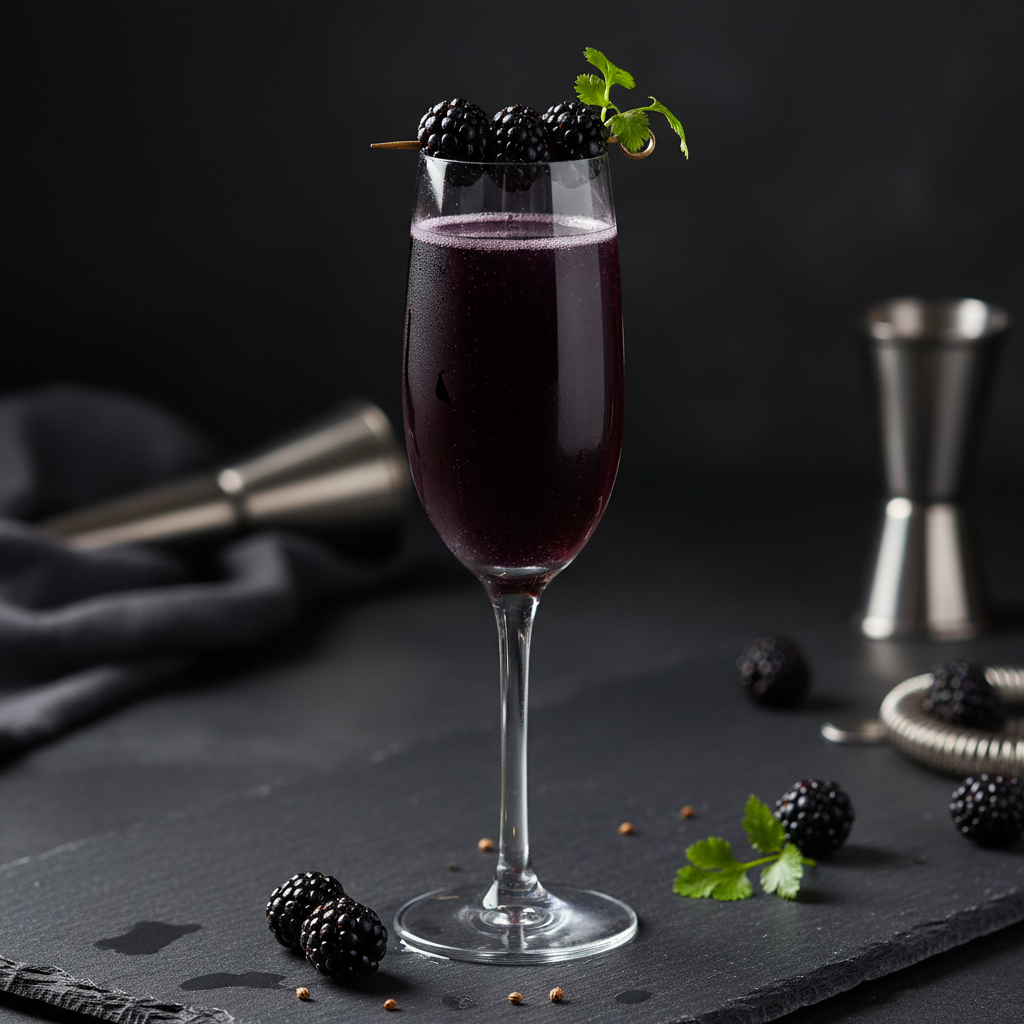
The Mimosa Pairing Logic: The spiced, flaky samosa wants a bright, aromatic drink that can both cool the gentle heat and lift the warming spices. A classic Champagne mimosa or a mango coconut mimosa is ideal — the tropical mango echoes the subcontinent's love of fruit with spice, and the creamy coconut tempers the chilli and the cumin. The wine's effervescence refreshes the palate between bites of the fried pastry. For those who like heat, a spicy jalapeño mimosa amplifies the samosa's chilli in a way that the traditional Indian chai never could. This pairing is, in its way, the brunch equivalent of a samosa and a glass of sweet mango lassi — a sparkling toast to one of the world's great snacks.
Reference Links: - Samosa recipe (Punjabi potato samosa): Indian Healthy Recipes - Aloo samosa (samosa stuffed with spiced potato and peas): Serious Eats - Punjabi samosa recipe: Veg Recipes of India - Classic samosa recipe (Punjabi samosa): Holy Cow Vegan
Make-Ahead: The filling can be made up to 2 days ahead and refrigerated — it improves as the flavours meld. The dough can be made 1 day ahead, wrapped tightly and refrigerated. The assembled, unbaked samosas can be frozen on a baking sheet, then transferred to a freezer bag for up to 2 months. Fry from frozen, adding 2–3 minutes to the frying time and lowering the oil temperature to 325°F (320°F) so they cook through without burning. Fried samosas reheat well in a 350°F (347°F) oven for 8–10 minutes.
Pro Tips: The *moyen* step — rubbing the oil into the flour — is essential for the flaky, blistered crust; do not skip it or add more water than needed. The dough should be stiff; a soft dough will make a bread-y, not flaky, samosa. The filling must be completely cool before shaping — warm filling will soften the dough and the samosas will leak. Seal the seams thoroughly — a poorly sealed samosa will open in the fryer. For the flakiest crust, fry at a lower temperature (325°F / 320°F) for longer; for a quicker, crisper crust, fry at 350°F (347°F). Do not overcrowd the fryer. Serve with both chutneys — the mint-cilantro cools and the tamarind adds sweet-sour depth.
Rate this recipe
Be the first to rate this recipe
to submit your rating.
Perfect Mimosa Pairings
Mimosas that pair perfectly with this dish
Recent Posts

Couscous Royale: North Africa's Grand Platter of Lamb, Chicken, and Merguez
October 14, 2026

Seattle Cream Cheese Dog Bites: Hadley Long's 1989 Pioneer Square Invention
October 14, 2026

Khao Soi: Chiang Mai's Northern Thai Coconut Curry Noodles
October 13, 2026

Korean Bibimbap: Jeonju's Joseon Dynasty Mixed Rice
October 11, 2026

Spaghetti alla Carbonara: Rome's World War II Pasta of Eggs, Guanciale, and Pecorino
October 9, 2026