Poha: The Indian Flattened Rice Breakfast of Mustard Seeds, Curry Leaves, and Peanuts
March 21, 2026
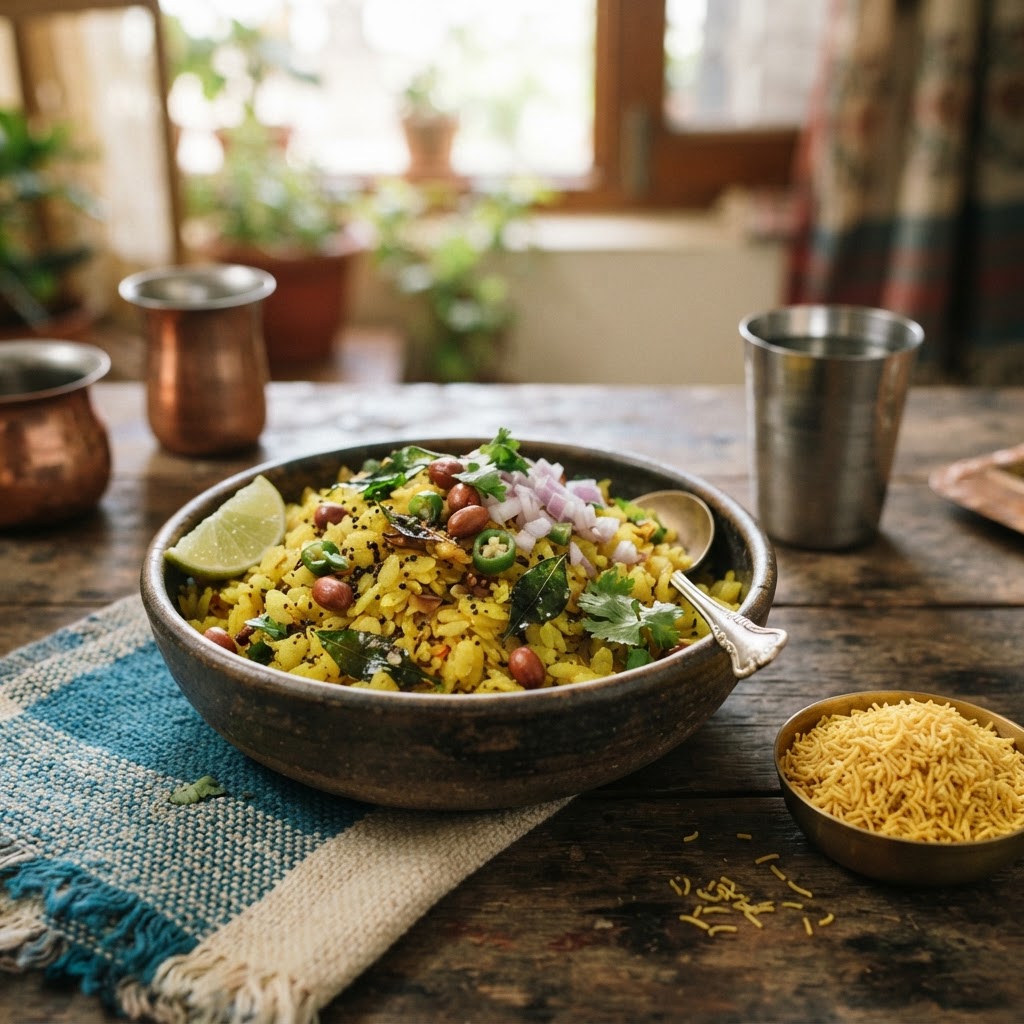
Poha is the Indian breakfast of flattened rice — paper-thin, parched flakes of rice that, soaked briefly and tossed in a tempering of mustard seeds, curry leaves, green chilies, turmeric, and roasted peanuts, become one of the lightest, brightest, most fragrant morning meals in the world. According to Wikipedia, flattened rice — called poha in Marathi and Hindi, chiura in Nepali, avalakki in Kannada, and aval in Tamil — is a breakfast staple across South Asia, made by parboiling rice and then flattening it into thin dry flakes that rehydrate almost instantly in water. Serious Eats describes pohé as "a rice-based Indian breakfast that is savory, tart, sweet, and packed with spices," built on parched flattened rice finished with a tempering of mustard seeds and curry leaves, and brightened at the end with lime and cilantro — a dish that is, in its essence, a quick-cooking celebration of the spice pantry.
The genius of poha is the flattened rice itself: because the grain is parboiled and pressed thin, it needs only a brief rinse and a 10-minute rest to soften, making it one of the fastest hot breakfasts in India. The *tadka* — oil heated with mustard seeds until they pop, curry leaves that crackle, green chilies, a pinch of turmeric for the golden color, and peanuts for crunch — is the flavor. Eaten warm with a squeeze of lime and a handful of sev, poha is the breakfast of the Indian railway platform, the Pune street, and the home kitchen alike.
About the Ingredients
Flattened rice (poha) — medium or thick flattened rice flakes, rinsed gently and soaked 5–10 minutes until just soft but still holding their shape; thin poha turns to mush, so use medium or thick.
Tempering (tadka) — oil, mustard seeds (popped until they crackle), curry leaves (fresh, torn), green chilies (slit or minced), and a pinch of asafoetida.
Turmeric — a pinch for the golden color and warm flavor.
Peanuts — raw peanuts, roasted in the oil until golden, for crunch and substance.
Onion — finely chopped onion, softened in the tempering.
Finish — salt, a squeeze of lime, fresh cilantro, and a handful of crispy sev (thin chickpea-flour noodles).
Ingredients (serves 3): - 2 cups medium or thick flattened rice (poha) - 3 tbsp oil - 1 tsp mustard seeds - 10–12 fresh curry leaves, torn - 2 green chilies, slit lengthwise - A pinch of asafoetida (hing) - 1/2 tsp turmeric - 1/3 cup raw peanuts - 1 medium onion, finely chopped - 1 tsp salt (or to taste) - 1 tbsp sugar (a pinch of sweetness is traditional) - Juice of 1/2 lime - Fresh cilantro, chopped - Sev, for garnish
Instructions: Place the poha in a colander and rinse gently under cold water; drain, then sprinkle a little water over it and let it rest 5–10 minutes until the flakes are soft but intact. (Test by pressing a flake between your fingers — it should yield but not turn to paste.) Drain any excess water.
In a wide pan or wok, heat the oil over medium heat. Add the peanuts and roast until golden; lift out and set aside. Add the mustard seeds to the oil; when they pop, add the curry leaves (stand back — they crackle), the green chilies, and the asafoetida. Add the chopped onion and sauté until translucent, 3–4 minutes. Stir in the turmeric.
Add the softened poha, salt, and sugar; toss gently to combine and warm through, 2–3 minutes, taking care not to break the flakes. Fold in the roasted peanuts. Remove from the heat, squeeze the lime over the top, and scatter with cilantro and a handful of sev. Serve warm.
The Mimosa Pairing Logic: The turmeric-and-curry-leaf poha wants a bright, citrus-driven drink that echoes the lime and lifts the spice. An amalfi lemon mimosa is a beautiful choice — the lemon mirrors the lime and brightens the turmeric. A mango coconut water mimosa is equally lovely, its tropical sweetness a beautiful nod to India and a bright counter to the mustard seeds and chilies. This pairing is, in its way, the brunch equivalent of poha and a cup of strong masala chai — a sparkling toast to the Indian morning and the railway platform.
Reference Links: - Flattened rice (poha, South Asian breakfast staple): Wikipedia - Pohé (Flattened Rice) Recipe (savory, tart, spice-packed Indian breakfast): Serious Eats
Make-Ahead: The peanuts can be roasted and the onion chopped ahead. Poha is cooked to order — it takes only 15 minutes from start to finish and does not reheat well, because the flakes turn mushy if held. Rinse and soak the poha just before cooking; once soaked it should be used within the hour. The tempering can be prepped (measured spices, torn curry leaves) but is best bloomed in the oil at the last moment.
Pro Tips: Use medium or thick poha, not thin; thin poha is for sweets and turns to paste. Rinse gently and soak only until the flakes yield when pressed — over-soaked poha is mush, under-soaked poha is gritty. Stand back when the curry leaves hit the hot oil; they crackle and spit. Keep the heat moderate so the mustard seeds pop without scorching; burnt mustard is bitter. Toss gently to keep the flakes intact; poha is meant to be light and separate, not stirred into a paste. Add the lime off the heat so its brightness survives.
Rate this recipe
Be the first to rate this recipe
to submit your rating.
Recent Posts

Couscous Royale: North Africa's Grand Platter of Lamb, Chicken, and Merguez
October 14, 2026

Seattle Cream Cheese Dog Bites: Hadley Long's 1989 Pioneer Square Invention
October 14, 2026

Khao Soi: Chiang Mai's Northern Thai Coconut Curry Noodles
October 13, 2026

Korean Bibimbap: Jeonju's Joseon Dynasty Mixed Rice
October 11, 2026

Spaghetti alla Carbonara: Rome's World War II Pasta of Eggs, Guanciale, and Pecorino
October 9, 2026