Idaho Finger Steaks
February 13, 2026
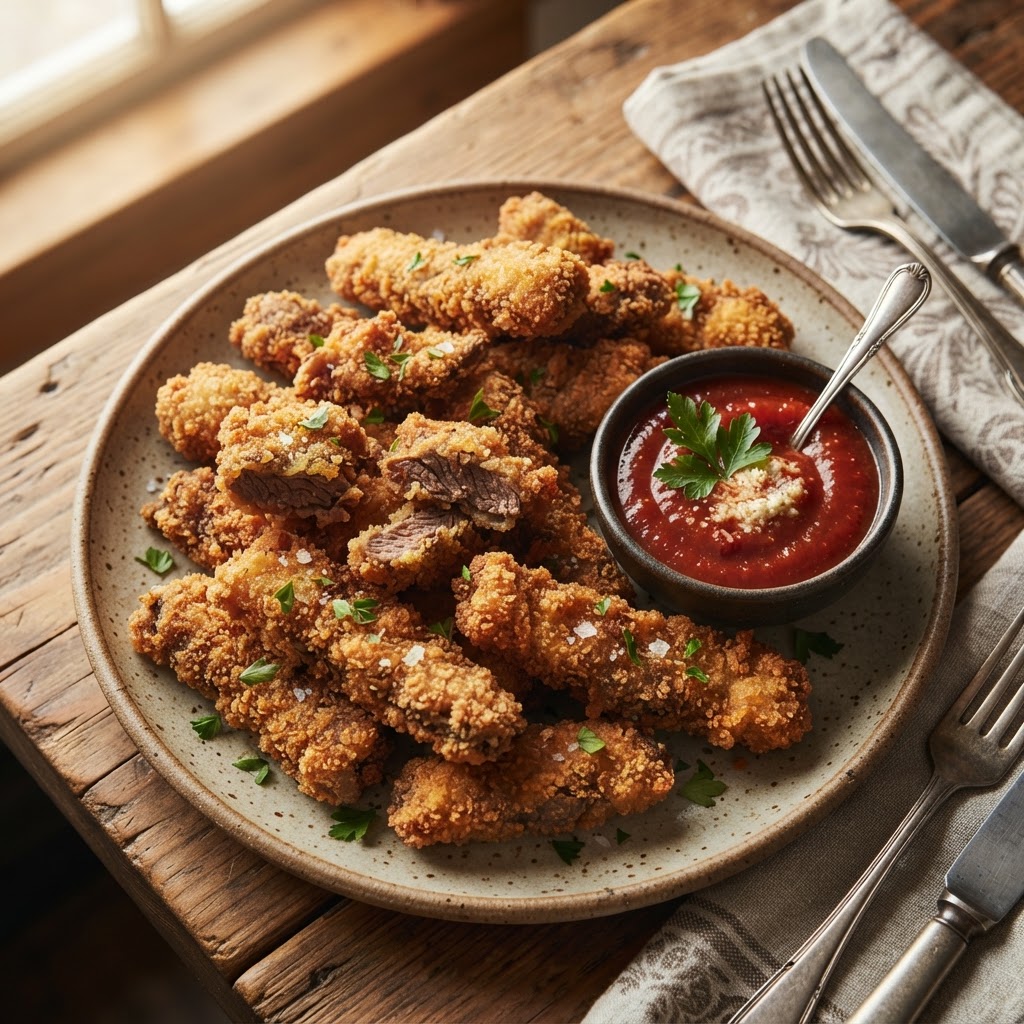
Finger steaks are strips of beef, dipped in batter and deep-fried until golden and crisp — a dish so tied to Idaho that one citizen half-jokingly proposed depicting it on the state quarter. According to Wikipedia, finger steaks are purported to have been first served in a restaurant setting at Boise, Idaho's "Torch Lounge" (aka The Torch) in 1957; Milo Bybee claimed to have invented finger steaks while wondering what to do with leftover tenderloin scraps when he was working as a butcher, and he went to work as a chef at the Torch in 1946. Opposing claims credit the original owners of The Torch, Floyd and Elnora (Shorty) Johnson, and a separate tradition holds that finger steaks were first made near Lewiston, Idaho during the log drives as a way to cook potentially spoiled beef thoroughly and palatably. Either way, the dish is Idaho's own — and the Idaho Beef Council recounts that the chef took the recipe with him when he opened Mylo's Torch Lounge in Boise in the late 1950s, where the restaurant quickly became famous for it.
For a party, finger steaks are the ideal hand-passed bite — crisp, juicy batons of beef that capture all the comfort of a steakhouse and a state fair in one golden piece.
About the Ingredients
Beef — beef tenderloin or top sirloin, cut into finger-sized strips about 3 inches long and ½ inch thick; tenderloin is traditional (it was, after all, born of tenderloin scraps), but any tender cut works.
The batter — a simple beer batter of flour, egg, and beer (the carbonation makes it crisp), seasoned with garlic powder, paprika, salt, and pepper; some Boise cooks add a splash of buttermilk for tang.
The fry — a deep or shallow fry in neutral oil at 375°F until deep golden; the crust should be shatteringly crisp and the beef inside still rosy and tender.
The dip — a creamy cocktail sauce, horseradish-spiked, or a simple steak sauce; the dipping is half the ritual.
Ingredients (makes about 24 finger steaks, serves 8–12): - 1½ lb beef tenderloin or top sirloin, cut into 3-inch × ½-inch strips - 1 cup all-purpose flour - 1 large egg - ¾ cup light beer (a pale lager) or buttermilk - 1 teaspoon garlic powder - 1 teaspoon paprika - 1 teaspoon kosher salt - ½ teaspoon black pepper - Neutral oil for frying - Cocktail sauce or horseradish cream, for serving - Lemon wedges
Instructions: Pat the beef strips completely dry and season lightly with salt and pepper. In a bowl, whisk together the flour, egg, beer (or buttermilk), garlic powder, paprika, salt, and pepper until smooth — the batter should coat the beef in a thin layer; add a splash more beer if too thick. Let the batter rest 10 minutes.
Heat oil to 375°F in a heavy Dutch oven. Working in batches, dip each beef strip in the batter, letting excess drip off, and lower carefully into the oil. Fry 2½–3½ minutes, turning once, until deep golden and crisp. Drain on a wire rack set over paper towels. Hold finished finger steaks in a 200°F oven while frying the rest. Serve at once with cocktail sauce and lemon wedges.
The Mimosa Pairing Logic: The crisp, beefy richness of a finger steak wants a bright, acid-driven drink to cut through the batter and refresh the palate. A classic Champagne mimosa is the natural choice — the orange's acid balances the fried crust and the bubbles lift the beef's richness. A grapefruit rosemary mimosa is equally fine, the grapefruit's gentle bitterness a bright counterpoint to the savory beef. This pairing is, in its way, the brunch equivalent of a basket of finger steaks and an ice-cold Idaho beer at the Torch Lounge — a sparkling toast to Boise.
Reference Links: - Finger steaks (Torch Lounge, Boise, 1957, Milo Bybee): Wikipedia - The Story of Idaho Finger Steaks: Idaho Beef Council
Make-Ahead: The batter can be mixed up to 1 hour ahead and kept cold. The beef can be cut a day ahead, refrigerated. Fry to order — the crisp crust softens within minutes, and a reheated finger steak is a lesser thing. For a party, set up a frying station and fry in small batches, passing them hot. Hold briefly in a 200°F oven, uncovered, on a rack so the crust stays crisp.
Pro Tips: Pat the beef dry before battering — moisture is the enemy of a crisp crust. Keep the batter cold; a cold batter into hot oil makes the crispest coating. Do not crowd the pot, or the temperature drops and the steaks turn greasy. Fry to deep golden, not pale — the color is the crunch. And eat at once; a finger steak that sits is a finger steak that disappoints, and the whole charm is the contrast between the shatteringly crisp crust and the tender, rosy beef within.
Rate this recipe
Be the first to rate this recipe
to submit your rating.
Recent Posts

Couscous Royale: North Africa's Grand Platter of Lamb, Chicken, and Merguez
October 14, 2026

Seattle Cream Cheese Dog Bites: Hadley Long's 1989 Pioneer Square Invention
October 14, 2026

Khao Soi: Chiang Mai's Northern Thai Coconut Curry Noodles
October 13, 2026

Korean Bibimbap: Jeonju's Joseon Dynasty Mixed Rice
October 11, 2026

Spaghetti alla Carbonara: Rome's World War II Pasta of Eggs, Guanciale, and Pecorino
October 9, 2026