Hungarian Goulash: The Paprika Stew of the Hungarian Plains
July 9, 2026
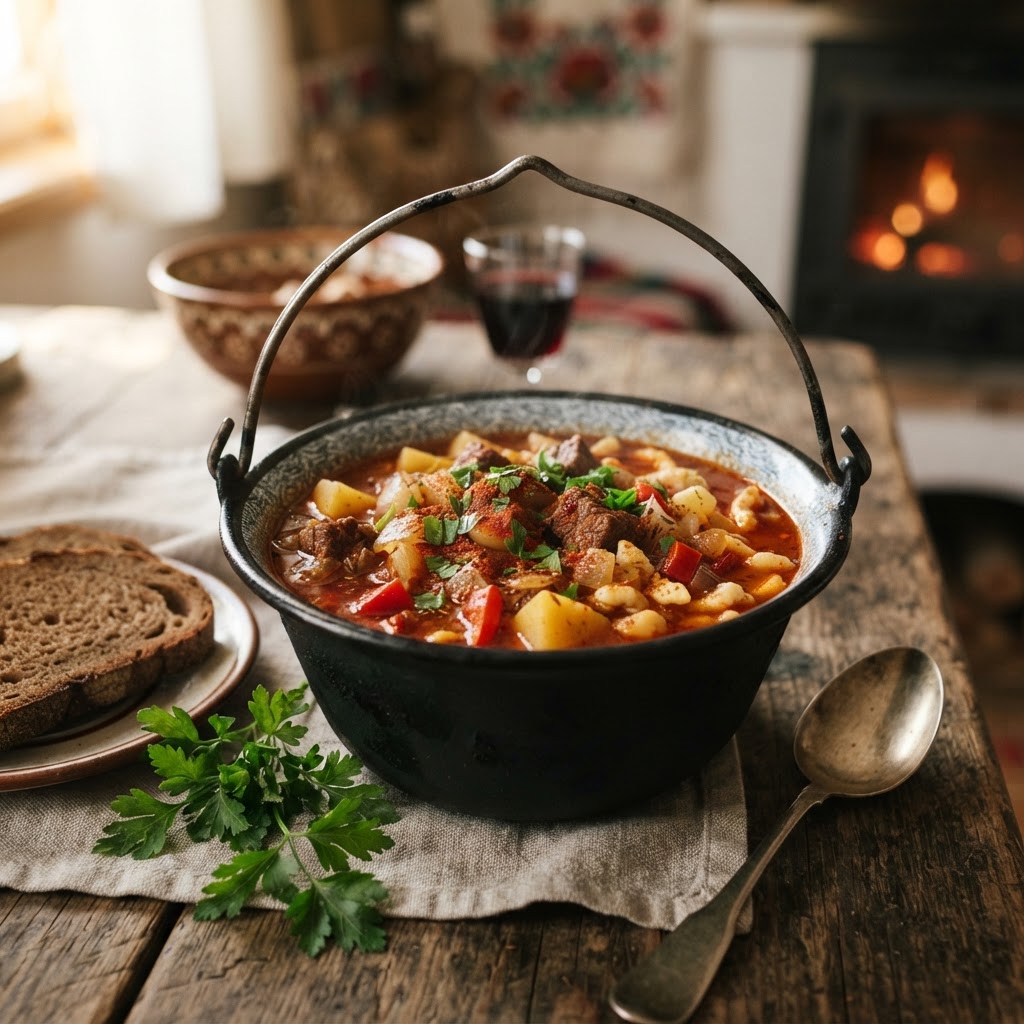
Goulash — *gulyás* in Hungarian, literally "herdsman" — is the great paprika stew of the Hungarian plains, a one-pot dish of beef, onion, paprika, and vegetables that began as the sustenance of the medieval cattle herders and became the national dish of Hungary. According to Wikipedia, goulash is a meal made of meat and vegetables seasoned with paprika and other spices, originating in Hungary, where it is a common meal predominantly eaten in Central Europe; its origins may be traced back as far as the 10th century to stews eaten by Hungarian shepherds. The Gulyásleves article describes the modern Hungarian *gulyásleves* (goulash soup), a strictly one-pot dish of beef, onions, paprika, caraway, potatoes, carrots, and *csipetke* (pinched egg noodles), considered a main course even in its soupy version.
The Hungarian distinction is sharp: *gulyás* is a soup (gulyásleves), while the thicker, richer stew is *pörkölt*, and the sour-cream version is *paprikás*. What the world calls "goulash" is often closer to pörkölt — a thick stew. The authentic Hungarian gulyás is a paprika-red soup, deeply savory, thickened not with flour but with the starch of potatoes and pinched noodles, its color all from the sweet Hungarian paprika.
About the Ingredients
Beef — shank, shin, or shoulder, cut in chunks; older beef is prized for the long, slow flavor. Browned with onion, never floured.
Paprika — sweet Hungarian paprika is the soul; the deep red color comes entirely from the paprika, not from tomato. Use the best Hungarian paprika you can find.
Onion — a great quantity of onion, sliced and cooked down with the beef; the onion melts into the broth and is the base.
Caraway and csipetke — caraway seeds perfume the broth, and *csipetke* — small egg noodles pinched from fresh dough — thicken and finish the soup.
Ingredients (serves 6): - 2 lb beef shin or chuck, cut in 1 1/2-inch chunks - 2 large onions, sliced - 2 tbsp lard or oil - 2 tbsp sweet Hungarian paprika (plus 1 tsp hot, if you like) - 1 tsp caraway seeds, crushed - 2 carrots, sliced - 2 potatoes, cubed - 2 tomatoes, diced (optional) - 2 bell peppers, sliced (optional) - 1 bay leaf - 6 cups beef broth or water - Salt and pepper For the csipetke: 1 egg, a pinch of salt, and enough flour to make a stiff dough
Instructions: In a heavy pot, heat the lard and sauté the onions until soft and golden. Add the beef and brown with the onions. Stir in the paprika (off the heat for a moment so it doesn't scorch), the caraway, bay leaf, salt, and pepper. Add the broth to cover. Bring to a boil, then reduce to a simmer and cook, covered, 1 1/2 hours until the beef is nearly tender.
Add the carrots, potatoes, tomatoes, and peppers. Cook 30 minutes more. Meanwhile, make the csipetke: beat the egg with a pinch of salt and enough flour for a stiff dough; rest 15 minutes, then pinch small fingernail-sized bits. Drop the csipetke into the simmering soup and cook 10 minutes until they float. Adjust the seasoning and serve in deep bowls.
The Mimosa Pairing Logic: The paprika-rich goulash wants a bright, refreshing drink that can cut the richness and echo the sweet pepper. A classic Champagne mimosa is the safe and perfect choice — the citrus lifts the paprika, and the wine's effervescence refreshes the palate. A bellini-style peach mimosa is equally lovely, the stone fruit a beautiful partner for the sweet Hungarian pepper. This pairing is, in its way, the brunch equivalent of goulash and a glass of Hungarian Tokaji — a sparkling toast to the plains.
Reference Links: - Goulash (Hungary, 10th century, paprika): Wikipedia - Gulyásleves (Hungarian Goulash Soup, csipetke): Wikipedia
Make-Ahead: Goulash is better the next day, when the paprika and beef have melded; make it a day ahead and reheat gently. The csipetke are best added fresh, but the soup holds well. The long, slow simmer (2 hours) is the point; a rushed goulash is a thin thing. Leftovers freeze well; the noodles soften but the flavor deepens.
Pro Tips: Use real Hungarian paprika — the deep red color and sweet pepper flavor come from it, and ordinary paprika makes a pale imitation. Add the paprika off the direct heat for a moment so it doesn't scorch; scorched paprika is bitter. Do not flour the beef; Hungarian goulash is thickened by the starch of potatoes and csipetke, never a roux. Make the csipetke fresh and pinch them small; they are the authentic finish. Cook the onion down until sweet before adding the beef; the onion is the base, not a seasoning.
Rate this recipe
Be the first to rate this recipe
to submit your rating.
Recent Posts

Couscous Royale: North Africa's Grand Platter of Lamb, Chicken, and Merguez
October 14, 2026

Seattle Cream Cheese Dog Bites: Hadley Long's 1989 Pioneer Square Invention
October 14, 2026

Khao Soi: Chiang Mai's Northern Thai Coconut Curry Noodles
October 13, 2026

Korean Bibimbap: Jeonju's Joseon Dynasty Mixed Rice
October 11, 2026

Spaghetti alla Carbonara: Rome's World War II Pasta of Eggs, Guanciale, and Pecorino
October 9, 2026