Hawaiian Kalua Pig
September 14, 2026
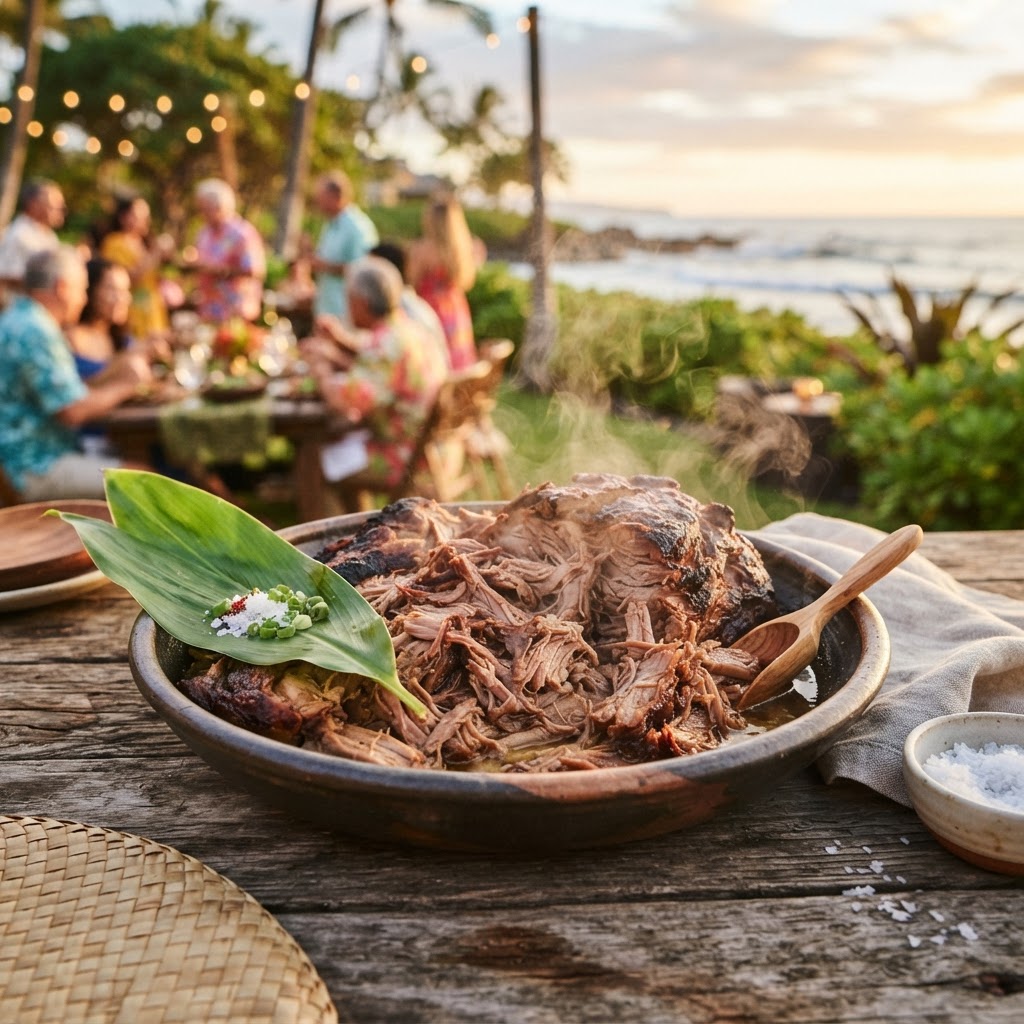
Kalua pig is the centerpiece of the Hawaiian lūʻau, a whole pig seasoned only with Hawaiian sea salt and slow-roasted in an imu, an underground earth oven lined with heated stones and banana and ti leaves. The word kālua means "to cook underground," and the technique is Polynesian in origin, carried to the Hawaiian Islands by the first voyaging canoes roughly a thousand years ago. The imu was the standard cooking method of pre-contact Hawaiʻi, and kalua pig remains the defining dish of the lūʻau, the feast that marks every important occasion, from a baby's first birthday to a wedding. The pig is wrapped in banana and ti leaves, lowered into the imu, covered with more leaves and earth, and left to steam for most of a day, emerging smoky, fall-apart tender, and perfumed with the sweet, earthy aroma of the leaves (Wikipedia — Kālua; Wikipedia — Lūʻau).
A kalua pig is an event dish by definition; one does not cook a whole pig in an earth oven for a small meal. It is the dish around which a lūʻau is built, and the communal digging, firing, and uncovering of the imu is itself the celebration.
Ingredients (serves 6, using a pork shoulder for a home version): - 1 bone-in pork shoulder (about 5–6 lb), skin on if possible - 3 tablespoons coarse Hawaiian sea salt (alaea salt if available) - 1 tablespoon liquid smoke (to approximate the imu's smoke, for an oven version) - 4–6 banana leaves, softened over a flame or in hot water - Ti leaves (if available), for wrapping - 1 cup water or chicken stock
Instructions (home oven method): Preheat the oven to 300°F. Score the pork skin in a cross-hatch pattern. Rub the pork all over with the salt and liquid smoke. Line a roasting pan with banana leaves, leaving enough overhang to fold over the top. Place the pork in the pan and pour the water in the bottom. Fold the banana leaves over the pork to enclose it completely, then cover the pan tightly with foil. Roast for 5 to 6 hours, until the meat is fall-apart tender and the internal temperature reaches 195°F. Remove from the oven and let rest 20 minutes, still wrapped. Unwrap and shred the meat with two forks, discarding the bone and large pieces of fat. Taste and add more salt if needed. Serve with steamed rice and poi.
For a Crowd (whole pig in an imu): - A 60–80 lb whole pig feeds 30–40 people; dig an imu at least 3 feet deep and 4 feet across. - Line with river stones (not volcanic, which can shatter), build a fire on top, let it burn to coals, layer hot stones inside the pig's cavity, wrap in banana and ti leaves, cover with wet burlap and earth, and steam for 6 to 8 hours.
Variations: - Kalua Pig and Cabbage: Add shredded cabbage to the pulled pork during the last 30 minutes for the classic Hawaiian plate lunch. - Kalua Pig Tacos: Serve the shredded pork in warm corn tortillas with pineapple salsa for a Hawaiian-Mexican fusion. - Slow Cooker Kalua Pig: Rub a pork shoulder with salt and liquid smoke, add a splash of water, and cook on low for 12 hours for the simplest home version.
Pairing: Kalua pig pairs with a cold Hawaiian lager such as Primo or a crisp tropical cocktail like a mai tai or a sparkling guava mimosa. The traditional accompaniments are steamed white rice, poi (pounded taro), lomi salmon, and haupia (coconut pudding).
Reference Links: - Kālua (imu, earth oven, Polynesian cooking method): Wikipedia - Lūʻau (Hawaiian feast, kalua pig as centerpiece): Wikipedia
Pro Tips: The liquid smoke is the compromise that makes an oven version taste close to an imu; use a small amount, because too much makes the pork taste artificial. The banana leaves do more than wrap: they steam the pork and give it a subtle, sweet, earthy flavor that aluminum foil alone cannot provide. Find banana leaves in the frozen section of Latin or Asian markets. Cook the pork until it is genuinely fall-apart tender; if it resists shredding, it needs another hour. For a true kalua pig, nothing replaces the imu, and if you have the space and the occasion, digging one is one of the great communal cooking experiences in all of gastronomy.
Rate this recipe
Be the first to rate this recipe
to submit your rating.
Perfect Mimosa Pairings
Mimosas that pair perfectly with this dish

Recent Posts

Couscous Royale: North Africa's Grand Platter of Lamb, Chicken, and Merguez
October 14, 2026

Seattle Cream Cheese Dog Bites: Hadley Long's 1989 Pioneer Square Invention
October 14, 2026

Khao Soi: Chiang Mai's Northern Thai Coconut Curry Noodles
October 13, 2026

Korean Bibimbap: Jeonju's Joseon Dynasty Mixed Rice
October 11, 2026

Spaghetti alla Carbonara: Rome's World War II Pasta of Eggs, Guanciale, and Pecorino
October 9, 2026