Hawaii Spam Musubi Bites
August 5, 2026
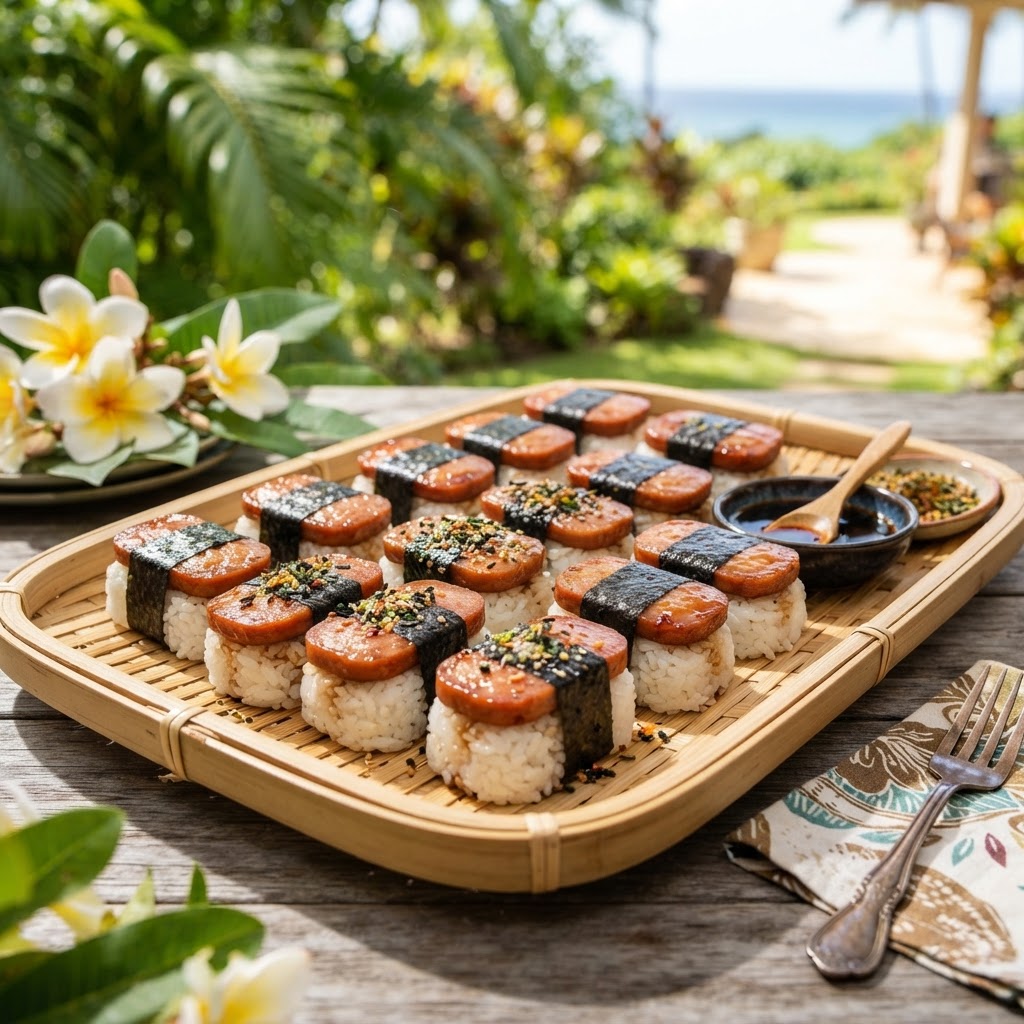
Spam musubi — a slice of teriyaki-glazed Spam perched on a block of warm rice, wrapped together with a strip of nori seaweed — is the great snack of Hawaii, a perfect synthesis of the islands' Japanese and American heritages. Its origin is somewhat disputed, but the two most widely cited creators are Mitsuko Kaneshiro, who began selling them out of City Pharmacy on Pensacola Street in Honolulu and by the early 1980s was making 500 handmade musubi a day at her own shop, Michan's Musubi, and Barbara Funamura, who sold them out of the Joni-Hana restaurant in Kukui Grove Center on Kauai around 1983. Both women turned Spam — a canned meat introduced to Hawaii during World War II and embraced by a population with limited options — into something genuinely popular by combining it with the Japanese concept of musubi (rice ball, related to onigiri) and the nori wrap. Today, Spam musubi is found near the cash register of every convenience store and mom-and-pop shop across Hawaii, eaten as a snack, a quick lunch, or a beach-picnic staple. In 2021, L&L Hawaiian Barbecue established National Spam Musubi Day (August 8), officially recognized by the governor of Hawaii.
For a party, the musubi becomes a bite: a small, square, two-bite version of the classic, perfect for a tray passed among guests, with the same teriyaki glaze, the same nori wrap, and the same sweet-savory simplicity.
Ingredients (makes 24 bites, serves 8–12):
The Rice: - 3 cups short-grain or medium-grain sushi rice (do not use long-grain — it will not hold together) - 3 cups water - 3 tablespoons rice vinegar - 1 tablespoon sugar - 1 teaspoon salt
The Spam: - 1 (12-ounce) can Spam (the classic, or Spam Lite or Teriyaku-flavored Spam if preferred) - ¼ cup soy sauce - ¼ cup sugar - 2 tablespoons mirin (optional, for depth and shine)
The Wrap: - 6–8 sheets of roasted nori (sushi seaweed), cut into ¾-inch strips - Optional: furikake (Japanese rice seasoning) for sprinkling
Optional Additions: - A thin layer of Japanese mayonnaise or a smear of wasabi on the rice - A small slice of cooked egg (tamago) between the Spam and the rice
Cooking the Rice: Rinse the rice in cold water until the water runs clear. Combine with the water in a rice cooker or pot and cook until tender. Gently fold in the rice vinegar, sugar, and salt while the rice is still hot. Cover with a damp cloth and let cool to just warm — rice that is too hot will steam the nori and turn it limp.
Preparing the Spam: Cut the Spam into 8 even slices (the can shape is the traditional musubi shape; you will cut each slice into thirds to make 24 bites). In a small bowl, whisk together the soy sauce, sugar, and mirin. Heat a skillet over medium heat and fry the Spam slices 1–2 minutes per side until lightly crisp. Pour the teriyaki mixture over the Spam in the pan and cook, turning, until the sauce thickens and glazes each slice glossy and caramelized. Remove to a plate.
Shaping the Musubi Bites: Cut each Spam slice into 3 equal pieces (for bite-sized musubi). Lay a strip of nori shiny side down on a work surface. Place the musubi mold (or a clean Spam can with both ends removed, lined with plastic wrap) across the nori. Add about 1½ tablespoons of warm rice and press firmly and evenly. Sprinkle with a little furikake if using. Place a piece of glazed Spam on top, pressing gently. Fold the nori up over the Spam and around the musubi, sealing the strip with a dab of water or a grain of rice. Repeat with the remaining ingredients, cutting the nori strips to size as needed.
Service: Arrange the bites on a platter, seam side down, so the nori wraps show. Serve immediately, or within an hour, while the rice is still warm and the Spam is still fragrant. A small dish of soy sauce for dipping is welcome, though the glaze makes them well-seasoned already.
The Mimosa Pairing Logic: The sweet-savory, teriyaki-glazed Spam and the gentle rice call for a mimosa with bright fruit and enough acidity to balance the salty-sweet glaze. A tropical mango mimosa is the most natural pairing — the mango's lush sweetness echoes the Hawaiian teriyaki and the tropical character is pure island. A lychee rose mimosa is inspired — the lychee's floral sweetness and the rose's aromatic lift pair beautifully with the nori and the Asian flavors. For a more refreshing, palate-cleansing pairing, a cucumber mint mimosa provides a cool, herbal contrast to the rich, glazed Spam. Avoid heavy, oaky mimosas — they fight with the delicate sweetness of the teriyaki glaze.
Reference Links: - Spam musubi — origin and history: Wikipedia - L&L Hawaiian Barbecue — established National Spam Musubi Day: Wikipedia
Make-Ahead: The rice can be cooked and seasoned 1 day ahead, refrigerated, then gently re-warmed (with a sprinkle of water and a brief microwave, or steamed) before shaping — warm rice is essential for the musubi to hold. The teriyaki glaze can be made 3 days ahead. The Spam can be glazed 1 day ahead and gently re-warmed. Assemble the musubi as close to service as possible — the nori softens over time, and the contrast between the crisp nori, warm rice, and glazed Spam is the whole point. For a party, set up an assembly station and roll them as guests arrive.
Pro Tips: Short-grain or medium-grain rice is non-negotiable — long-grain rice is too dry and fluffy to hold its shape in a musubi; the stickiness of sushi rice is what binds the bite. Press the rice firmly in the mold — a loose musubi falls apart the moment the nori is unwrapped, while a tightly pressed one holds its neat rectangle. The Spam should be glazed until caramelized and glossy, not just warmed — the teriyaki coating is what transforms plain Spam into musubi Spam, and it is the dish's signature. Wrap the nori snugly and seal it well — a loose nori strip unspools in the hand. And eat them while the rice is warm and the Spam is fragrant — a cold, stale musubi is a sad thing, while a fresh one, with its sweet-savory glaze and gentle rice, is one of the great snacks of the Pacific.
Rate this recipe
Be the first to rate this recipe
to submit your rating.
Recent Posts

Couscous Royale: North Africa's Grand Platter of Lamb, Chicken, and Merguez
October 14, 2026

Seattle Cream Cheese Dog Bites: Hadley Long's 1989 Pioneer Square Invention
October 14, 2026

Khao Soi: Chiang Mai's Northern Thai Coconut Curry Noodles
October 13, 2026

Korean Bibimbap: Jeonju's Joseon Dynasty Mixed Rice
October 11, 2026

Spaghetti alla Carbonara: Rome's World War II Pasta of Eggs, Guanciale, and Pecorino
October 9, 2026