Greek Tzatziki Cucumber Cups with Feta: The 10th-Century Ottoman Yogurt Dip in a Modern Party Bite
April 18, 2026
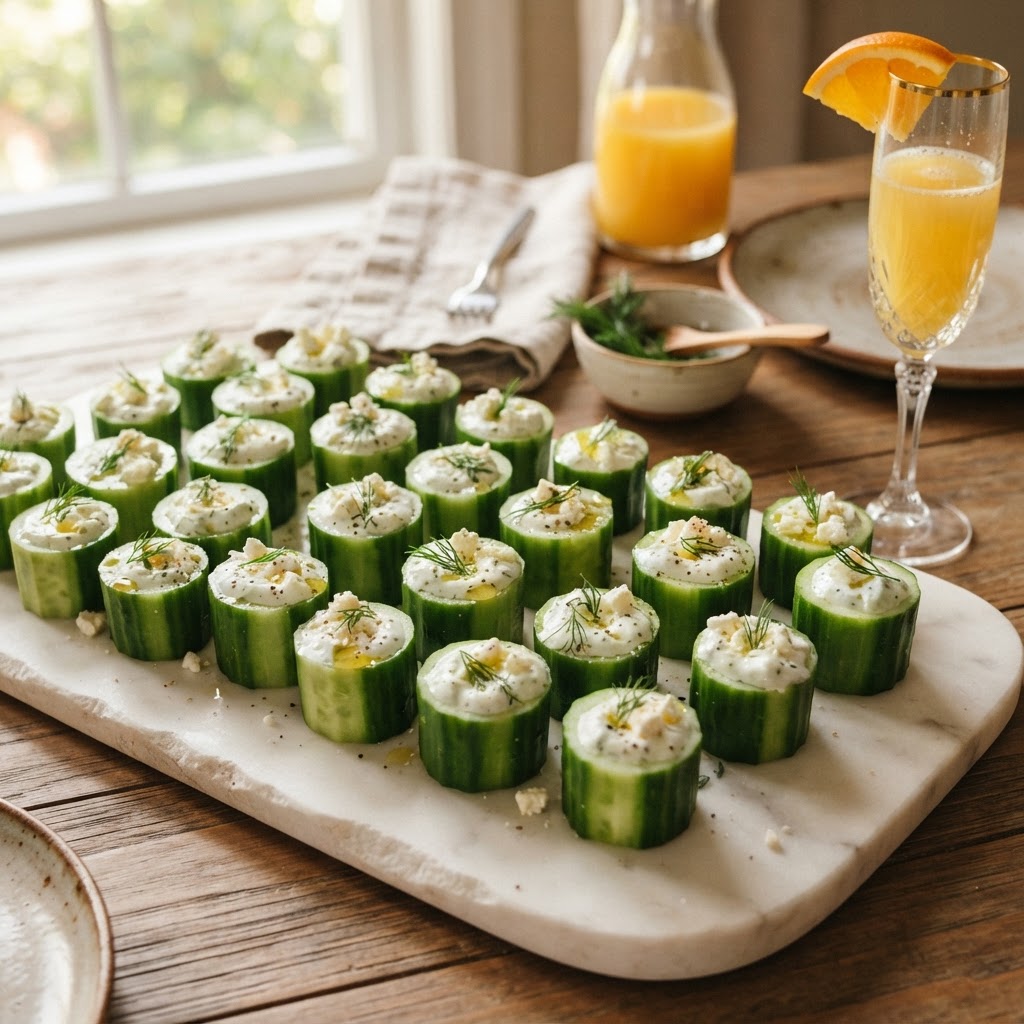
Tzatziki cucumber cups are the Mediterranean's most refreshing party bite — small hollowed-out cucumber cups filled with cold, garlicky yogurt tzatziki, topped with crumbled feta, a drizzle of olive oil, and a sprig of dill. They are the kind of appetizer that cools the palate and the room, the kind you eat three of before you realize you've had any.
The History of Tzatziki
Tzatziki has ancient and contested roots. According to Wikipedia, the word *tzatziki* comes to English from Modern Greek, which in turn borrowed it from the Turkish word *cacık*. The root is likely related to Persian *zhazh*, referring to herbs used for cooking. The food historian Nawal Nasrallah traces the earliest known recipe for a cucumber-yogurt salad — called *jajik* — to a 10th-century Arabic-language cookbook, making this preparation over a thousand years old. Later mentions appear in Egyptian cookbooks from the 14th and 15th centuries.
Greeks have used yogurt-based condiments since antiquity, including *oxygala*, a yogurt-like condiment combined with honey or olive oil and herbs. During the Ottoman Empire, yogurt and garlic condiments became part of the *meze* tradition. The modern term *cacık* was first mentioned in print in 1844 in Hoca Kâmil Pasha's *Melceü't-Tabbâhîn*, the first Ottoman cookbook, described simply as "yogurt with cucumber and garlic." Today, tzatziki is the essential Greek meze — served with souvlaki, gyros, or simply with bread and olives.
The cucumber cup is the modern party iteration — the same ancient dip, served in an edible vessel, topped with feta and olive oil, sized for a single bite.
About the Ingredients
Cucumbers — English or Persian cucumbers, the thin-skinned, seedless kind; their firm flesh holds its shape when hollowed, and their mild flavor lets the tzatziki shine.
Greek yogurt — full-fat, strained yogurt; the straining removes the whey and concentrates the protein, giving tzatziki its thick, almost spreadable consistency.
Garlic — minced very fine or grated on a microplane; raw garlic is the backbone of tzatziki's bite.
Feta — crumbled on top, not mixed in; the saltiness contrasts with the cool yogurt.
Olive oil and dill — the finishing drizzle and the herb that ties it to the Greek garden.
Ingredients (makes 16 cups): - 4 English cucumbers, cut into 1-inch rounds - 1 cup full-fat Greek yogurt, strained - 1/2 cup grated and squeezed cucumber (from the cored centers) - 2 cloves garlic, minced or grated - 1 tbsp extra-virgin olive oil, plus more for drizzling - 1 tbsp red wine vinegar - 1 tbsp chopped fresh dill, plus more for garnish - 1/2 tsp salt, 1/4 tsp black pepper - 1/4 cup crumbled feta cheese
Instructions: Cut the cucumbers into 1-inch rounds. Using a melon baller or small spoon, hollow out the center of each round, leaving a 1/4-inch wall, to create a cup. Reserve the cored cucumber flesh. Grate the reserved cucumber flesh, squeeze out the liquid, and set aside. In a bowl, combine the Greek yogurt, grated cucumber, garlic, olive oil, red wine vinegar, dill, salt, and pepper. Stir well and chill at least 30 minutes for the flavors to meld. Spoon the tzatziki into the cucumber cups. Top each with crumbled feta, a drizzle of olive oil, and a sprig of dill. Sixteen cups, each one a cold, garlicky, refreshing bite of the Mediterranean.
The Mimosa Pairing Logic: Cool, garlicky yogurt and bright sparkling wine is a Greek taverna match. A pomegranate mimosa is the showstopper — the pomegranate's tart sweetness echoes the Mediterranean table and its ruby color is stunning against the white tzatziki. A cucumber mint mimosa is the spa-garden alternative — the cucumber in the glass mirrors the cucumber in the cup, and the mint nods to the dill. Either way, eat the cup cold, while the yogurt is chilled, and raise the glass to the Aegean.
Reference Links: - Tzatziki (etymology, 10th-century origin, Ottoman cookbook): Wikipedia - Tzatziki history and Ottoman meze tradition: Wikipedia — Tzatziki History
Make-Ahead: The tzatziki can be made a day ahead and kept refrigerated — it's actually better the next day, once the garlic has permeated the yogurt. The cucumber cups can be hollowed and stored in ice water up to 6 hours ahead. But assemble just before serving: filled cups weep and soften if they sit. Spoon the tzatziki at the last minute, top with feta and oil, and pass immediately.
Pro Tips: Salt the cucumber cups lightly after hollowing and let them sit 10 minutes — this draws out water and keeps the cups crisp. Squeeze the grated cucumber dry — wet tzatziki is runny tzatziki. Use full-fat yogurt; low-fat won't hold its shape. And let the tzatziki rest before filling: raw garlic needs time to mellow into the yogurt. The cups are ready when they're cold, the yogurt is thick, and the dill is fresh.
Rate this recipe
Be the first to rate this recipe
to submit your rating.
Recent Posts

Couscous Royale: North Africa's Grand Platter of Lamb, Chicken, and Merguez
October 14, 2026

Seattle Cream Cheese Dog Bites: Hadley Long's 1989 Pioneer Square Invention
October 14, 2026

Khao Soi: Chiang Mai's Northern Thai Coconut Curry Noodles
October 13, 2026

Korean Bibimbap: Jeonju's Joseon Dynasty Mixed Rice
October 11, 2026

Spaghetti alla Carbonara: Rome's World War II Pasta of Eggs, Guanciale, and Pecorino
October 9, 2026