Greek Roast Leg of Lamb with Lemon, Garlic, and Avgolemono Sauce
June 21, 2026
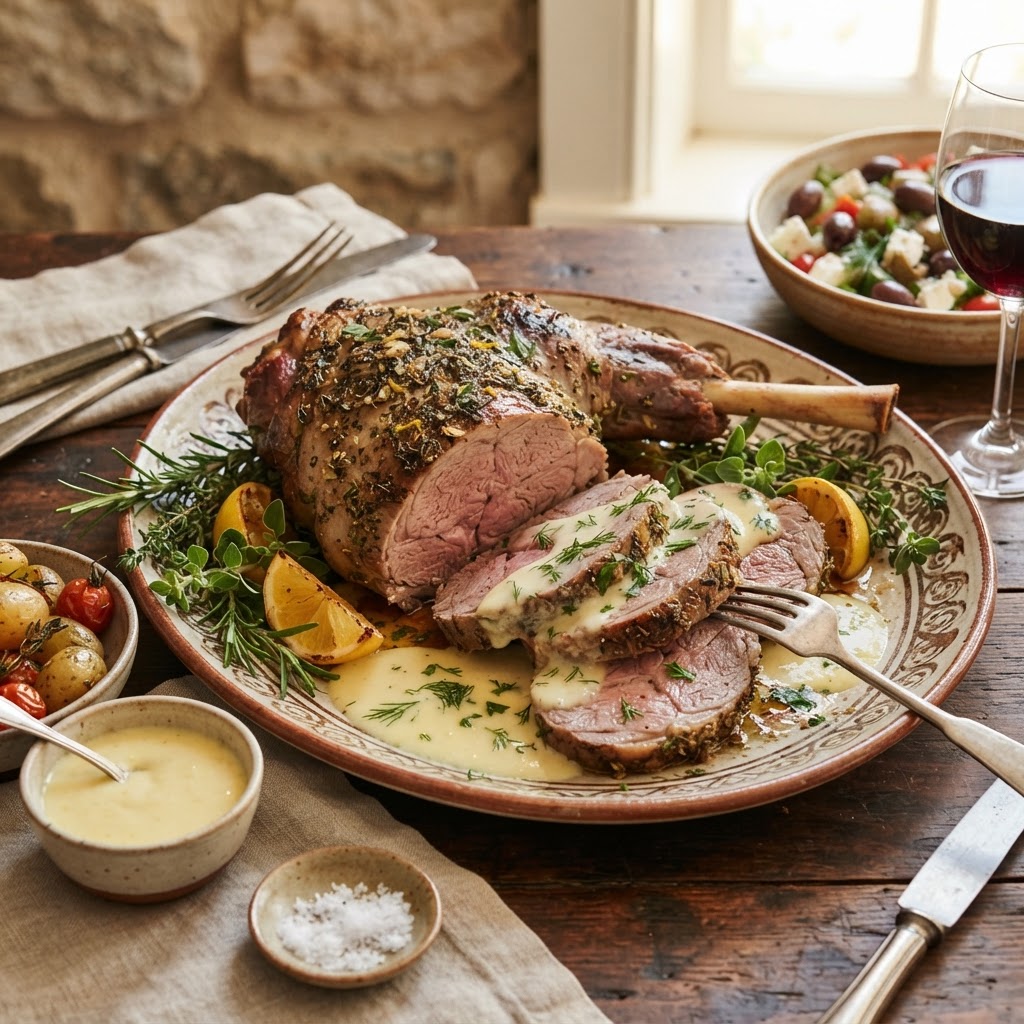
Roast leg of lamb is the centerpiece of Greek Easter and the most famous main course in Greek cuisine — a whole leg of lamb rubbed with garlic, lemon, oregano, and olive oil, roasted slowly until the meat is falling from the bone and the exterior is deeply golden and aromatic. The dish is the heart of the Greek Easter table, where it follows the midnight resurrection service and breaks the 40-day Lenten fast. It is the dish that characterizes Greek hospitality, family gathering, and the celebration of spring.
The Greek tradition of roasting lamb on the spit for Easter is one of the oldest surviving food rituals in Europe. The practice dates to the early Christian era — the lamb symbolizes Christ, the "Lamb of God," and the roasting is part of the Paschal celebration. In villages across Greece, whole lambs are roasted on spits in the courtyards and town squares, turning slowly over charcoal fires from dawn until the afternoon feast. The scent of roasting lamb, garlic, and lemon is the smell of Greek Easter.
For a home cook or a smaller gathering, a bone-in leg of lamb, roasted in the oven with the classic Greek marinade of garlic, lemon, oregano, and olive oil, is the more practical and equally delicious version. The avgolemono — a Greek sauce of egg yolks and lemon juice whisked into a warm broth — is the essential accompaniment, adding a bright, silky, tart counterpoint to the rich, savory lamb. Avgolemono is one of the great sauces of the Mediterranean, and it is the defining flavor of Greek cooking — bright, lemony, and rich without being heavy.
Ingredients (serves 8–10 as a main course):
The Lamb: - 1 bone-in leg of lamb (6–7 lbs), trimmed of excess fat (the bone adds flavor and helps the leg cook evenly) - 6 garlic cloves, sliced into slivers - ¼ cup extra-virgin olive oil - Juice of 3 lemons (about ½ cup) - 2 tablespoons dried Greek oregano (rubbed between your palms to release the oils — Greek oregano is more aromatic than Italian) - 1 tablespoon fresh rosemary, minced (optional) - 1 tablespoon kosher salt - 1 tablespoon coarsely ground black pepper - 1 cup dry white wine (Assyrtiko or a crisp Sauvignon Blanc) - 1 cup chicken or lamb stock
The Avgolemono Sauce: - 3 large egg yolks - Juice of 2 lemons (about ⅓ cup) - 1½ cups hot lamb cooking broth (strained from the roasting pan) - 1 tablespoon cornstarch (optional, for stability) - 1 tablespoon cold water (if using cornstarch)
Garnish: - Fresh oregano sprigs - Lemon wedges - Extra virgin olive oil (for drizzling)
To Serve: - Roasted potatoes (the classic Greek accompaniment — see below) - Greek salad - Crusty bread
Greek Roasted Potatoes (optional but traditional): - 3 lbs Yukon Gold potatoes, peeled and quartered - ¼ cup olive oil - Juice of 2 lemons - 1 cup chicken stock - 2 tablespoons dried oregano - Salt and pepper
Marinating the Lamb (4–24 hours ahead): With a small knife, make deep slits all over the lamb leg. Insert a sliver of garlic into each slit — the garlic flavors the meat from within during roasting. In a bowl, combine the olive oil, lemon juice, dried oregano, rosemary (if using), salt, and pepper. Rub the marinade all over the lamb, working it into the slits. Cover and refrigerate 4–24 hours. Bring to room temperature before roasting.
Roasting: Preheat oven to 325°F (320°F). Place the lamb on a rack in a roasting pan. Pour the white wine and stock into the bottom of the pan. Roast 20 minutes per pound (approximately 2 hours for a 6 lb leg), basting every 30 minutes with the pan juices. The lamb is done when a meat thermometer inserted into the thickest part reads 135°F for medium-rare (the temperature will rise to 140°F during resting) or 145°F for medium. Do not overcook — the Greek preference is for well-done, falling-off-the-bone lamb, which requires 3–4 hours at 300°F, but medium-rare is more appropriate for an elegant dinner.
Greek Roasted Potatoes (while the lamb roasts): Toss the potatoes with olive oil, lemon juice, oregano, salt, and pepper. Spread in a roasting pan. Pour in the chicken stock. Roast at 375°F for 45–60 minutes, stirring occasionally, until the potatoes are golden and the liquid has been absorbed. The potatoes absorb the lemon and oregano flavors and develop a deeply golden crust.
Resting: Remove the lamb from the oven and transfer to a cutting board. Tent loosely with foil and rest 20 minutes — the internal temperature equalizes and the juices redistribute. Do not skip the resting — slicing before resting causes the juices to run onto the board.
The Avgolemono Sauce: Strain the pan juices through a fine sieve into a saucepan, skimming the fat. You need 1½ cups of hot broth — add chicken stock if the pan juices are insufficient. In a heatproof bowl, whisk the egg yolks and lemon juice until pale and slightly thickened. Temper the yolks by slowly whisking in ½ cup of the hot broth — this raises the temperature gradually so the yolks do not scramble. Pour the tempered yolk mixture back into the saucepan, whisking constantly. Cook over very low heat 2–3 minutes, stirring constantly, until the sauce thickens enough to coat the back of a spoon. Do not let it boil — boiling scrambles the yolks and breaks the sauce. If the sauce is not thickening, whisk in a slurry of cornstarch and cold water and cook 1 minute more. Taste and adjust — the sauce should be bright, lemony, and silky.
Carving: Carve the lamb against the grain into thin slices. The meat should be tender and juicy, with the garlic and oregano flavors permeating every bite.
Service: Arrange the sliced lamb on a warmed platter with the roasted potatoes alongside. Pour the avgolemono sauce generously over the lamb and potatoes. Garnish with fresh oregano and lemon wedges. Drizzle with a little extra-virgin olive oil. Serve with Greek salad and crusty bread to soak up the sauce.
The Mimosa Pairing Logic: The lemony, herby, savory character of the Greek roast lamb calls for a mimosa with bright citrus that echoes the avgolemono and complements the oregano. A classic orange mimosa is the most natural pairing — the citrus echoes the lemon in the sauce and the champagne's acidity balances the richness of the lamb. A blood orange mimosa is exceptional — the slight bitterness of the blood orange provides an elegant counterpoint to the savory lamb and complements the oregano. For a more aromatic pairing, a lavender elderflower mimosa creates a beautiful resonance with the Mediterranean herbs. Avoid very sweet tropical mimosas — they overwhelm the bright, herbal character of the dish.
Reference Links: - Greek roast lamb: Diana's Greek Island Recipes - Avgolemono sauce: Serious Eats - Greek Easter traditions: Wikipedia - Avgolemono history: The Spruce Eats
Make-Ahead: The lamb can be marinated up to 24 hours ahead. The roasted potatoes can be made 2 hours ahead and reheated. The avgolemono sauce must be made à la minute — it does not hold well and the egg yolks scramble if reheated. The lamb must be roasted close to service and rested before carving.
Pro Tips: The garlic slivers inserted into the slits are the defining technique of Greek roast lamb — they flavor the meat from within and perfume every slice. Do not skip this step. The dried Greek oregano (rigani) is more aromatic than Italian oregano and is worth seeking out at Greek or Mediterranean markets. The bone-in leg of lamb is essential — the bone adds flavor and helps the leg cook evenly, and boneless legs dry out. The avgolemono must be made with tempered egg yolks over very low heat — boiling scrambles the yolks and breaks the sauce, and the sauce cannot be reheated. The lamb should be rested for at least 20 minutes — the juices redistribute and the internal temperature equalizes, producing juicier, more tender slices. The Greek preference is for well-done lamb, but medium-rare (135°F) is more appropriate for an elegant dinner — the choice depends on the tradition you are honoring.
Rate this recipe
Be the first to rate this recipe
to submit your rating.
Recent Posts

Couscous Royale: North Africa's Grand Platter of Lamb, Chicken, and Merguez
October 14, 2026

Seattle Cream Cheese Dog Bites: Hadley Long's 1989 Pioneer Square Invention
October 14, 2026

Khao Soi: Chiang Mai's Northern Thai Coconut Curry Noodles
October 13, 2026

Korean Bibimbap: Jeonju's Joseon Dynasty Mixed Rice
October 11, 2026

Spaghetti alla Carbonara: Rome's World War II Pasta of Eggs, Guanciale, and Pecorino
October 9, 2026